Review
. 2022 Sep;19(9):971-992.
doi: 10.1038/s41423-022-00905-x. Epub 2022 Aug 15.

Role of pyroptosis in inflammation and cancer

Affiliations
Review

Role of pyroptosis in inflammation and cancer

Xiang Wei et al. Cell Mol Immunol. 2022 Sep.

Abstract

Pyroptosis is a form of programmed cell death mediated by gasdermin and is a product of continuous cell expansion until the cytomembrane ruptures, resulting in the release of cellular contents that can activate strong inflammatory and immune responses. Pyroptosis, an innate immune response, can be triggered by the activation of inflammasomes by various influencing factors. Activation of these inflammasomes can induce the maturation of caspase-1 or caspase-4/5/11, both of which cleave gasdermin D to release its N-terminal domain, which can bind membrane lipids and perforate the cell membrane. Here, we review the latest advancements in research on the mechanisms of pyroptosis, newly discovered influencing factors, antitumoral properties, and applications in various diseases. Moreover, this review also provides updates on potential targeted therapies for inflammation and cancers, methods for clinical prevention, and finally challenges and future directions in the field.

Keywords: Pyroptosis; antitumor; inflammasome; influencing factors; pyroptosis-associated diseases; targeted therapy.


Conflict of interest statement

The authors declare no competing interests.

Figures
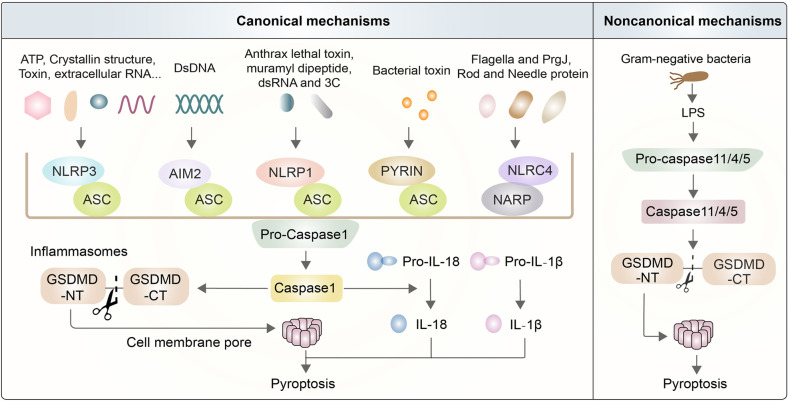
Fig. 1
Fig. 1
Basic mechanisms of canonical and noncanonical inflammasomes. The mechanisms of pyroptosis are divided into canonical pathways activated by caspase-1 and noncanonical pathways activated by caspase-11/4/5. Activated caspase-1/11 can induce the formation of GSDMD-NT, which contributes to the perforation of the cell membrane and enhances the capability of processing IL-1β and IL-18. Canonical inflammasomes, including NLRP3, AIM2, NLRP1, PYRIN, and NLRC4 inflammasomes, are usually composed of PRR, ASC, and pro-caspase-1. NLRP3 is triggered by endogenous danger signals, such as pore-forming toxins, crystalline structures, extracellular ATP, and RNA. NLRP1 is mainly activated by physiologically relevant factors, including the lethal toxin found in anthrax and muramyl dipeptide. NLRC4 typically responds to bacterial flagellin and PrgJ, which are rod and needle proteins. AIM2 directly binds to cytosolic dsDNA from DNA viruses to activate them. Pyrin activation is caused by exposure to pathogenic toxins. The noncanonical pyroptosis pathway is directly triggered by LPS from extracellular Gram‐negative bacteria
Fig. 2
Fig. 2
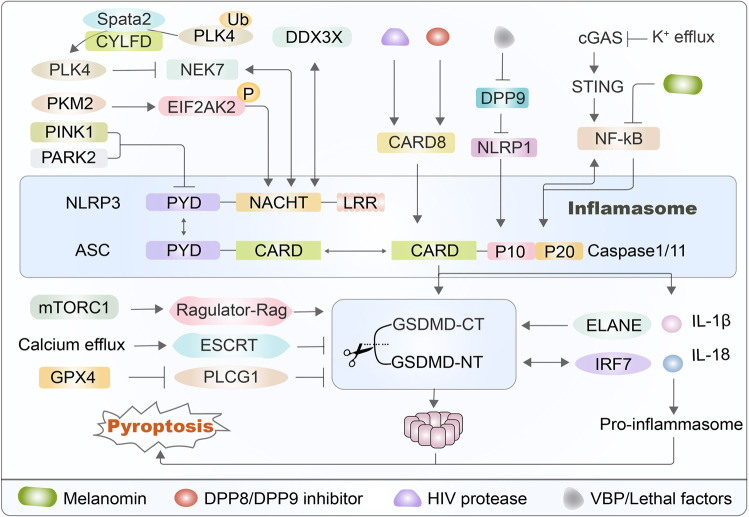
Novel regulation of NLRP3 and gasdermin D. There are many signaling pathways influencing the functions of the NLRP3 inflammasome and gasdermin D to regulate the occurrence of pyroptosis. For example, the PINK1-PARK2 pathway induces the release of dopamine to function on PYD to induce NLRP3 inflammasome activation. In addition, PKM2 selectively activates EIF2AK2 phosphorylation to trigger the NLRP3 inflammasome in macrophages. The kinase NEK7 can combine with NLRP3 to control the activation of the NLRP3 inflammasome, which is suppressed by phosphorylation of PLK4 and is formed by deubiquitinating the Spata2-CYLD complex. DDX3X is coupled with the NACHT domain of full-length NLRP3. The CARD8 inflammasome senses the activities of HIV-1 protease and DPP8/9 inhibitor to regulate NLRP3-caspase-1-dependent pyroptosis. VbP disrupts the interaction of NLRP1 and DPP9 to accelerate the degradation of N-terminal fragments. The cGAS-STING pathway promotes the NF-κB function on caspase-1 to induce pyroptosis, which is suppressed by melatonin. Furthermore, the mTORC1-Ragulator-Rag pathway promotes ROS production to regulate the oligomerization of GSDMD and pore formation. The ESCRT system repairs membrane pores to alleviate pyroptosis and inhibit the production of IL-1β, which is otherwise upregulated by calcium efflux. GPX4 blocks lipid peroxidation to suppress GSDMD activity and inhibits caspase-1/11 to prevent the production of GSDMD-NT. ELANE-mediated GSDMD cleavage produces an active GSDMD-eNT that causes pyroptosis. Finally, IRF7 can physically interact with GSDMD-NT to cause pyroptosis
Fig. 3
Fig. 3
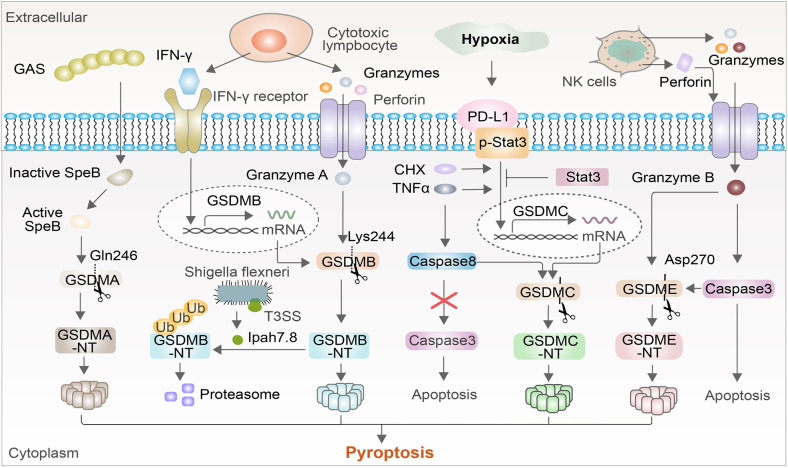
New roles of other gasdermins. Granzyme A can enter target cells through perforin and can hydrolyze gasdermin B, which is upregulated by interferon-γ. The IpaH7.8 effector secreted by Shigella flexneri allows GSDMB to be used for 26 S proteasome degradation to inhibit Granzyme A-mediated, GSDMB-induced pyroptosis. Another gasdermin, granzyme B, can induce the maturation of caspase-3 to cleave GSDME, where the mechanism of cell death changes from apoptosis to pyroptosis. Under hypoxic conditions, PD-L1 interacts with p-Stat3-Y705 to promote the GSDMC-induced triggering of pyroptosis, which is promoted by TNFα and CHX but prevented by Stat3. TNF-α activates caspase-8 to cleave GSDMC, thus avoiding caspase-8 activation and instead activating caspase-3-induced pyroptosis. Activated GAS cysteine protease SpeB cleaves GSDMA by direct proteolysis after the Gln246 site 134 to form GSDMA pores in the host cell membrane, promoting the pyroptosis of infected cells and ultimately resulting in local inflammation and the clearance of pathogens
Fig. 4
Fig. 4
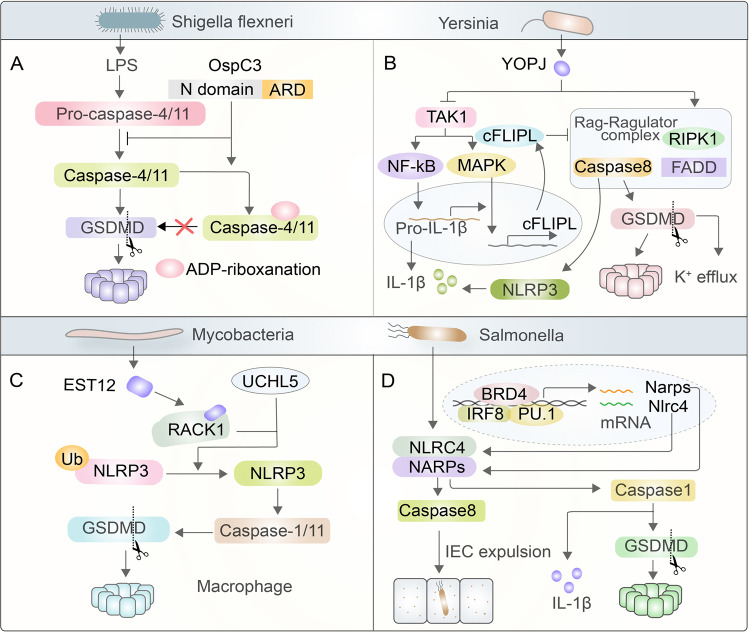
Bacteria influence the immune response to manipulate pyroptosis. Shigella flexneri inhibits caspase-4/11 through the secreted effector protein OspC3 to mediate arginine ADP-riboxanation and block the maturation of caspase-4/11 and consequently GSDMD cleavage. Yersinia secretes YopJ to inhibit TAK1, further activating RIPK1/caspase-8-dependent pyroptosis. Simultaneously, YopJ binds to RIPK1 to function on the Rag-Ragulator complex, causing cleavage and partial activation of GSDMD by caspase-1/11 and cleavage of GSDME by caspase-3/7. Mycobacteria secrete EST12, which binds to RACK1, recruiting UCHL5 to promote deubiquitination of NLRP3 and thus inducing NLRP3 and GSDMD to trigger pyroptosis. Additionally, Brd4 regulates the activation of the NAIP-NLRC4 inflammasome by recruiting PU.1 and IRF8 to initiate the maturation of caspase-1 and activate caspase-8 to cause IEC in cells infected by Salmonella
Fig. 5
Fig. 5
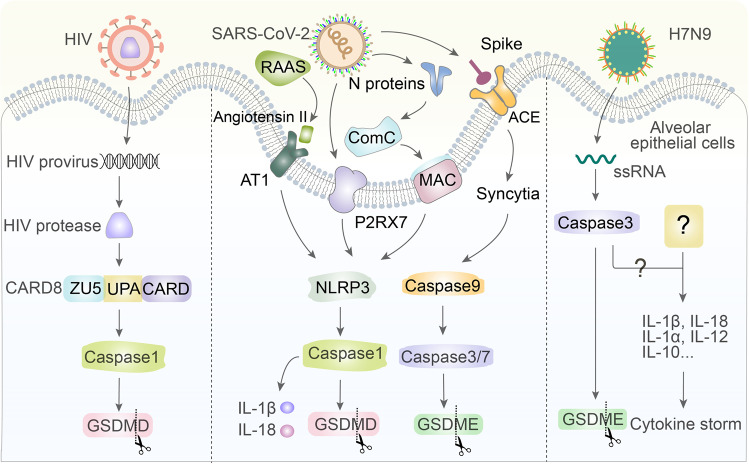
Virus infection triggers or avoids pyroptosis. CARD8 can recognize active HIV protease that cleaves its N-terminus to activate caspase-1 and GSDMD and can trigger pyroptosis to eliminate cells infected with HIV. Additionally, the SARS-CoV-2 spike protein interacts with ACE2, causing the formation of syncytia that activate caspase-9/3/7 to lead to the cleavage of GSDME. N proteins can function in the ComC pathway, which collaborates with MAC to directly activate the NLRP3 inflammasome. The P2RX7 receptor is mediated by ATP when SARS-CoV-2 enters the airway, leading to NLRP3 activation. RAAS induces angiotensin II to combine with AT1 to trigger the NLRP3 inflammasome in cells infected with SARS-CoV-2. Finally, H7N9 viruses inject ssRNA into the cells to trigger gasdermin E-dependent pyroptosis
Fig. 6
Fig. 6
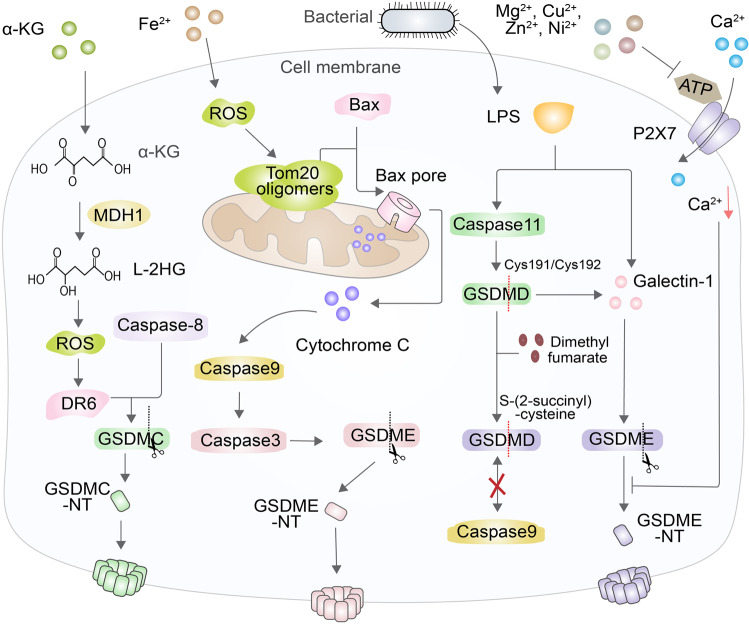
Chemical factors promote or inhibit pyroptosis. An example of a chemical factor that affects pyroptosis is α-KG, which is changed into L-2HG to trigger an increase in ROS levels as well as DR6 oxidation and polymerization to induce caspase-8 to cleave GSDMC and trigger pyroptosis. Drugs that enhance ROS production, or iron, result in Tom20 oligomerization and the formation of Bax pores, leading to cytochrome C release, which induces the cleavage of caspase-3/9 to trigger GSDME-dependent pyroptosis. Additionally, DMF interacts with GSDMD at the Cys191/Cys193 position to generate S-(2-succinyl)-cysteine, which prevents the combination of GSDMD and caspase. Galectin-1 induced by GSDMD can promote and enhance LPS-induced pyroptosis. Finally, Mg2+ blocks the influx of Ca2+ into the cells by restraining the ATP-gated calcium channel P2X7 to suppress GSDMD-NT oligomerization
Fig. 7
Fig. 7
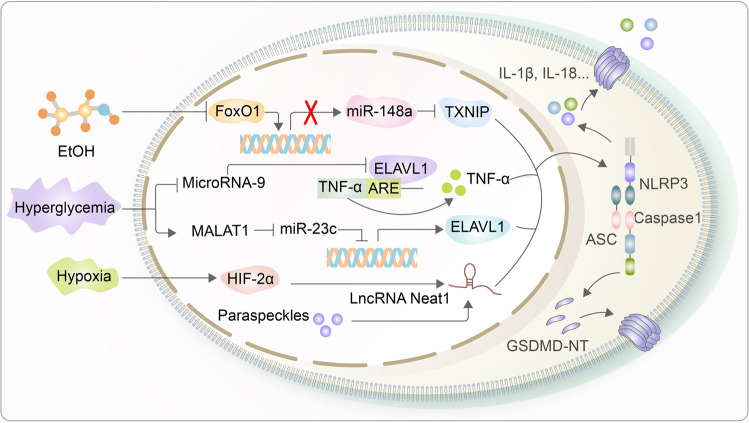
Noncoding RNA is associated with the regulation of pyroptosis. miR-148a inhibits the expression of TXNIP to suppress NLRP3 inflammasome activation, which is reversed by elevated FoxO1 expression induced by alcohol treatment. Additionally, microRNA-9 functions on ELAVL1 to suppress the expression of TNF-α, which inhibits pyroptosis by preventing NLRP3 inflammasome activation in a hyperglycemic environment. Similarly, MALAT1 downregulates the expression of miR-23c to induce ELAVL1 expression. Finally, the lncRNA Neat1, activated by HIF-2α, activates the NLRP3 inflammasome and directly interacts with caspase-1 p20 subunits to yield mature caspase-1
Fig. 8
Fig. 8
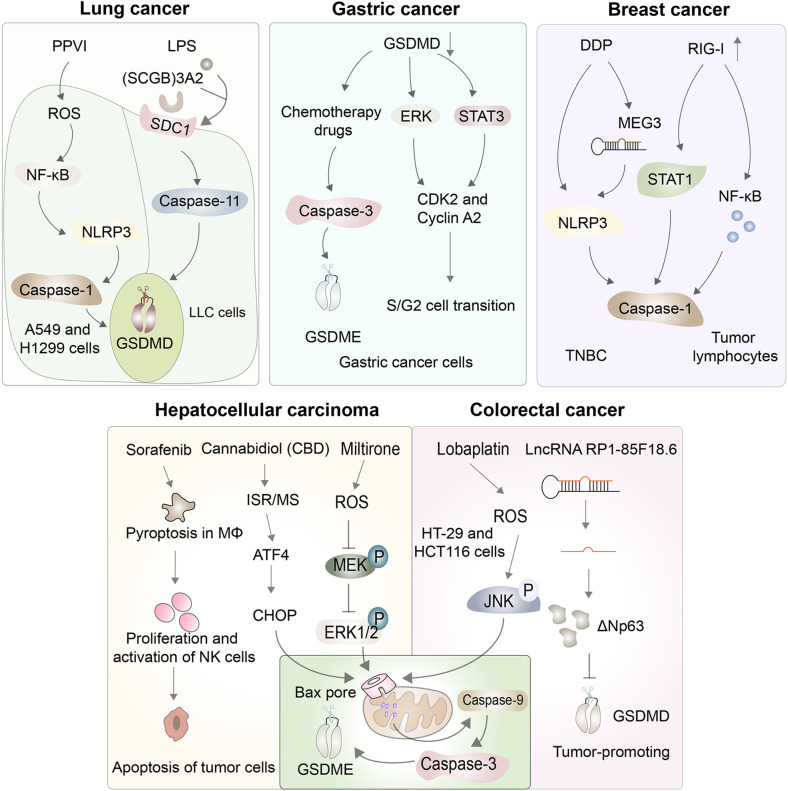
Pyroptosis and antitumor immunity in cancer. Manipulating pyroptosis to kill tumor cells and inhibit the proliferation, migration, and invasion of tumor cells is a novel research avenue for cancer treatment. Pyroptosis plays antitumor roles in several cancers, including lung, gastric, breast, hepatocellular, and colorectal cancers
Fig. 9
Fig. 9
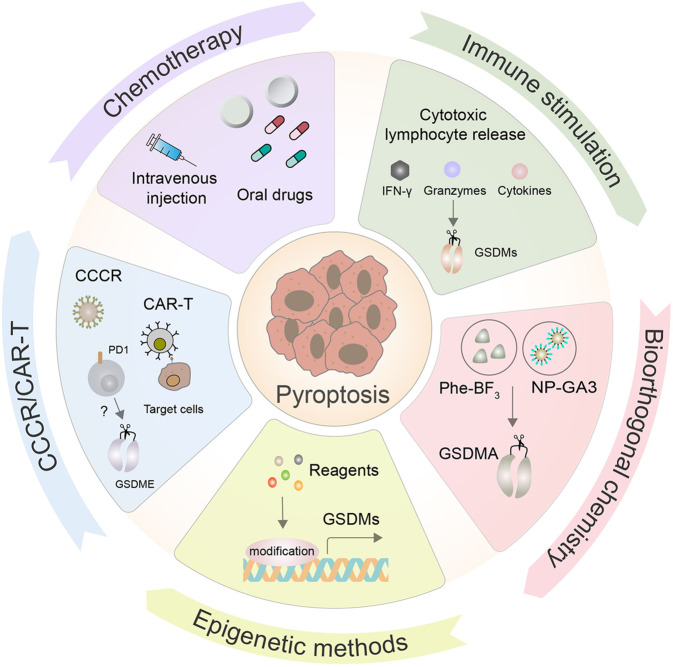
Prospects for pyroptosis in anticancer therapy. The therapeutic feasibility and potential of manipulating pyroptosis as an anticancer therapy have recently been explored. Chemotherapy is still the most common form of cancer treatment, as it elicits tumor cell death by triggering pyroptosis. In addition, some novel target and delivery methods have been developed, such as chimeric antigen receptor engineered T cells (CAR-T), chimeric costimulatory converting receptor (CCCR), immune stimulation, bioorthogonal chemical systems, and epigenetic methods, all of which can effectively induce pyroptosis in tumor cells
Fig. 10
Fig. 10
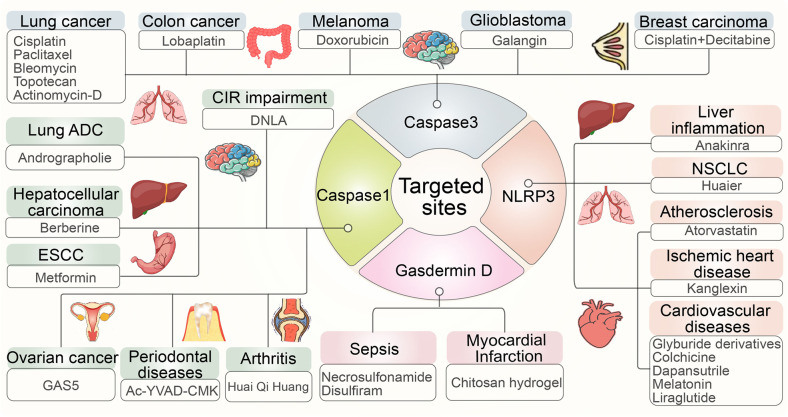
Potential targeted treatment strategies for pyroptosis. Research on pyroptosis benefits the study of the pathological processes of many different diseases, especially essential components in the process of pyroptosis, such as NLRP3, caspase-1, caspase-3, and gasdermin D, all of which play critical roles in human health and have been developed into many targeted treatment drugs against several inflammatory diseases

References

    1. Man SM, Karki R, Kanneganti TD. Molecular mechanisms and functions of pyroptosis, inflammatory caspases and inflammasomes in infectious diseases. Immunol Rev. 2017;277:61–75. doi: 10.1111/imr.12534. - DOI - PMC - PubMed
    1. Man SM, Kanneganti TD. Converging roles of caspases in inflammasome activation, cell death and innate immunity. Nat Rev Immunol. 2016;16:7–21. doi: 10.1038/nri.2015.7. - DOI - PMC - PubMed
    1. Zychlinsky A, Prevost MC, Sansonetti PJ. Shigella flexneri induces apoptosis in infected macrophages. Nature. 1992; 358: 167–9. 10.1038/358167a0. - PubMed
    1. Hersh D, et al. The Salmonella invasin SipB induces macrophage apoptosis by binding to caspase-1. P Natl Acad Sci USA. 1999;96:2396–401. 10.1073/pnas.96.5.2396. - PMC - PubMed
    1. Hilbi H, Moss JE, Hersh D, Chen Y, Arondel J, Banerjee S, et al. Shigella-induced apoptosis is dependent on Caspase-1 which binds to IpaB. J Biol Chem. 1998;273:32895–900. doi: 10.1074/jbc.273.49.32895. - DOI - PubMed

Publication types