


Diagnostic yield and clinical relevance of expanded genetic testing for cancer patients
- PMID: 35971132
- PMCID: PMC9377129
- DOI: 10.1186/s13073-022-01101-2
Diagnostic yield and clinical relevance of expanded genetic testing for cancer patients
Abstract
Background: Genetic testing (GT) for hereditary cancer predisposition is traditionally performed on selected genes based on established guidelines for each cancer type. Recently, expanded GT (eGT) using large hereditary cancer gene panels uncovered hereditary predisposition in a greater proportion of patients than previously anticipated. We sought to define the diagnostic yield of eGT and its clinical relevance in a broad cancer patient population over a 5-year period.
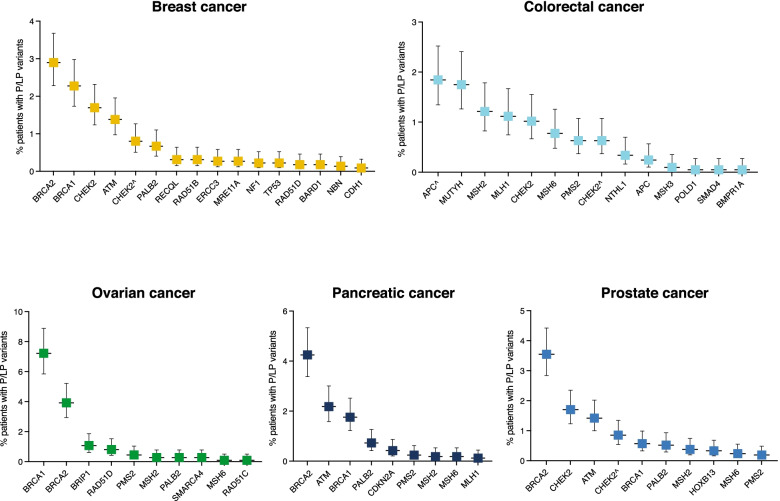
Methods: A total of 17,523 cancer patients with a broad range of solid tumors, who received eGT at Memorial Sloan Kettering Cancer Center between July 2015 to April 2020, were included in the study. The patients were unselected for current GT criteria such as cancer type, age of onset, and/or family history of disease. The diagnostic yield of eGT was determined for each cancer type. For 9187 patients with five common cancer types frequently interrogated for hereditary predisposition (breast, colorectal, ovarian, pancreatic, and prostate cancer), the rate of pathogenic/likely pathogenic (P/LP) variants in genes that have been associated with each cancer type was analyzed. The clinical implications of additional findings in genes not known to be associated with a patients' cancer type were investigated.
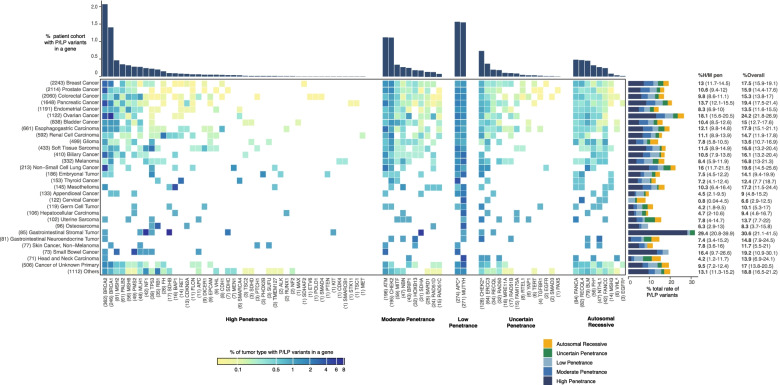
Results: 16.7% of patients in a broad cancer cohort had P/LP variants in hereditary cancer predisposition genes identified by eGT. The diagnostic yield of eGT in patients with breast, colorectal, ovarian, pancreatic, and prostate cancer was 17.5%, 15.3%, 24.2%, 19.4%, and 15.9%, respectively. Additionally, 8% of the patients with five common cancers had P/LP variants in genes not known to be associated with the patient's current cancer type, with 0.8% of them having such a variant that confers a high risk for another cancer type. Analysis of clinical and family histories revealed that 74% of patients with variants in genes not associated with their current cancer type but which conferred a high risk for another cancer did not meet the current GT criteria for the genes harboring these variants. One or more variants of uncertain significance were identified in 57% of the patients.
Conclusions: Compared to targeted testing approaches, eGT can increase the yield of detection of hereditary cancer predisposition in patients with a range of tumors, allowing opportunities for enhanced surveillance and intervention. The benefits of performing eGT should be weighed against the added number of VUSs identified with this approach.
© 2022. The Author(s).
Conflict of interest statement
J.S. Reis-Filho reports receiving personal/consultancy fees from Goldman Sachs, REPARE Therapeutics, Paige.AI, and Eli Lilly; membership of the scientific advisory boards of VolitionRx, REPARE Therapeutics, Paige.AI, and Personalis; membership of the Board of Directors of Grupo Oncoclinicas; and ad hoc membership of the scientific advisory boards of Roche Tissue Diagnostics, Ventana Medical Systems, Novartis, Genentech, and InVicro, outside the scope of this study. Z.K. Stadler’s immediate family member serves as a consultant in Ophthalmology for Alcon, Adverum Biotechnologies, Gyroscope Therapeutics Limited, Neurogene, and RegenexBio outside the submitted work. M.E. Robson reports grants from AstraZeneca, Merck, and Pfizer and personal fees from Change Healthcare outside the submitted work, as well as an uncompensated advisory for Artios Pharma, AstraZeneca, Daiichi Sankyo, Epic Sciences, Merck, Pfizer, Tempus Lab, and Zenith Pharma. L. Zhang reports receiving honoraria from Future Technology Research LLC, BGI, Illumina, and Roche Diagnostics Asia Pacific. L. Zhang’s family members hold a leadership position and ownership interests of Decipher Medicine. A. Zehir is currently an employee of AstraZeneca. The remaining authors declare that they have no competing interests.
Figures

References
Publication types
MeSH terms
Grants and funding
LinkOut - more resources
Full Text Sources
Medical
Research Materials
Miscellaneous
