


Potential mechanisms of quercetin in cancer prevention: focus on cellular and molecular targets
- PMID: 35971151
- PMCID: PMC9380290
- DOI: 10.1186/s12935-022-02677-w
Potential mechanisms of quercetin in cancer prevention: focus on cellular and molecular targets
Abstract
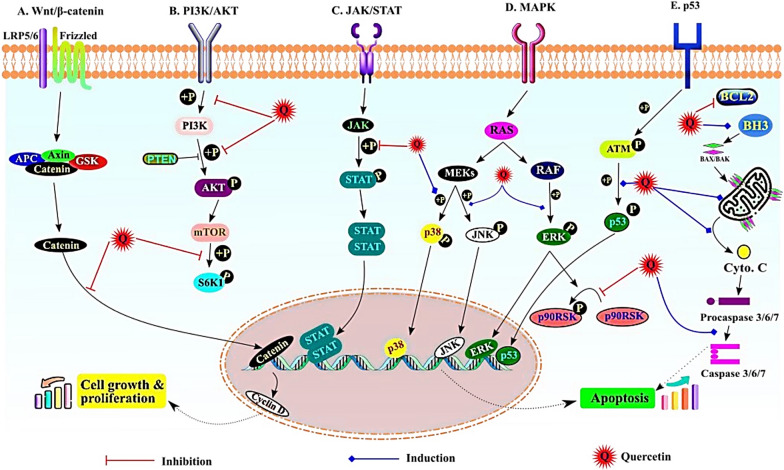
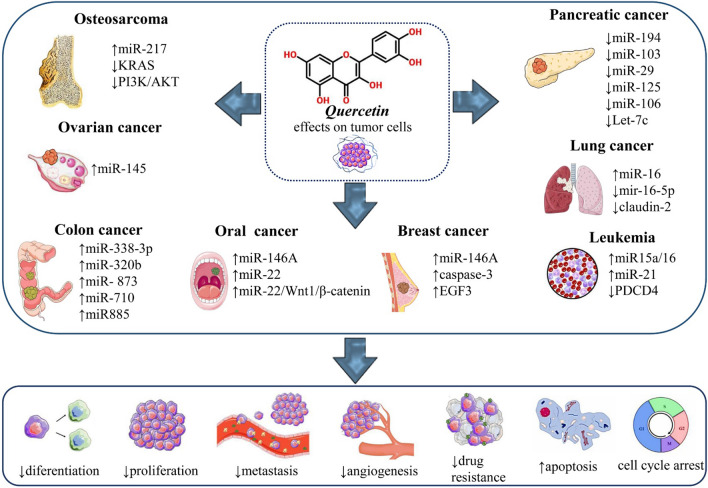
Over the past few years, the cancer-related disease has had a high mortality rate and incidence worldwide, despite clinical advances in cancer treatment. The drugs used for cancer therapy, have high side effects in addition to the high cost. Subsequently, to reduce these side effects, many studies have suggested the use of natural bioactive compounds. Among these, which have recently attracted the attention of many researchers, quercetin has such properties. Quercetin, a plant flavonoid found in fresh fruits, vegetables and citrus fruits, has anti-cancer properties by inhibiting tumor proliferation, invasion, and tumor metastasis. Several studies have demonstrated the anti-cancer mechanism of quercetin, and these mechanisms are controlled through several signalling pathways within the cancer cell. Pathways involved in this process include apoptotic, p53, NF-κB, MAPK, JAK/STAT, PI3K/AKT, and Wnt/β-catenin pathways. In addition to regulating these pathways, quercetin controls the activity of oncogenic and tumor suppressor ncRNAs. Therefore, in this comprehensive review, we summarized the regulation of these signalling pathways by quercetin. The modulatory role of quercetin in the expression of various miRNAs has also been discussed. Understanding the basic anti-cancer mechanisms of these herbal compounds can help prevent and manage many types of cancer.
Keywords: Malignant tumors; Molecular targets; Pharmacology; Quercetin; Signalling pathways.
© 2022. The Author(s).
Conflict of interest statement
The authors declare that they have no competing interests.
Figures
References
-
- Mitrut P, Docea AO, Kamal AM, Mitrut R, Calina D, Gofita E, Padureanu V, Gruia C, Streba L. Colorectal cancer and inflammatory bowel disease; 2016.
-
- Sharifi-Rad J, Bahukhandi A, Dhyani P, Sati P, Capanoglu E, Docea AO, Al-Harrasi A, Dey A, Calina D. Therapeutic potential of neoechinulins and their derivatives: an overview of the molecular mechanisms behind pharmacological activities. Front Nutr. 2021;8:664197. doi: 10.3389/fnut.2021.664197. - DOI - PMC - PubMed
Publication types
LinkOut - more resources
Full Text Sources
Research Materials
Miscellaneous
