Timing of first bath in term healthy newborns: A systematic review
- PMID: 35972992
- PMCID: PMC9380966
- DOI: 10.7189/jogh.12.12004
Timing of first bath in term healthy newborns: A systematic review
Abstract
Background: This systematic review of intervention trials and observational studies assessed the effect of delaying the first bath for at least 24 hours after birth, compared to conducting it within the first 24 hours, in term healthy newborns.
Methods: We searched MEDLINE via PubMed, Cochrane CENTRAL, Embase, CINAHL (updated till November 2021), and clinical trials databases and reference lists of retrieved articles. Key outcomes were neonatal mortality, systemic infections, hypothermia, hypoglycaemia, and exclusive breastfeeding (EBF) rates. Two authors separately evaluated the risk of bias, extracted data, and synthesized effect estimates using relative risk (RR) or odds ratio (OR). The GRADE approach was used to assess the certainty of evidence.
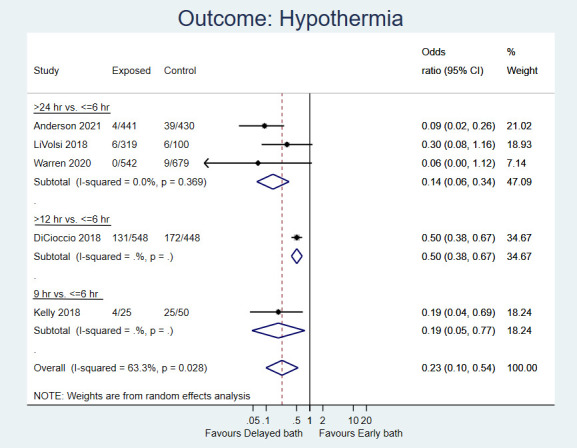
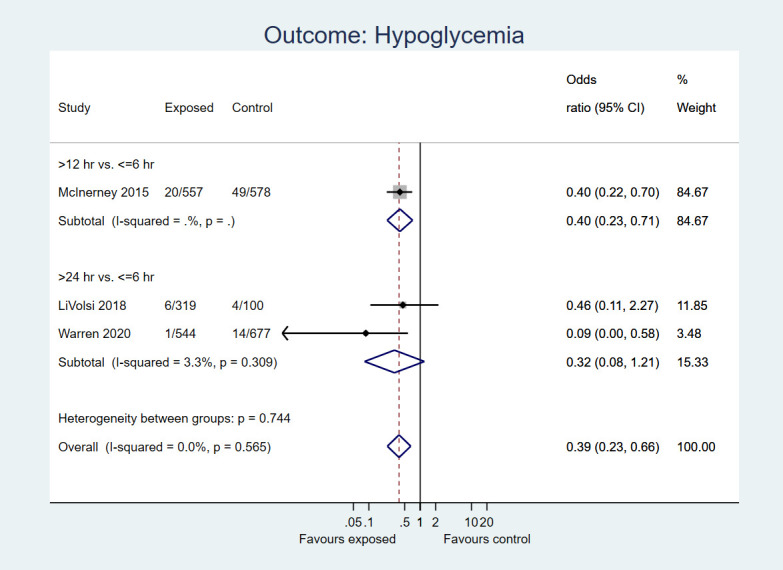
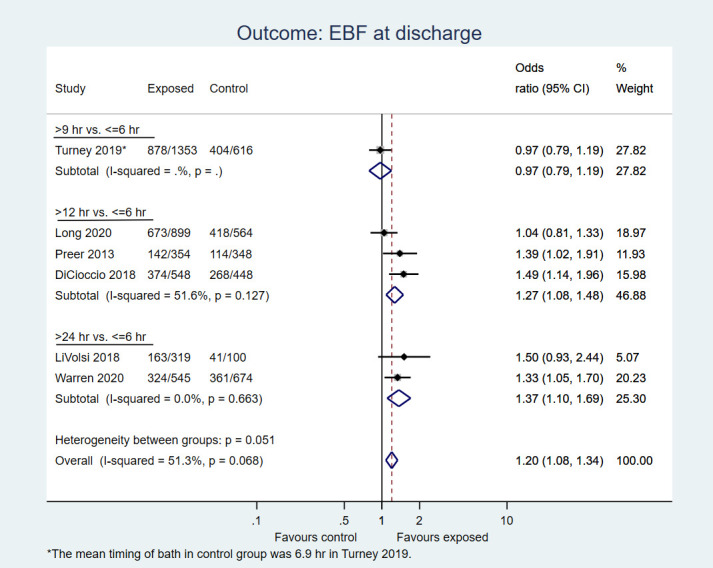
Results: We included 16 studies (two trials and 14 observational studies) involving 39 020 term or near-term healthy newborns. Delayed and early baths were defined variably in the studies, most commonly as >24 hours (six studies) and as ≤6 hours (12 studies), respectively. We performed a post-hoc analysis for studies that defined early bath as ≤6 hours. Low certainty evidence suggested that bathing the newborn 24 hours after birth might reduce the risk of infant mortality (OR = 0.46, 95% confidence interval (CI) = 0.28 to 0.77; one study, 789 participants) and neonatal hypothermia (OR = 0.50, 95% CI = 0.28-0.88; one study, 660 newborns), compared to bathing within first 24 hours. The evidence on the effect on EBF at discharge was very uncertain. Delayed bath beyond 6 hours (at or after nine, 12, or 24 hours) after birth compared to that within 6 hours might reduce the risk of hypothermia (OR = 0.47, 95% CI = 0.36-0.61; four studies, 2711 newborns) and hypoglycaemia (OR = 0.39, 95% CI = 0.23-0.66; three studies, 2775 newborns) and improve the incidence of EBF at discharge (OR = 1.12, 95% CI = 1.08-1.34; six studies, 6768 newborns); the evidence of the effect on neonatal mortality was very uncertain.
Conclusion: Delayed first bath for at least 24 hours may reduce infant mortality and hypothermia. Delayed bath for at least 6 hours may prevent hypothermia and hypoglycaemia and improve EBF rates at discharge. However, most of these conclusions are limited by low certainty evidence.
Registration: PROSPERO 2020 CRD42020177430.
Copyright © 2022 by the Journal of Global Health. All rights reserved.
Conflict of interest statement
Disclosure of interest: The authors completed the ICMJE Disclosure of Interest Form (available upon request from the corresponding author) and declare the following interests and relationships: Shuchita Gupta is a staff member of WHO.
Figures

References
-
- Ruschel LM, Pedrini DB, da Cunha MLC.Hypothermia and the newborn’s bath in the first hours of life. Rev Gaúcha Enferm. 2018;39:e20170263. - PubMed
-
- McInerney CM, Gupta A.Delaying the first bath decreases the incidence of neonatal hypoglycemia. J Obstet Gynecol Neonatal Nurs. 2015;44:S73-4. 10.1111/1552-6909.12650 - DOI
Publication types
MeSH terms
Grants and funding
LinkOut - more resources
Full Text Sources
Medical