. 2022 Aug 17;21(1):163.
doi: 10.1186/s12934-022-01852-y.

Production of new antimicrobial palm oil-derived sophorolipids by the yeast Starmerella riodocensis sp. nov. against Candida albicans hyphal and biofilm formation

Affiliations

Production of new antimicrobial palm oil-derived sophorolipids by the yeast Starmerella riodocensis sp. nov. against Candida albicans hyphal and biofilm formation

Achmad Rifky Alfian et al. Microb Cell Fact. .

Abstract

Background: Microbial derived-surfactants display low eco-toxicity, diverse functionality, high biodegradability, high specificity, and stability under extreme conditions. Sophorolipids are emerging as key biosurfactants of yeast origins, used in various industrial sectors to lower surface tension. Recently, sophorolipid complexes have been applied in biomedicals and agriculture to eradicate infectious problems related to human and plant fungal pathogens. This study aimed to characterize the functional properties and antifungal activities of sophorolipids produced by a newly characterized Starmerella riodocensis GT-SL1R sp. nov. strain.

Results: Starmerella riodocensis GT-SL1R sp. nov. strain was belonged to Starmerella clade with 93.12% sequence similarity using the ITS technique for strain identification. Sophorolipids production was examined, using co-carbon substrates glucose and palm oil, with a yield on the substrate between 30 and 46%. Using shake-flasks, the S. riodocensis GT-SL1R strain produced biosurfactants with an emulsification activity of 54.59% against kerosene compared to the S. bombicola BCC5426 strain with an activity of 60.22%. Maximum productivities of GT-SL1R and the major sophorolipid-producer S. bombicola were similar at 0.8 gl-1 h-1. S. riodocensis GT-SL1R produced mixed forms of lactonic and acidic sophorolipids, shown by TCL, FTIR, and HPLC. Importantly, the complex sophorolipid mixture displayed antifungal activity against an opportunistic yeast pathogen Candida albicans by effectively reducing hyphal and biofilm formation.

Conclusions: Sophorolipids derived from S. riodocensis demonstrate potential industrial and biomedical applications as green surfactant and antifungal agent. Since numerous renewable bioresources and industrial wastes could be used by microbial cell factories in the biosynthesis of biosurfactants to reduce the production cost, sophorolipids hold a promising alternative to current antimicrobials in treatments against infectious diseases in humans, animals, and plants.

Keywords: Antifungal; Biosurfactant; Sophorolipid production; Starmerella bombicola; Starmerella riodocensis; Yeast cell factory.


Conflict of interest statement

The authors declare that they have no competing interest.

Figures
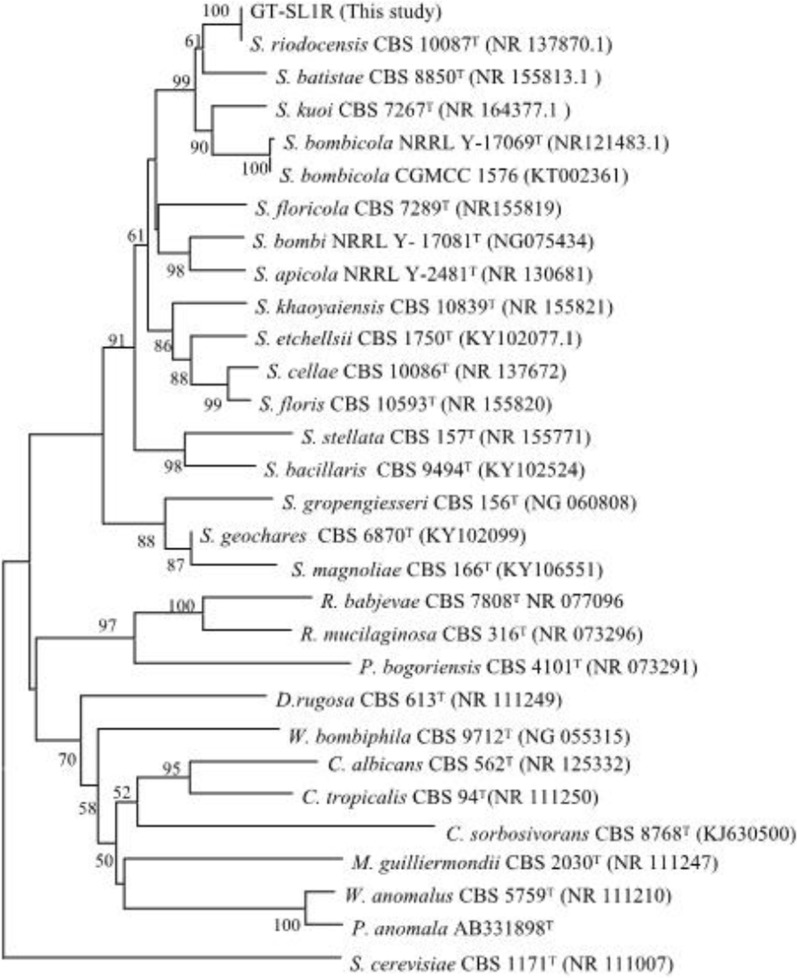
Fig. 1
Fig. 1
The phylogenetic tree displayed the relationships between the identified yeast isolate GT-SL1R strain of S. riodocensis and different yeast species. For comparison, based on ITS region sequences of type strains from different species which are retrieved from the literature and NCBI database. The phylogenetic tree was constructed using the neighbor-joining method. Bootstrap values were calculated from 1000 replicates. T symbol indicated “Type Strain” that is used as a reference
Fig. 2
Fig. 2
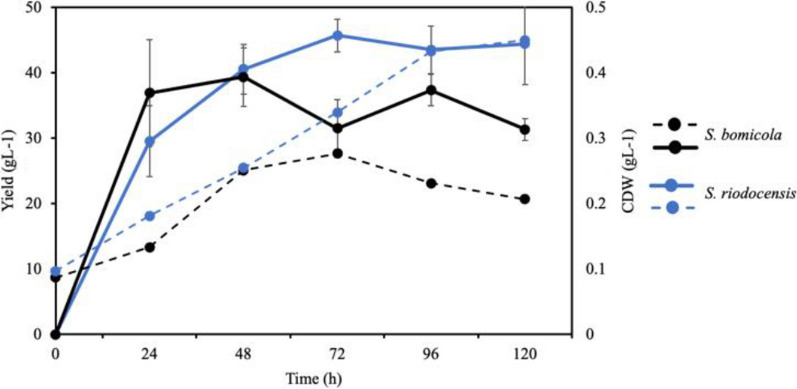
Biomass (dash line) and biosurfactant production (solid line) of S. riodocensis GT-SL1R strain (blue line) and S. bombicola BCC5426 strain (black line) grown at 30 °C, 150 rpm from 0 to 120 h. Cell growth was supplemented with palm oil as a hydrophobic substrate. The data were given as mean values obtained from at least two independent experiments performed in triplicates. Error bars displayed standard deviations of means
Fig. 3
Fig. 3
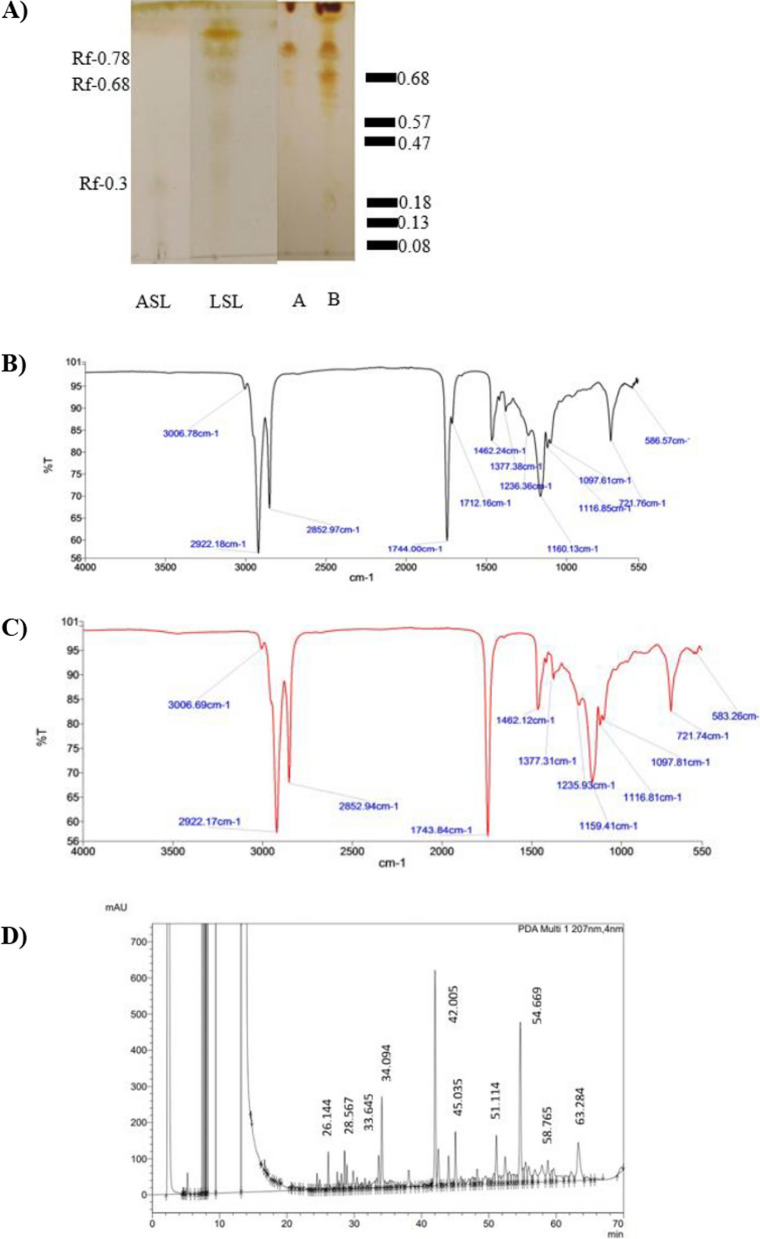
Structural characterization of SLs produced by S. riodocensis GT-SL1R strain using mixed glucose and palm oil. A TLC chromatograms showing the retention factors of SLs biosurfactants obtained from S. bombicola (A) and S. riodocensis (B) compared to acidic (ASL) and lactonic (LSL) SLs, respectively. Marker bands indicated previously identified congeners of SLs produced by S. bombicola. FTIR spectra of crude SLs produced by S. riodocensis (B) and S. bombicola (C). HPLC chromatogram of purified form SLs extracted from the crude mixture SLs produced by S. riodocensis GT-SL1R strain (D)
Fig. 4
Fig. 4
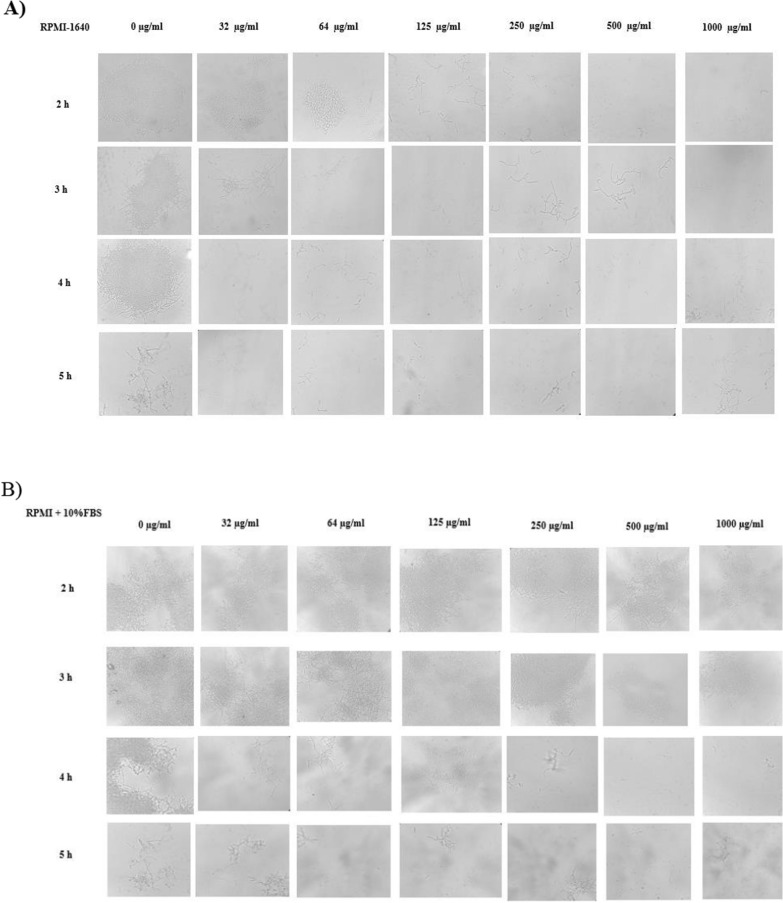
Effect of different concentrations of SLs produced by S. riodocensis GT-SL1R strain to inhibit C. albicans hyphal growth. C. albicans cells were grown in (A) RPMI-1640 media and (B) RPMI-1640 media supplemented with 10% FBS at 37 ℃ for a duration of 2-, 3, 4 or 5 h. Cells were observed using a microscope and photographed at 400×magnification. Representative images of two independent experiments performed in triplicates were shown
Fig. 5
Fig. 5
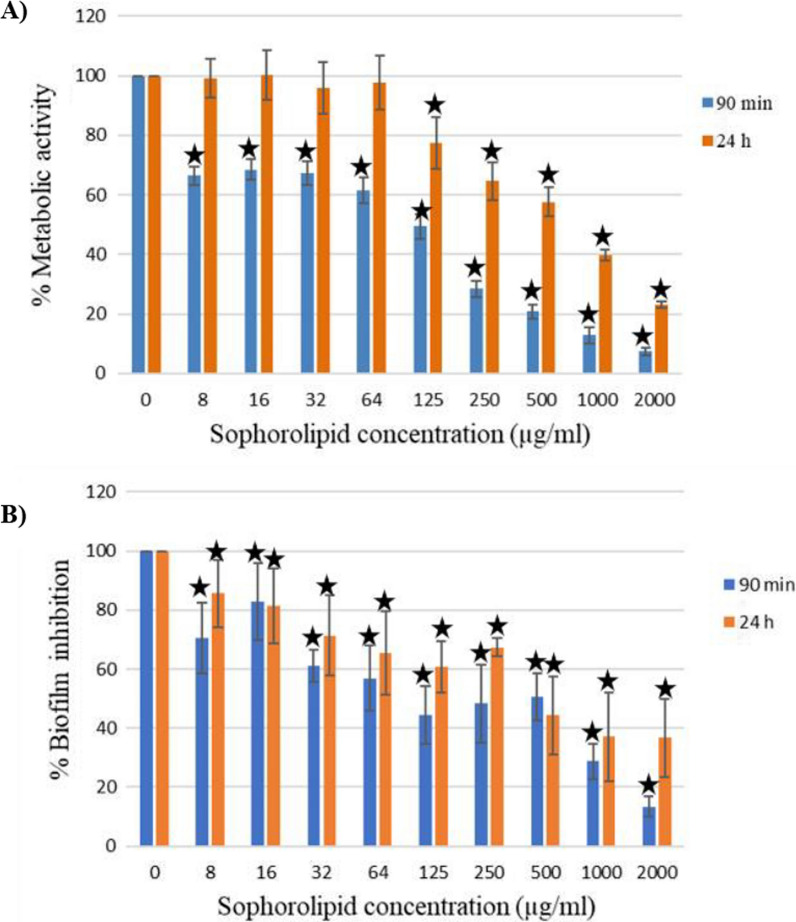
Antifungal activity of SLs produced by S. riodocensis GT-SL1R strain against C. albicans adherence phase (90 min) and mature biofilm at 24 h. A Readings of colorimetric XTT reduction assay at 492 nm are expressed in terms of % metabolic activity of control and (B) biofilm inhibition using crystal violet assay. Results represent the average of three independent experiments ± SD. *p < 0.05 when compared with SLs untreated controls
Fig. 6
Fig. 6
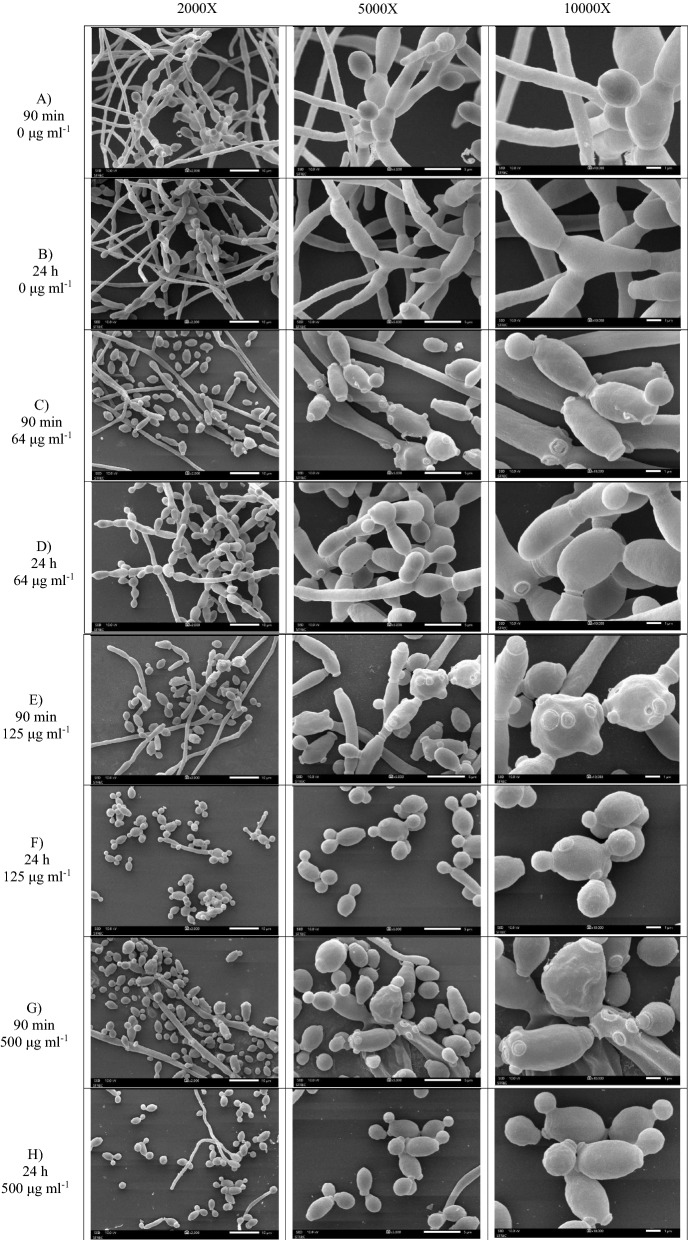
Scanning electron microscopy images of C. albicans biofilms. SEM was used to examine the effect of sophorolipids (SLs) on C. albicans biofilm formation at different magnification. Biofilms were formed on coated poly-Lysine glass cover slips for 90 min or 24 h at 37 °C. Biofilm formation of C. albicans (ATCC 90,028) in the absence (0 µg ml−1) of SLs (A, B), 64 µg ml−1of SLs (C, D), 125 µg ml−1 of SLs (E, F), or  500 µg ml−1 of SLs (G, H)

References

    1. Sen S, Borah SN, Bora A, Deka S. Production, characterization, and antifungal activity of a biosurfactant produced by Rhodotorula babjevae YS3. Microb Cell Fact. 2017;16(1):95. doi: 10.1186/s12934-017-0711-z. - DOI - PMC - PubMed
    1. Archana K, Sathi Reddy K, Parameshwar J, Bee H. Isolation and characterization of sophorolipid producing yeast from fruit waste for application as antibacterial agent. Environ Sustain. 2019;2(2):107–115. doi: 10.1007/s42398-019-00069-x. - DOI
    1. Santos DK, Rufino RD, Luna JM, Santos VA, Sarubbo LA. Biosurfactants: multifunctional biomolecules of the 21st century. Int J Mol Sci. 2016;17(3):401. doi: 10.3390/ijms17030401. - DOI - PMC - PubMed
    1. Yan X, Gu S, Cui X, Shi Y, Wen S, Chen H, et al. Antimicrobial, anti-adhesive and anti-biofilm potential of biosurfactants isolated from Pediococcus acidilactici and Lactobacillus plantarum against Staphylococcus aureus CMCC26003. Microb Pathog. 2019;127:12–20. doi: 10.1016/j.micpath.2018.11.039. - DOI - PubMed
    1. Liu J, Li W, Zhu X, Zhao H, Lu Y, Zhang C, et al. Surfactin effectively inhibits Staphylococcus aureus adhesion and biofilm formation on surfaces. Appl Microbiol Biotechnol. 2019;103(11):4565–4574. doi: 10.1007/s00253-019-09808-w. - DOI - PubMed

Supplementary concepts

LinkOut - more resources