


Serologic response and safety of COVID-19 vaccination in HSCT or CAR T-cell recipients: a systematic review and meta-analysis
- PMID: 35974381
- PMCID: PMC9380660
- DOI: 10.1186/s40164-022-00299-6
Serologic response and safety of COVID-19 vaccination in HSCT or CAR T-cell recipients: a systematic review and meta-analysis
Abstract
Background: Patients receiving hematopoietic stem cell transplantation (HSCT) or chimeric antigen receptor T cell (CAR T-cell) therapy are immunocompromised and at high risk of viral infection, including SAR2-CoV-2 infection. However, the effectiveness and safety of COVID-19 vaccines in these recipients is not well characterized. The present meta-analysis evaluated the serologic response and safety of COVID-19 vaccines in these population.
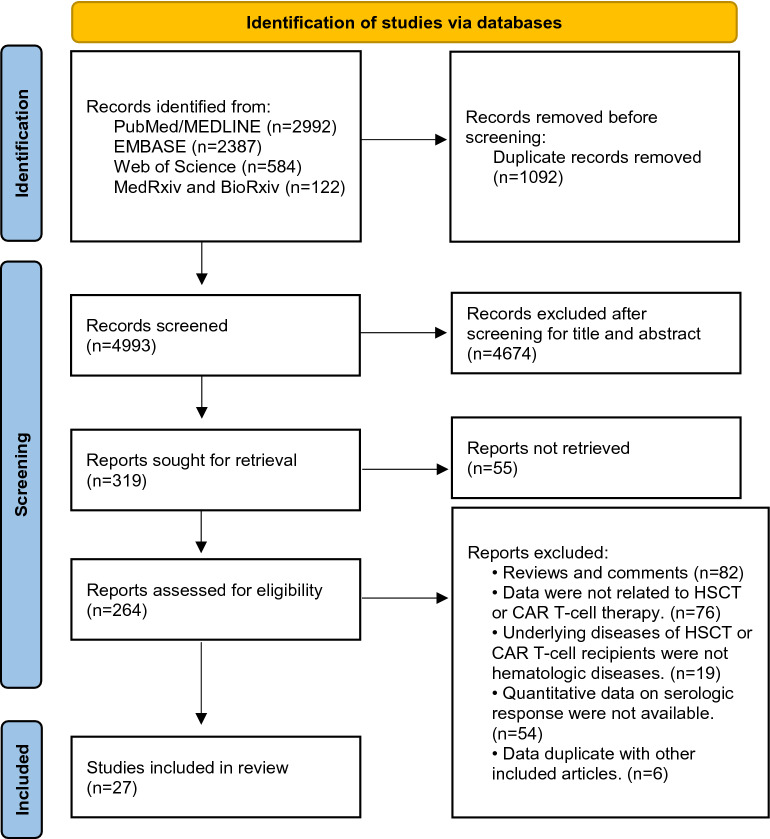
Methods: Literature databases (MEDLINE, EMBASE, Web of Science, MedRvix and BioRvix) were searched for original studies with serologic response post COVID-19 vaccination in HSCT or CAR T-cell recipients published until July 14, 2022. The analysis included 27 observational studies with a total of 2899 patients receiving allogeneic HSCT (2506), autologous HSCT (286) or CAR T-cell therapy (107), and 683 healthy participants with serologic response data. Random effects models were used to pool the rate of serologic response to COVID-19 vaccination in HSCT or CAR T-cell recipients and odds ratio comparing with healthy controls.
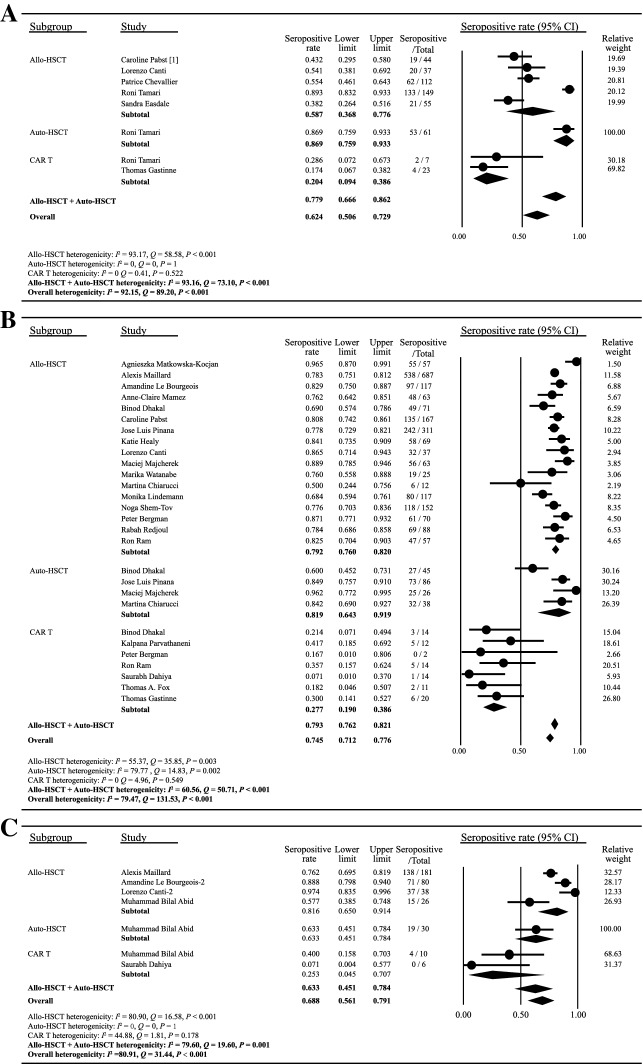
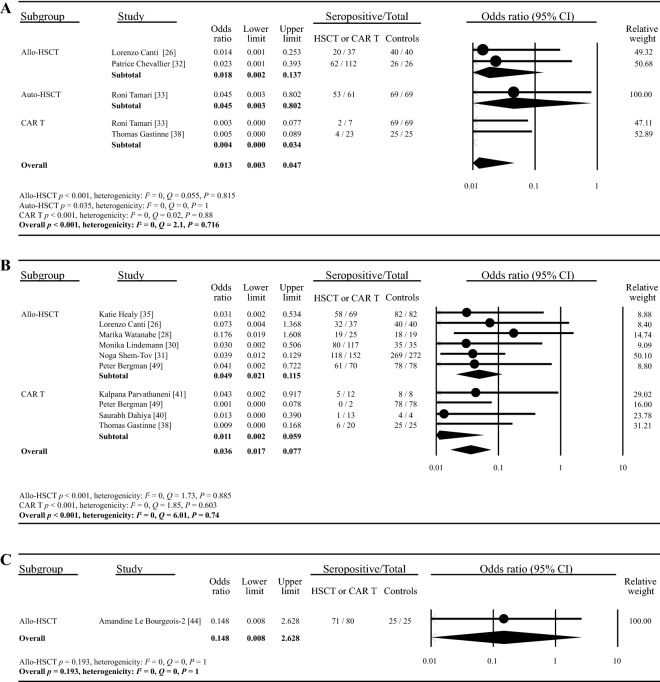
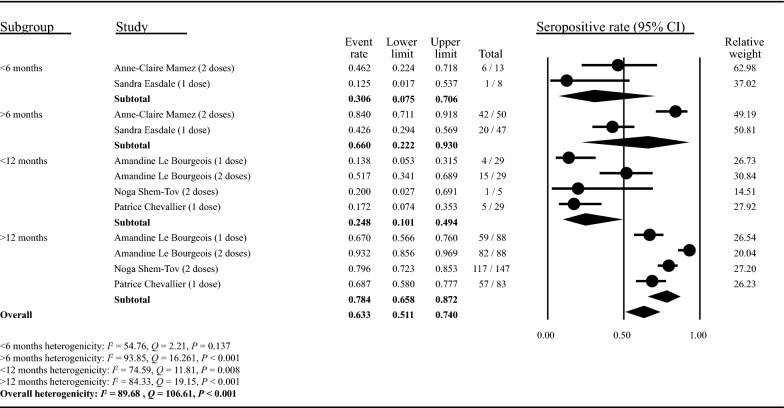
Results: The pooled seropositivity rates in HSCT and CAR T-cell recipients were 0.624 [0.506-0.729] for one dose, 0.745 [0.712-0.776] for two doses. The rates were significantly lower than those in healthy controls (nearly 100%). In subgroup analysis, CAR T-cell recipients exhibited an even lower seroconversion rate (one dose: 0.204 [0.094-0.386]; two doses: 0.277 [0.190-0.386]) than HSCT counterparts (one dose: 0.779 [0.666-0.862]; two doses: 0.793 [0.762-0.821]). The rates were comparable between autologous and allogeneic HSCT recipients. Other possible impact factors related to seropositivity were time interval between therapy and vaccination, use of immunosuppressive drugs and immune cell counts. Most vaccine-related adverse effects were mild and resolvable, comparable to general population.
Conclusions: This analysis revealed a diminished response to COVID-19 vaccines in HSCT or CAR T-cell recipients. Our findings may inform regular COVID-19 vaccination at appropriate intervals after HSCT or CAR T-cell therapy.
Keywords: COVID-19; Chimeric antigen receptor T cell therapy; Hematopoietic stem cell transplantation; Meta-analysis; Vaccine.
© 2022. The Author(s).
Conflict of interest statement
The authors declare that they have no competing interests.
Figures
References
-
- World Health Organization. 2022. https://covid19.who.int/. Accessed 15 July 2022.
-
- CDC Expands Eligibility for COVID-19 Booster Shots to All Adults. https://www.cdc.gov/media/releases/2021/s1119-booster-shots.html. Accessed 01 Apr 2022.
-
- Lopez Bernal J, Andrews N, Gower C, Robertson C, Stowe J, Tessier E, et al. Effectiveness of the Pfizer-BioNTech and Oxford-AstraZeneca vaccines on covid-19 related symptoms, hospital admissions, and mortality in older adults in England: test negative case-control study. BMJ (Clinical research ed) 2021;373:n1088. doi: 10.1136/bmj.n1088. - DOI - PMC - PubMed
-
- Haas EJ, Angulo FJ, McLaughlin JM, Anis E, Singer SR, Khan F, et al. Impact and effectiveness of mRNA BNT162b2 vaccine against SARS-CoV-2 infections and COVID-19 cases, hospitalisations, and deaths following a nationwide vaccination campaign in Israel: an observational study using national surveillance data. Lancet (London, England) 2021;397(10287):1819–1829. doi: 10.1016/s0140-6736(21)00947-8. - DOI - PMC - PubMed
LinkOut - more resources
Full Text Sources
