Prevalence, type of infections and comparative analysis of detection techniques of intestinal parasites in the province of Belgarn, Saudi Arabia
- PMID: 35975233
- PMCID: PMC9375965
- DOI: 10.7717/peerj.13889
Prevalence, type of infections and comparative analysis of detection techniques of intestinal parasites in the province of Belgarn, Saudi Arabia
Abstract
Background: The study was conducted to observe the prevalence and type of infection caused by intestinal parasites and to compare the techniques that are available for the detection.
Method: A total of 112 stool samples were obtained from study participants, and the laboratory examinations were performed at Special Infectious Agents Unit, King Abdulaziz University, Jeddah. One hundred and twelve participants were included in this study.
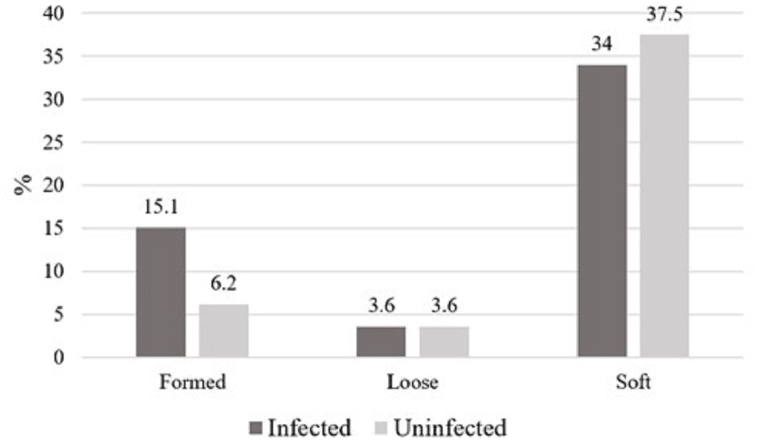
Result: The color of positive specimens was mainly brown (86.4%). Stool consistency in infected cases was soft in (64%) samples. There was no statistically significant difference with the physical characteristics of the stool (P > 0.05). In total, 59 of the 112 participants were infected with intestinal parasites, representing 52.7%. Different intestinal protozoa parasites were identified in which Blastocystis hominis (86.4%) was highest. None of the intestinal helminths were detected. Out of the 59 infected cases, single infections were found in (62.7%) samples. The intestinal protozoan parasites in single infections were B. hominis (78.4%), Giardia lamblia (8.1%), and (2.7%) from each Entamoeba histolytica, Cryptosporidium parvum, Entamoeba coli, Endolimax nana, and Chilomastix mesnili. Microscopy, RDTs, and real-time PCR were used for detection and identification of G. lamblia, E. histolytica, and C. parvum.
Conclusion: The study reported a high rate of intestinal parasitic infections, mainly with B. hominis. There were no statistical differences in parasite detection between the three techniques in detection of the thirteen cases infected with the pathogenic protozoa.
Keywords: Belgarn; Detection techniques; Food handlers; Intestinal parasites; Microscopy; Prevalence; Protozoa; RDTs; Real-time PCR; Saudi Arabia.
©2022 Alqarni et al.
Conflict of interest statement
The authors declare there are no competing interests.
Figures
References
-
- Aldahhasi WT, Toulah FH, Wakid MH. Evaluation of common microscopic techniques for detection of Blastocystis hominis. Journal of the Egyptian Society of Parasitology. 2020;50:33–40. doi: 10.21608/jesp.2020.88748. - DOI
-
- CDC Diagnosis of parasitic diseases. 2018. [20 April 2021]. https://www.cdc.gov/parasites/references_resources/diagnosis.html https://www.cdc.gov/parasites/references_resources/diagnosis.html
-
- CDC Parasites soil-transmitted helminths. 2020. [10 April 2021]. https://www.cdc.gov/parasites/sth/index.html https://www.cdc.gov/parasites/sth/index.html
-
- CDC Transmission of parasitic diseases 2021. 2021. [20 April 2021]. https://www.cdc.gov/parasites/transmission/index.html https://www.cdc.gov/parasites/transmission/index.html
MeSH terms
LinkOut - more resources
Full Text Sources
Medical