


Inflammatory and immune markers in HIV-infected older adults on long-term antiretroviral therapy: Persistent elevation of sCD14 and of proinflammatory effector memory T cells
- PMID: 35975357
- PMCID: PMC9470897
- DOI: 10.1111/acel.13681
Inflammatory and immune markers in HIV-infected older adults on long-term antiretroviral therapy: Persistent elevation of sCD14 and of proinflammatory effector memory T cells
Abstract
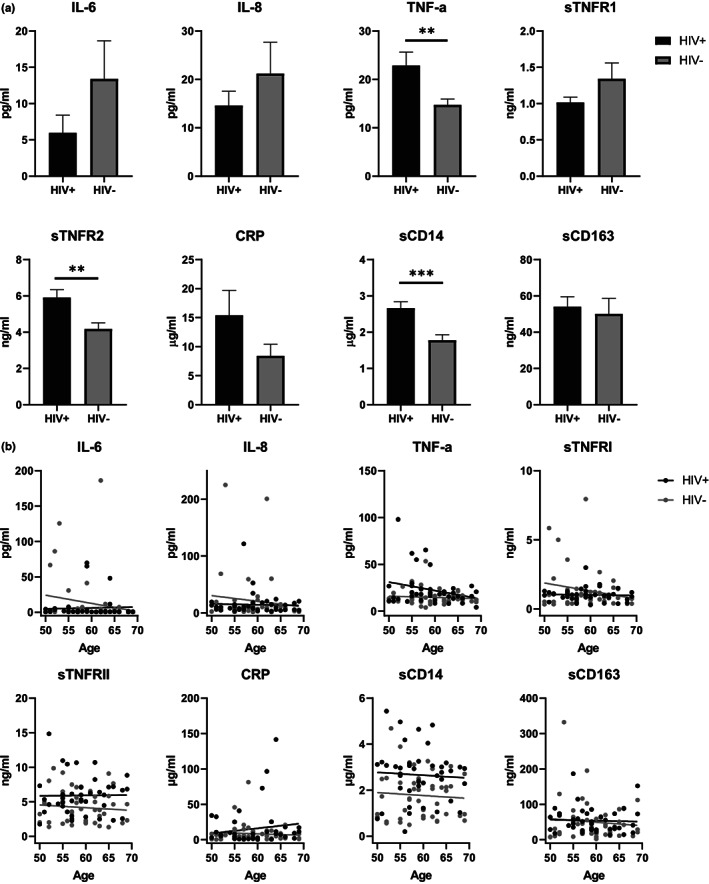
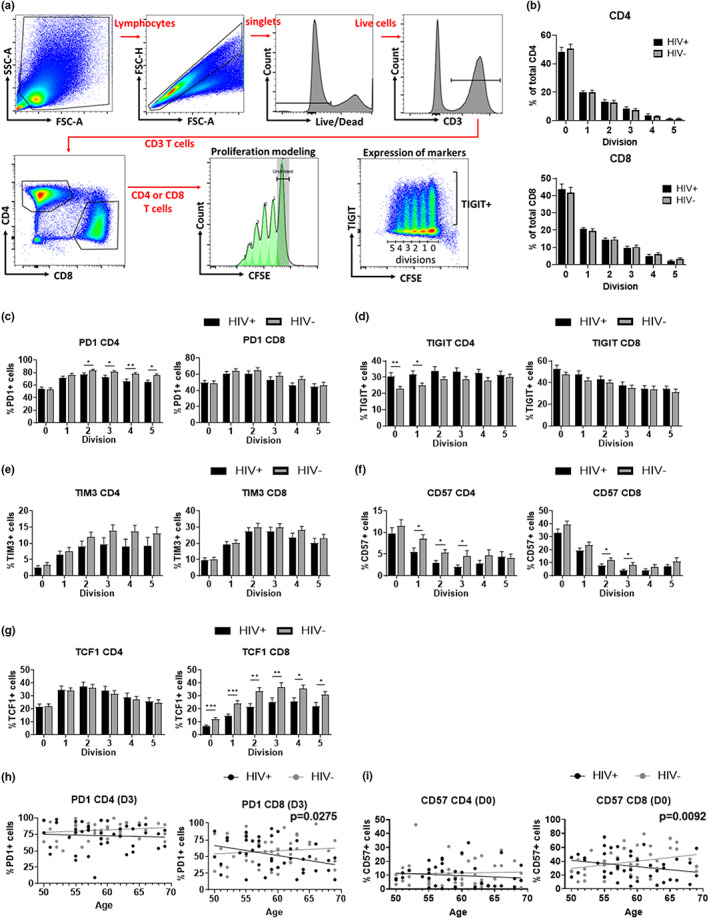
HIV-positive patients whose viral loads are successfully controlled by active antiretroviral therapy (ART) show no clinical signs of AIDS. However, their lifespan is shorter compared with individuals with no HIV infection and they prematurely exhibit a multitude of chronic diseases typically associated with advanced age. It was hypothesized that immune system aging may correlate with, and provide useful biomarkers for, this premature loss of healthspan in HIV-positive subjects. Here, we tested whether the immune correlates of aging, including cell numbers and phenotypes, inflammatory status, and control of human cytomegalovirus (hCMV) in HIV-positive subjects on long-term successful ART (HIV+) may reveal increased "immunological age" compared with HIV-negative, age-matched cohort (HIV-) in participants between 50 and 69 years of age. Specifically, we expected that younger HIV+ subjects may immunologically resemble older individuals without HIV. We found no evidence to support this hypothesis. While T cells from HIV+ participants displayed differential expression in several differentiation and/or inhibitory/exhaustion markers in different T cell subpopulations, aging by a decade did not pronounce these changes. Similarly, while the HIV+ participants exhibited higher T cell responses and elevated inflammatory marker levels in plasma, indicative of chronic inflammation, this trait was not age-sensitive. We did find differences in immune control of hCMV, and, more importantly, a sustained elevation of sCD14 and of proinflammatory CD4 and CD8 T cell responses across age groups, pointing towards uncontrolled inflammation as a factor in reduced healthspan in successfully treated older HIV+ patients.
Keywords: HIV; antiretroviral therapy; immune aging; sCD14.
© 2022 The Authors. Aging Cell published by Anatomical Society and John Wiley & Sons Ltd.
Conflict of interest statement
The authors declare that there is no conflict of interest.
Figures




References
-
- Althoff, K. N. , McGinnis, K. A. , Wyatt, C. M. , Freiberg, M. S. , Gilbert, C. , Oursler, K. K. , Rimland, D. , Rodriguez‐Barradas, M. C. , Dubrow, R. , Park, L. S. , Skanderson, M. , Shiels, M. S. , Gange, S. J. , Gebo, K. A. , Justice, A. C. , & Study Veterans Aging Cohort . (2015). Comparison of risk and age at diagnosis of myocardial infarction, end‐stage renal disease, and non‐AIDS‐defining cancer in HIV‐infected versus uninfected adults. Clinical Infectious Diseases, 60, 627–638. - PMC - PubMed
-
- Appay, V. , Almeida, J. R. , Sauce, D. , Autran, B. , & Papagno, L. (2007). Accelerated immune senescence and HIV‐1 infection. Experimental Gerontology, 42, 432–437. - PubMed
-
- Brenchley, J. M. , Price, D. A. , & Douek, D. C. (2006). HIV disease: Fallout from a mucosal catastrophe? Nature Immunology, 7, 235–239. - PubMed
Publication types
MeSH terms
Substances
Grants and funding
LinkOut - more resources
Full Text Sources
Medical
Research Materials
