Pigmentation biosynthesis influences the microbiome in sea urchins
- PMID: 35975446
- PMCID: PMC9382222
- DOI: 10.1098/rspb.2022.1088
Pigmentation biosynthesis influences the microbiome in sea urchins
Abstract
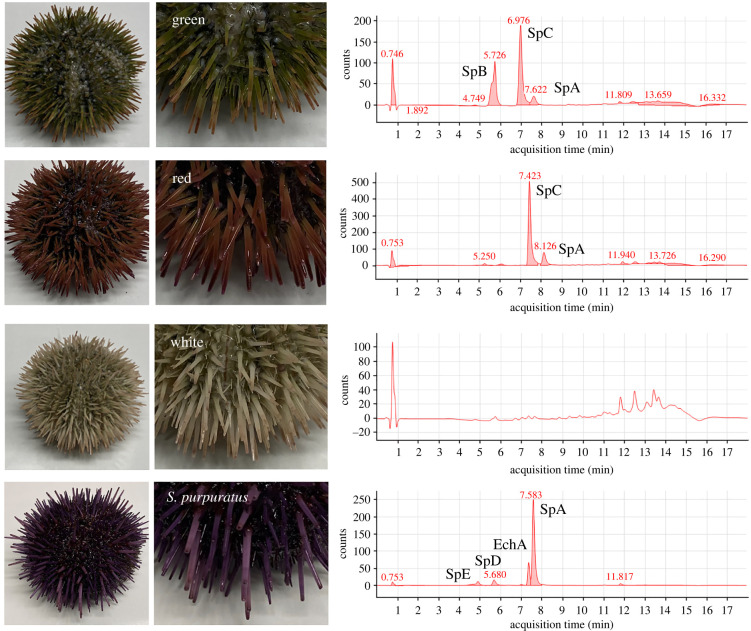
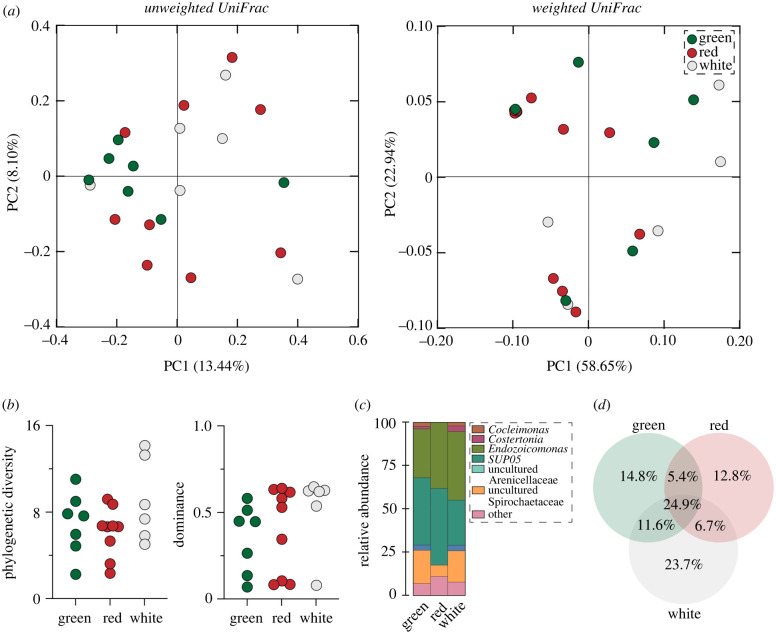
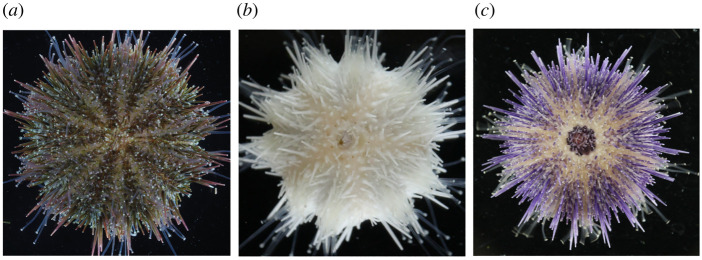
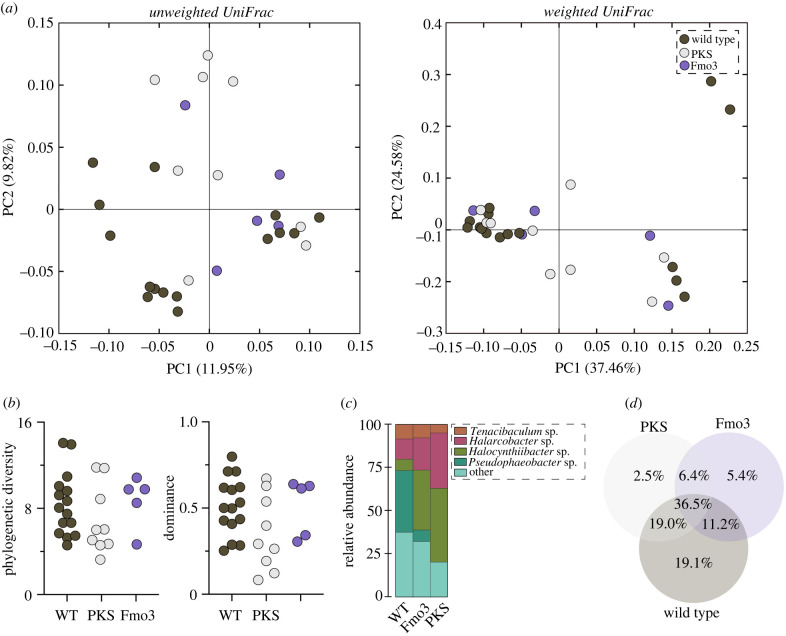
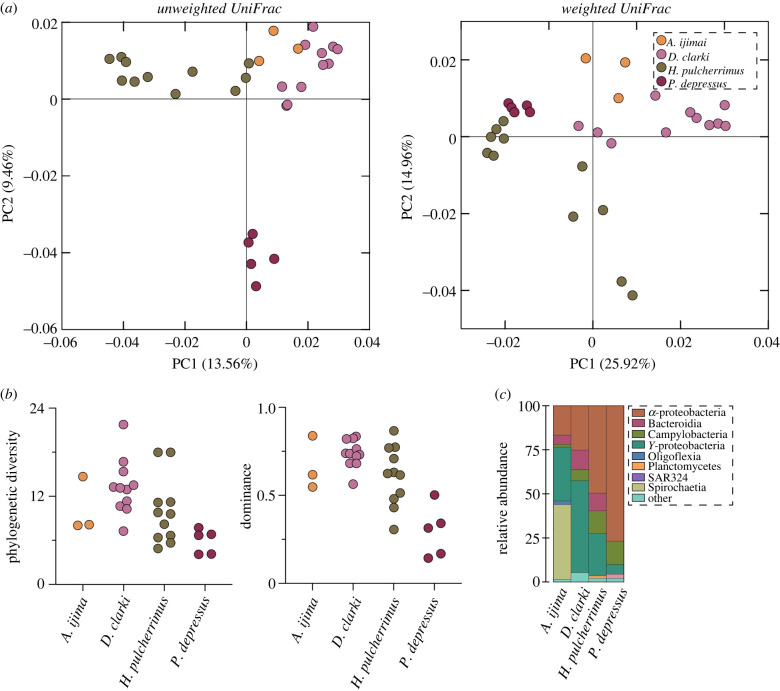
Organisms living on the seafloor are subject to encrustations by a wide variety of animals, plants and microbes. Sea urchins, however, thwart this covering. Despite having a sophisticated immune system, there is no clear molecular mechanism that allows sea urchins to remain free of epibiotic microorganisms. Here, we test the hypothesis that pigmentation biosynthesis in sea urchin spines influences their interactions with microbes in vivo using CRISPR/Cas9. We report three primary findings. First, the microbiome of sea urchin spines is species-specific and much of this community is lost in captivity. Second, different colour morphs associate with bacterial communities that are similar in taxonomic composition, diversity and evenness. Lastly, loss of the pigmentation biosynthesis genes polyketide synthase and flavin-dependent monooxygenase induces a shift in which bacterial taxa colonize sea urchin spines. Therefore, our results are consistent with the hypothesis that host pigmentation biosynthesis can, but may not always, influence the microbiome in sea urchin spines.
Keywords: echinoderm; flavin-dependent monooxygenase; host–microbe symbiosis; microbial communities; polyketide pigments; polyketide synthase.
Conflict of interest statement
We declare we have no competing interests.
Figures
Similar articles
-
More than a colour; how pigment influences colourblind microbes.Philos Trans R Soc Lond B Biol Sci. 2024 May 6;379(1901):20230077. doi: 10.1098/rstb.2023.0077. Epub 2024 Mar 18. Philos Trans R Soc Lond B Biol Sci. 2024. PMID: 38497266 Free PMC article. Review.
-
A molecular basis for spine color morphs in the sea urchin Lytechinus variegatus.Sci Rep. 2024 Nov 18;14(1):28518. doi: 10.1038/s41598-024-79312-3. Sci Rep. 2024. PMID: 39557917 Free PMC article.
-
Genetic manipulation of the pigment pathway in a sea urchin reveals distinct lineage commitment prior to metamorphosis in the bilateral to radial body plan transition.Sci Rep. 2020 Feb 6;10(1):1973. doi: 10.1038/s41598-020-58584-5. Sci Rep. 2020. PMID: 32029769 Free PMC article.
-
The Epibiotic Microbiota of Wild Caribbean Sea Urchin Spines Is Species Specific.Microorganisms. 2023 Feb 3;11(2):391. doi: 10.3390/microorganisms11020391. Microorganisms. 2023. PMID: 36838357 Free PMC article.
-
Analysis of immune response in the sea urchin larva.Methods Cell Biol. 2019;150:333-355. doi: 10.1016/bs.mcb.2018.10.009. Epub 2018 Dec 14. Methods Cell Biol. 2019. PMID: 30777183 Review.
Cited by
-
Spotting disease disrupts the microbiome of infected purple sea urchins, Strongylocentrotus purpuratus.BMC Microbiol. 2024 Jan 4;24(1):11. doi: 10.1186/s12866-023-03161-9. BMC Microbiol. 2024. PMID: 38172649 Free PMC article.
-
Recombinant SpTransformer proteins are functionally diverse for binding and phagocytosis by three subtypes of sea urchin phagocytes.Front Immunol. 2024 Apr 29;15:1372904. doi: 10.3389/fimmu.2024.1372904. eCollection 2024. Front Immunol. 2024. PMID: 38742116 Free PMC article.
-
More than a colour; how pigment influences colourblind microbes.Philos Trans R Soc Lond B Biol Sci. 2024 May 6;379(1901):20230077. doi: 10.1098/rstb.2023.0077. Epub 2024 Mar 18. Philos Trans R Soc Lond B Biol Sci. 2024. PMID: 38497266 Free PMC article. Review.
-
Gene regulatory divergence amongst echinoderms underlies appearance of pigment cells in sea urchin development.Dev Biol. 2023 Feb;494:13-25. doi: 10.1016/j.ydbio.2022.11.008. Epub 2022 Nov 26. Dev Biol. 2023. PMID: 36519720 Free PMC article.
-
Bald sea urchin disease shifts the surface microbiome on purple sea urchins in an aquarium.Pathog Dis. 2023 Jan 17;81:ftad025. doi: 10.1093/femspd/ftad025. Pathog Dis. 2023. PMID: 37715299 Free PMC article.
References
-
- Hyman L. 1955. The invertebrates. New York, NY: McGraw-Hill.
-
- Smith L, et al. 2018. Echinodermata: the complex immune system in echinoderms. In Advances in comparative immunology (ed. Cooper E), pp. 409-501. Berlin, Germany: Springer.
-
- O'Hara T, Byrne M. 2017. Australian echinoderms: biology, ecology and evolution. Victoria, Australia: CSIRO Publishing.
Publication types
MeSH terms
Substances
Associated data
LinkOut - more resources
Full Text Sources
Miscellaneous