


Acute Neuromuscular, Physiological and Performance Responses After Strength Training in Runners: A Systematic Review and Meta-Analysis
- PMID: 35976540
- PMCID: PMC9385928
- DOI: 10.1186/s40798-022-00497-w
Acute Neuromuscular, Physiological and Performance Responses After Strength Training in Runners: A Systematic Review and Meta-Analysis
Abstract
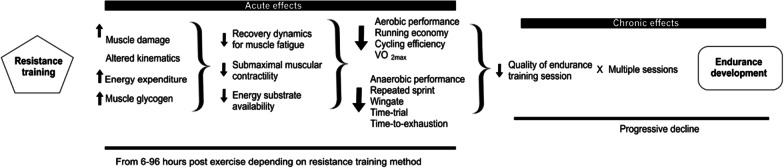
Background: Strength training (ST) is commonly used to improve muscle strength, power, and neuromuscular adaptations and is recommended combined with runner training. It is possible that the acute effects of the strength training session lead to deleterious effects in the subsequent running. The aim of this systematic review and meta-analysis was to verify the acute effects of ST session on the neuromuscular, physiological and performance variables of runners.
Methods: Studies evaluating running performance after resistance exercise in runners in the PubMed and Scopus databases were selected. From 6532 initial references, 19 were selected for qualitative analysis and 13 for meta-analysis. The variables of peak torque (PT), creatine kinase (CK), delayed-onset muscle soreness (DOMS), rating of perceived exertion (RPE), countermovement jump (CMJ), ventilation (VE), oxygen consumption (VO2), lactate (La) and heart rate (HR) were evaluated.
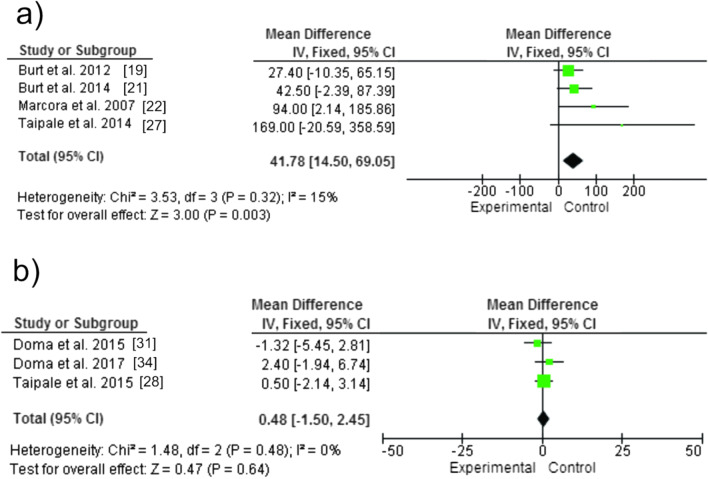
Results: The methodological quality of the included studies was considered reasonable; the meta-analysis indicated that the variables PT (p = 0.003), DOMS (p < 0.0001), CK (p < 0.0001), RPE (p < 0.0001) had a deleterious effect for the experimental group; for CMJ, VE, VO2, La, FC there was no difference. By qualitative synthesis, running performance showed a reduction in speed for the experimental group in two studies and in all that assessed time to exhaustion.
Conclusion: The evidence indicated that acute strength training was associated with a decrease in PT, increases in DOMS, CK, RPE and had a low impact on the acute responses of CMJ, VE, VO2, La, HR and submaximal running sessions.
Keywords: Aerobic performance; Competitive training; Running; Strength training.
© 2022. The Author(s).
Conflict of interest statement
Gustavo Ivo de Carvalho e Silva, Leandro Henrique Albuquerque Brandão, Deivisson dos Santos Silva, Micael Deivison de Jesus Alves, Felipe J. Aidar, Matheus Santos de Sousa Fernandes, Ricardo Aurélio Carvalho Sampaio, Beat Knechtle and Raphael Fabricio de Souza declare that they have no competing interests.
Figures



References
Publication types
LinkOut - more resources
Full Text Sources
Research Materials
