


Relation of CDC42, Th1, Th2, and Th17 cells with cognitive function decline in Alzheimer's disease
- PMID: 35976992
- PMCID: PMC9463943
- DOI: 10.1002/acn3.51643
Relation of CDC42, Th1, Th2, and Th17 cells with cognitive function decline in Alzheimer's disease
Abstract
Objective: Cell division cycle 42 (CDC42) regulates neurite outgrowth, neurotransmitter, and T help (Th) cell-mediated neuroinflammation, while its clinical implication in Alzheimer's disease (AD) is not clear. The present study aimed to investigate the correlation of CDC42 with Th1, Th2, and Th17 cells, as well as CDC42' longitudinal change and relation to cognitive function decline in AD patients.
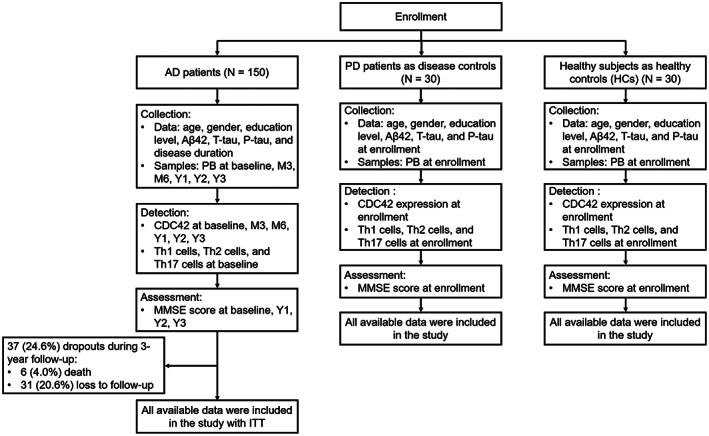
Methods: 150 AD patients were enrolled, then their blood Th1, Th2, and Th17 cells were quantified by flow cytometry at baseline; CDC42 was detected by RT-qPCR and MMSE score was assessed at baseline and during 3-year follow-up. Meanwhile, CDC42, Th1, Th2, and Th17 cells were quantified in 30 Parkinson's disease (PD) patients and 30 healthy controls (HCs).
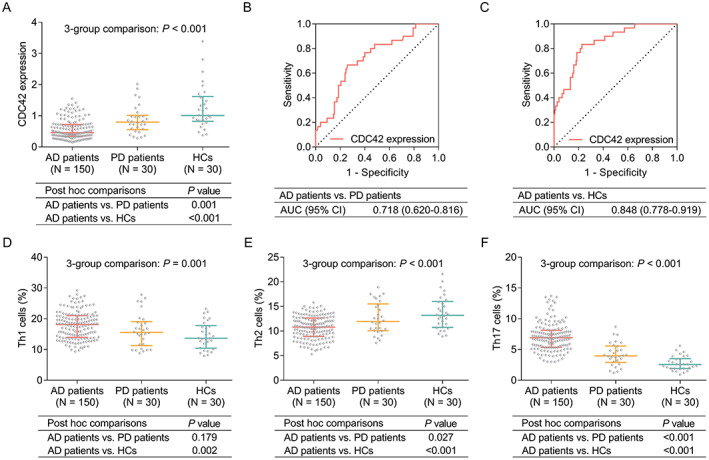
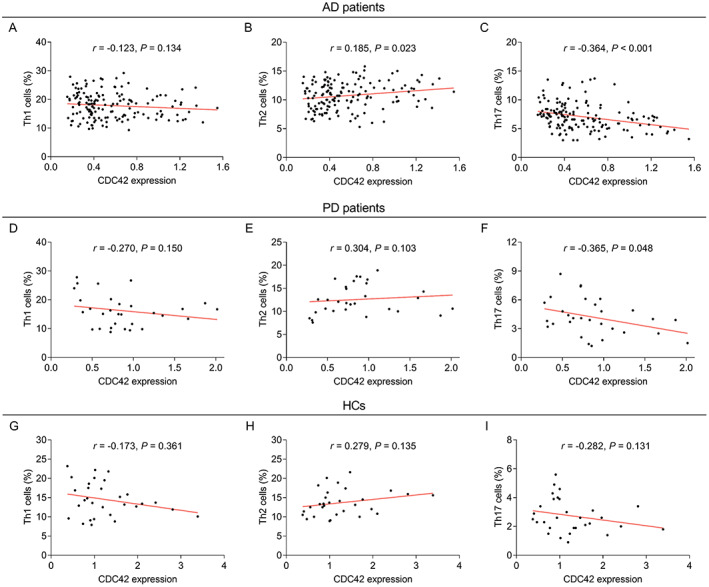
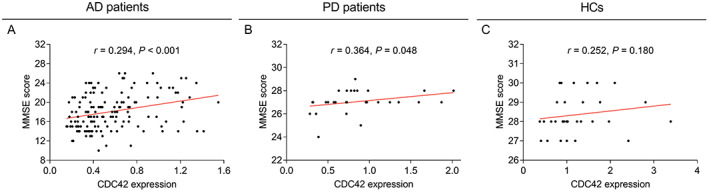
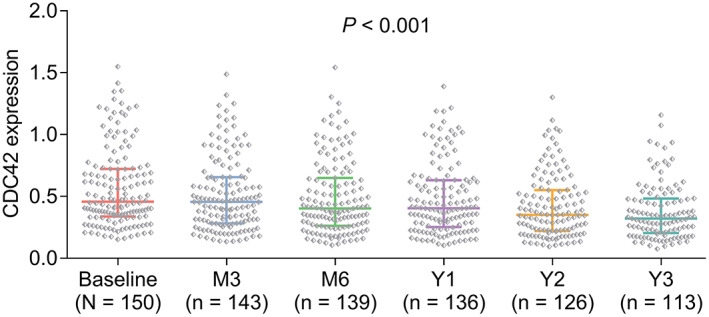
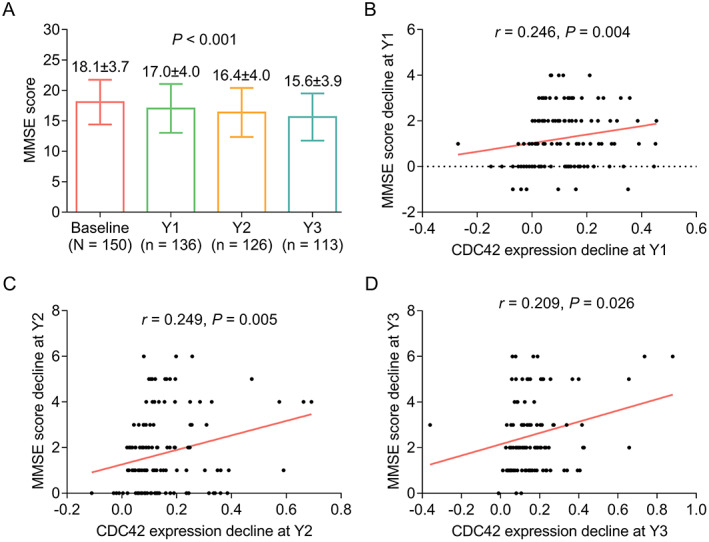
Results: CDC42 (p < 0.001) and Th2 cells (p < 0.001) were lowest in AD patients, followed by PD patients, highest in HCs; but Th1 cells (p = 0.001) and Th17 cells (p < 0.001) showed opposite trends. CDC42 was not related to Th1 cells (p = 0.134), positively correlated with Th2 cells (p = 0.023) and MMSE (p < 0.001), while negatively associated with Th17 cells (p < 0.001) in AD patients. CDC42 was only related to Th17 cells (p = 0.048) and MMSE (p = 0.048) in PD patients; and it was not linked with Th1, Th2, Th17 cells, or MMSE in HCs (all p > 0.05). During a 3-year follow-up, CDC42 was gradually declined in AD patients (p < 0.001), its decline was positively correlated with MMSE decline at 1 year (p = 0.004), 2 years (p = 0.005), and 3 years (p = 0.026).
Interpretation: CDC42 might have the potency to serve as a biomarker for estimating AD risk and progression.
© 2022 The Authors. Annals of Clinical and Translational Neurology published by Wiley Periodicals LLC on behalf of American Neurological Association.
Conflict of interest statement
The authors declare that they have no conflict of interest.
Figures
References
-
- Zhang XX, Tian Y, Wang ZT, Ma YH, Tan L, Yu JT. The epidemiology of Alzheimer's disease modifiable risk factors and prevention. J Prev Alzheimers Dis. 2021;8:313‐321. - PubMed
-
- Lopez OL, Kuller LH. Epidemiology of aging and associated cognitive disorders: prevalence and incidence of Alzheimer's disease and other dementias. Handb Clin Neurol. 2019;167:139‐148. - PubMed
MeSH terms
LinkOut - more resources
Full Text Sources
Medical
Miscellaneous