


Impact of Somatic Mutations on Survival Outcomes in Patients With Anaplastic Thyroid Carcinoma
- PMID: 35977347
- PMCID: PMC10530586
- DOI: 10.1200/PO.21.00504
Impact of Somatic Mutations on Survival Outcomes in Patients With Anaplastic Thyroid Carcinoma
Abstract
Purpose: Anaplastic thyroid carcinoma (ATC) uniformly present with aggressive disease, but the mutational landscape of tumors varies. We aimed to determine whether tumor mutations affect survival outcomes in ATC.
Materials and methods: Patients who underwent mutation sequencing using targeted gene panels between 2005 and 2019 at a tertiary referral center were included. Associations between mutation status and survival outcomes were assessed using Cox proportional hazards models.
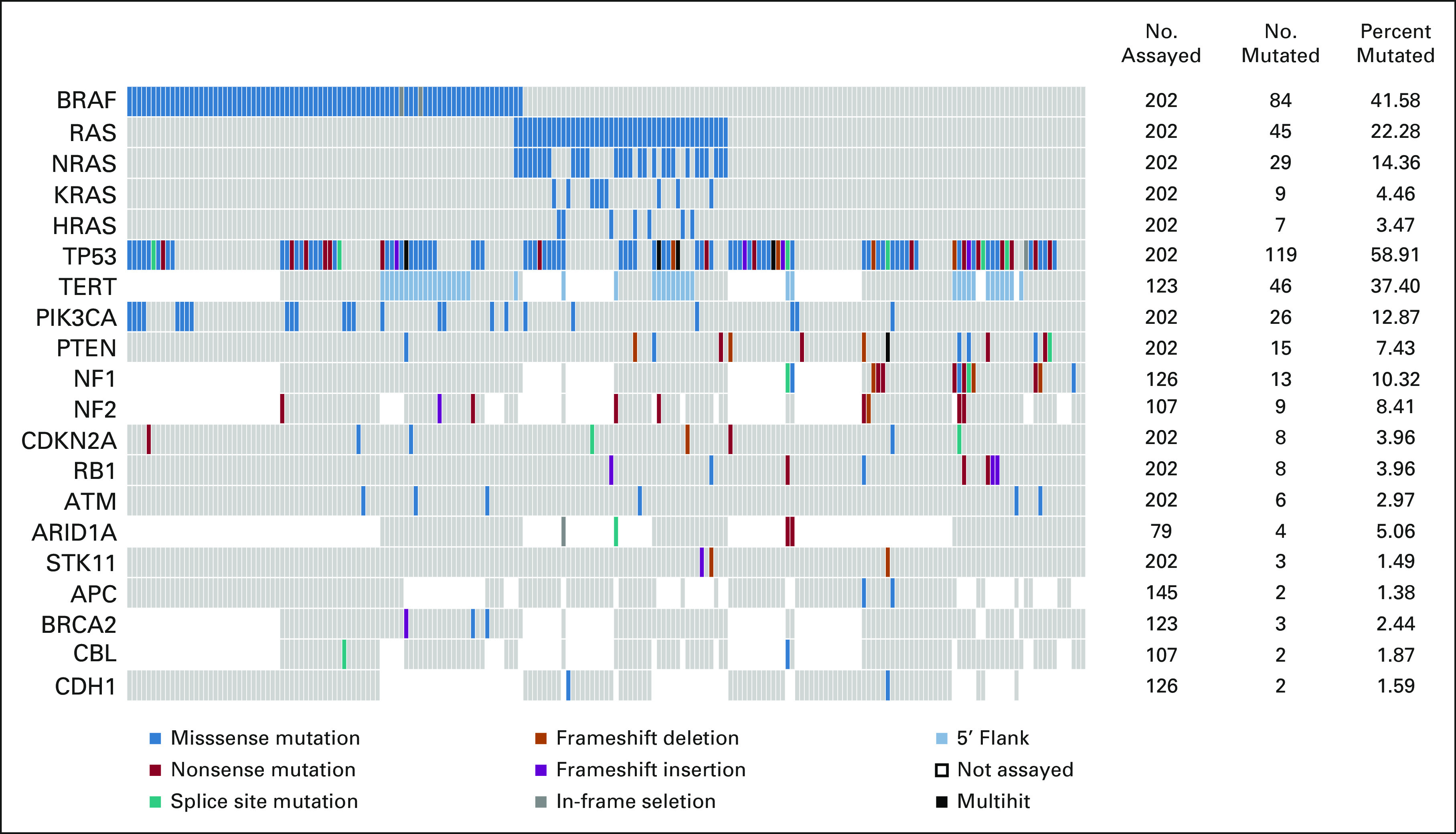
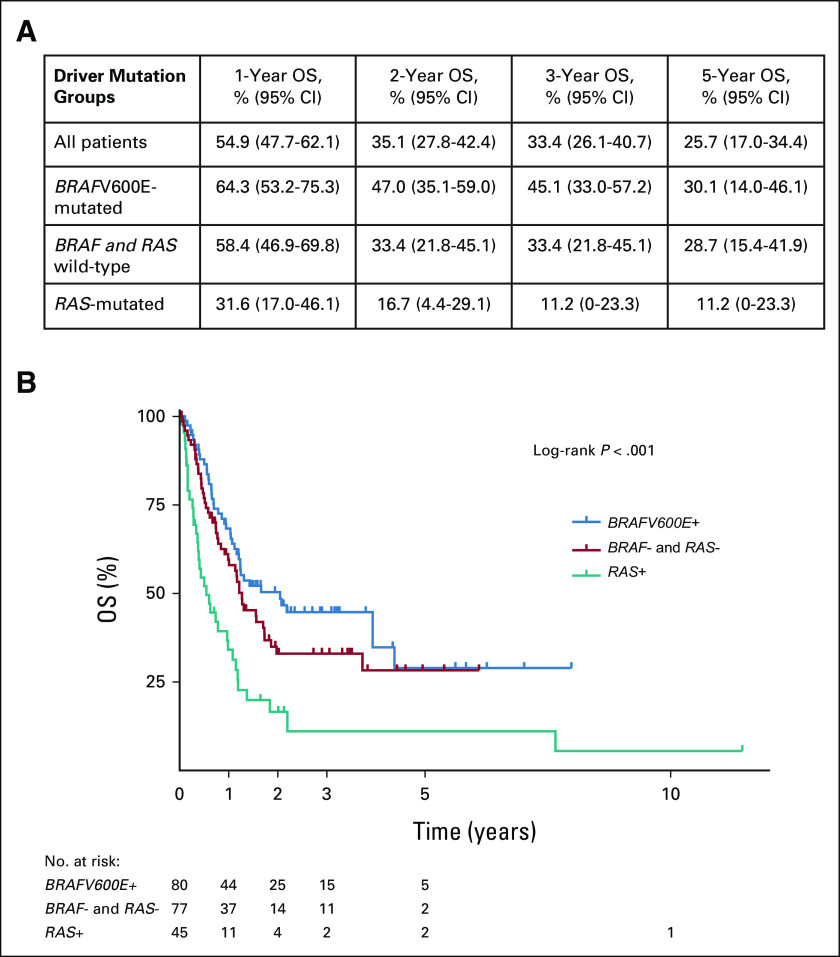
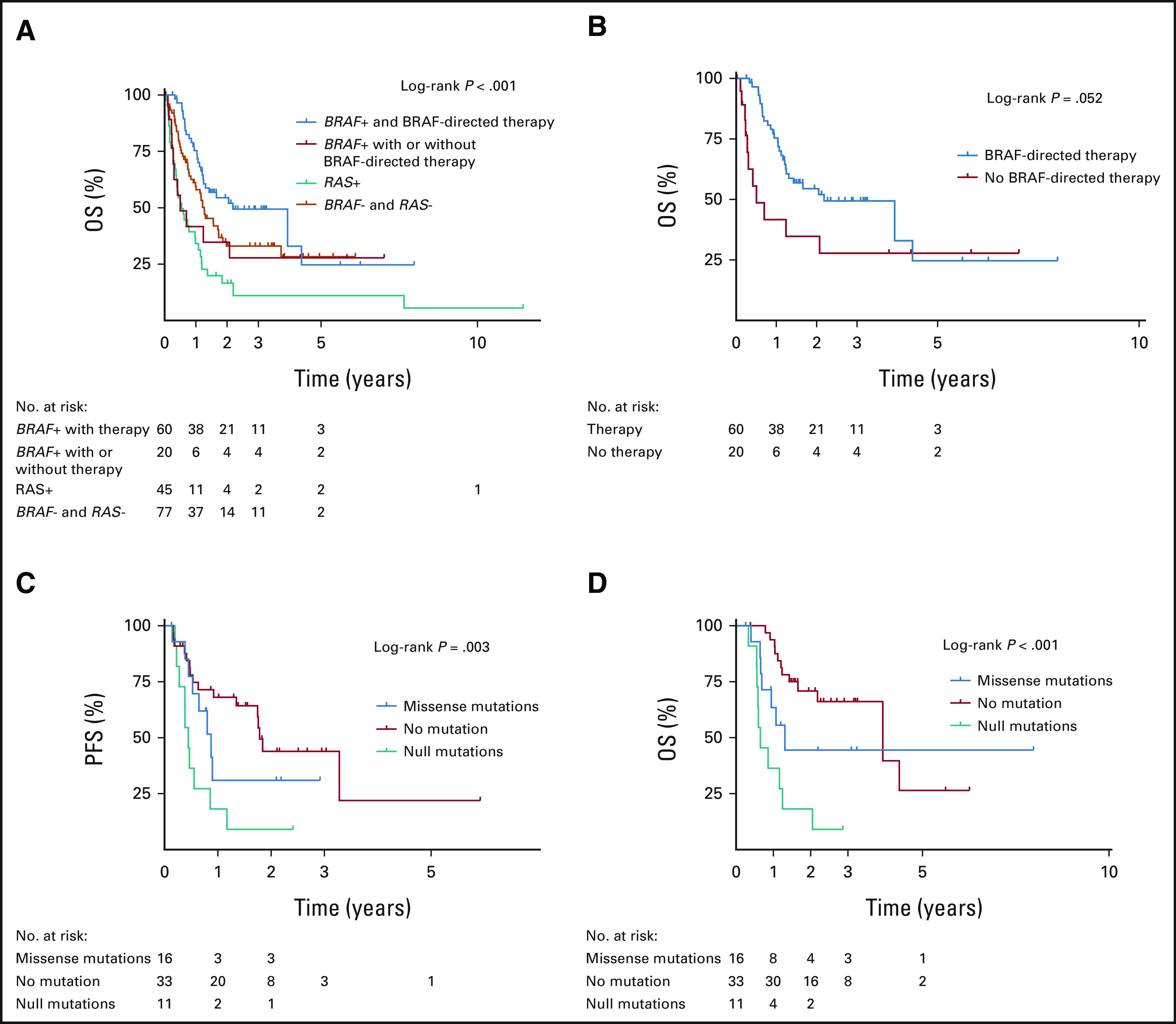
Results: A total of 202 patients were included, where 122 died of ATC (60%). The median follow-up was 31 months (interquartile range, 18-45 months). The most common mutations were in TP53 (59%), BRAF (41%), TERT promoter (37%), and the RAS gene family (22%). Clinicopathologic characteristics and overall survival (OS) significantly correlated with mutations in BRAFV600E and RAS, which were mutually exclusive. The BRAFV600E mutation was associated with the presence of a papillary thyroid carcinoma precursor and significantly better OS (median OS: 24 months). RAS-mutated patients more commonly presented without cervical lymph node involvement but had the worst OS (median OS: 6 months). Tumors that were wild-type for both BRAF and RAS were enriched for NF1 mutations and harbored intermediate prognosis (median OS: 15 months). In multivariate analyses, RAS mutations were associated with a more than 2.5-fold higher risk of death (adjusted hazard ratio, 2.64; 95% CI, 1.66 to 4.20) compared with BRAFV600E. In patients treated with BRAF-directed therapy (n = 60), disease progression occurred in 48% of patients (n = 29). The median progression-free survival was 14 months. The presence of a TP53 mutation was independently associated with reduced progression-free survival in BRAFV600E-mutated patients treated with BRAF-directed therapy (adjusted hazard ratio, 2.89; 95% CI, 1.35 to 6.21).
Conclusion: Mutation analysis provides prognostic information in ATC and should be incorporated into routine clinical care.
Conflict of interest statement
The following represents disclosure information provided by authors of this manuscript. All relationships are considered compensated unless otherwise noted. Relationships are self-held unless noted. I = Immediate Family Member, Inst = My Institution. Relationships may not relate to the subject matter of this manuscript. For more information about ASCO's conflict of interest policy, please refer to
Open Payments is a public database containing information reported by companies about payments made to US-licensed physicians (
No other potential conflicts of interest were reported.
Figures
References
-
- Sugitani I, Miyauchi A, Sugino K, et al. : Prognostic factors and treatment outcomes for anaplastic thyroid carcinoma: ATC Research Consortium of Japan Cohort Study of 677 patients. World J Surg 36:1247-1254, 2012 - PubMed
-
- Prasongsook N, Kumar A, Chintakuntlawar Av, et al. : Survival in response to multimodal therapy in anaplastic thyroid cancer. J Clin Endocrinol Metab 102:4506-4514, 2017 - PubMed
Publication types
MeSH terms
Substances
Grants and funding
LinkOut - more resources
Full Text Sources
Medical
Research Materials
Miscellaneous
