


Adolescent social emotional skills, resilience and behavioral problems during the COVID-19 pandemic: A longitudinal study in three European countries
- PMID: 35978848
- PMCID: PMC9376252
- DOI: 10.3389/fpsyt.2022.942692
Adolescent social emotional skills, resilience and behavioral problems during the COVID-19 pandemic: A longitudinal study in three European countries
Abstract
Objectives: The consequences of long-lasting restrictions related to the COVID-19 pandemic have become a topical question in the latest research. The present study aims to analyze longitudinal changes in adolescents' social emotional skills, resilience, and behavioral problems. Moreover, the study addresses the impact of adolescents' social emotional learning on changes in their resilience and behavioral problems over the course of seven months of the pandemic.
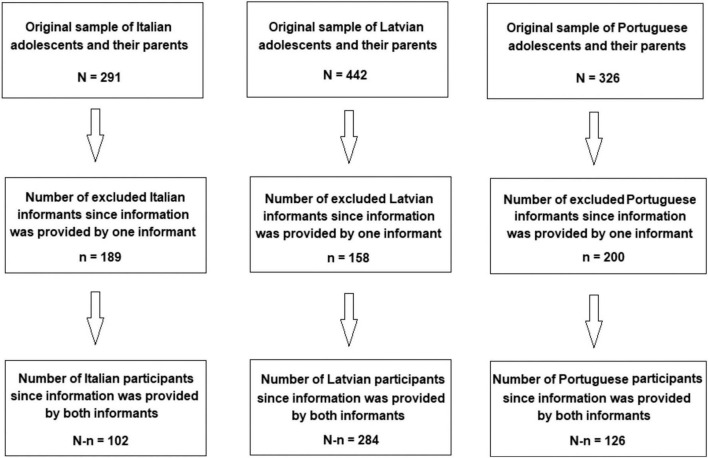
Methods: The Time 1 (T1) and Time 2 (T2) measuring points were in October 2020 and May 2021, characterized by high mortality rates and strict restrictions in Europe. For all three countries combined, 512 questionnaires were answered by both adolescents (aged 11-13 and 14-16 years) and their parents. The SSIS-SEL and SDQ student self-report and parent forms were used to evaluate adolescents' social emotional skills and behavioral problems. The CD-RISC-10 scale was administered to adolescents to measure their self-reported resilience. Several multilevel models were fitted to investigate the changes in adolescents' social emotional skills, resilience, and behavioral problems, controlling for age and gender. Correlation analysis was carried out to investigate how changes in the adolescents' social emotional skills were associated with changes in their resilience and mental health adjustment.
Results: Comparing T1 and T2 evaluations, adolescents claim they have more behavioral problems, have less social emotional skills, and are less prosocial than perceived by their parents, and this result applies across all countries and age groups. Both informants agree that COVID-19 had a negative impact, reporting an increment in the mean internalizing and externalizing difficulties scores and reductions in social emotional skills, prosocial behavior, and resilience scores. However, these changes are not very conspicuous, and most of them are not significant. Correlation analysis shows that changes in adolescents' social emotional skills are negatively and significantly related to changes in internalized and externalized problems and positively and significantly related to changes in prosocial behavior and resilience. This implies that adolescents who experienced larger development in social emotional learning also experienced more increase in resilience and prosocial behavior and a decrease in difficulties.
Conclusion: Due to its longitudinal design, sample size, and multi-informant approach, this study adds to a deeper understanding of the pandemic's consequences on adolescents' mental health.
Keywords: COVID-19; adolescents; behavioral problems; longitudinal research; mental health; multi-informant approach; social emotional learning.
Copyright © 2022 Martinsone, Stokenberga, Damberga, Supe, Simões, Lebre, Canha, Santos, Santos, Fonseca, Santos, Gaspar de Matos, Conte, Agliati, Cavioni, Gandellini, Grazzani, Ornaghi and Camilleri.
Conflict of interest statement
The authors declare that the research was conducted in the absence of any commercial or financial relationships that could be construed as a potential conflict of interest.
Figures
References
LinkOut - more resources
Full Text Sources
