


Rebuilding trust in proton pump inhibitor therapy
- PMID: 35979162
- PMCID: PMC9260870
- DOI: 10.3748/wjg.v28.i24.2667
Rebuilding trust in proton pump inhibitor therapy
Abstract
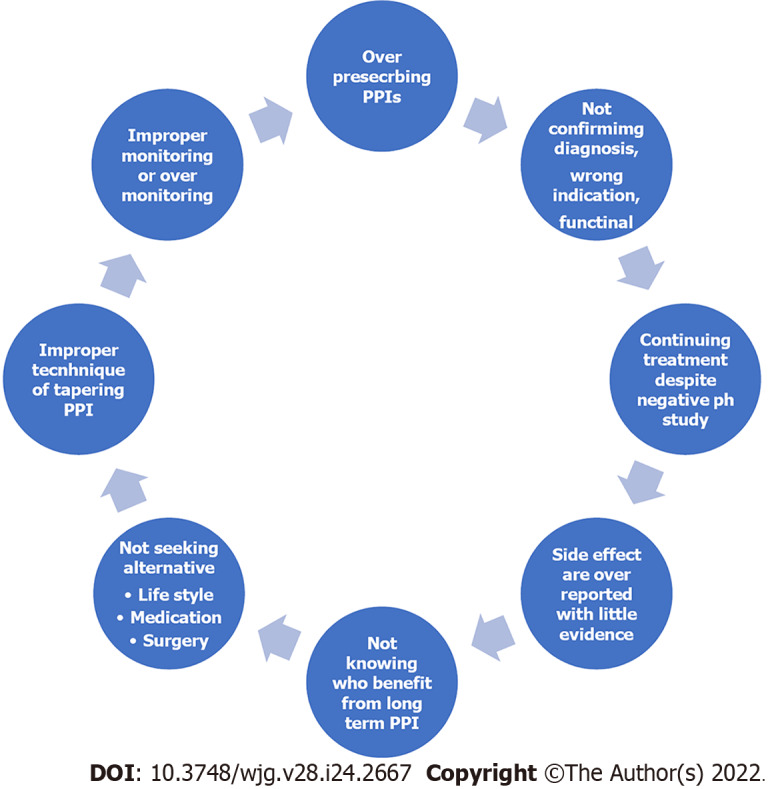
Introduction of proton pump inhibitor (PPI) therapy into clinical practice has revolutionized treatment approach to acid-related diseases. With its clinical success came a widespread use of PPI therapy. Subsequently, several studies found that PPIs were oftentimes overprescribed in primary care and emergency setting, likely attributed to seemingly low side-effect profile and physicians having low threshold to initiate therapy. However, now there is a growing concern over PPI side-effect profile among both patients and providers. We would like to bring more awareness to the currently available guidelines on PPI use, discuss clinical indications for PPIs and the evidence behind the reported side-effects. We hope that increased awareness of proper PPI use will make the initiation or continuation of therapy a well informed and an evidence-based decision between patient and physician. We also hope that discussing evidence behind the reported side-effect profile will help clarify the growing concerns over PPI therapy.
Keywords: Gastro-esophageal reflux disease; Proton pump inhibitor; Side-effects; Therapy.
©The Author(s) 2022. Published by Baishideng Publishing Group Inc. All rights reserved.
Conflict of interest statement
Conflict-of-interest statement: There are no conflicts of interest to report.
Figures
References
-
- Chiba T, Malfertheiner P, Satoh H. Proton Pump Inhibitors: A Balanced View. Front Gastrointest Res. 2013;32:1–17.
-
- Lassen AT. Acid-related disorders and use of antisecretory medication. Dan Med Bull. 2007;54:18–30. - PubMed
-
- Robinson M, Horn J. Clinical pharmacology of proton pump inhibitors: what the practising physician needs to know. Drugs. 2003;63:2739–2754. - PubMed
Publication types
MeSH terms
Substances
LinkOut - more resources
Full Text Sources
Medical
