


Gray wolf optimization-extreme learning machine approach for diabetic retinopathy detection
- PMID: 35979449
- PMCID: PMC9376263
- DOI: 10.3389/fpubh.2022.925901
Gray wolf optimization-extreme learning machine approach for diabetic retinopathy detection
Abstract
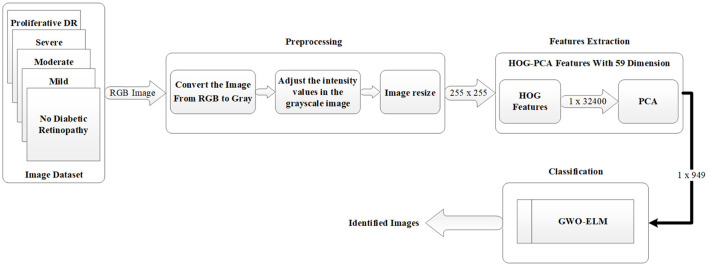
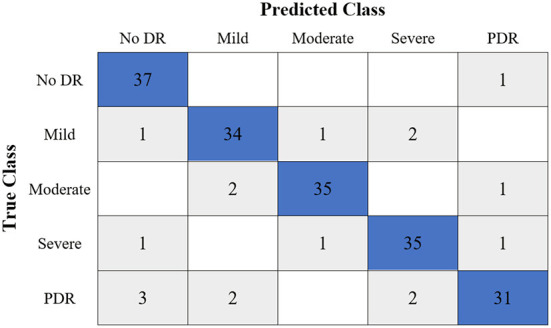
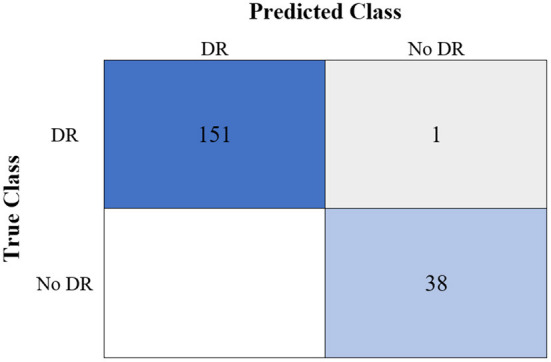
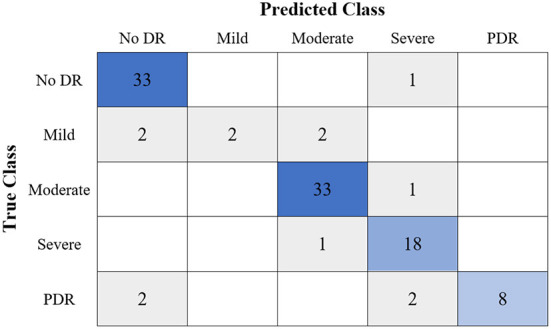
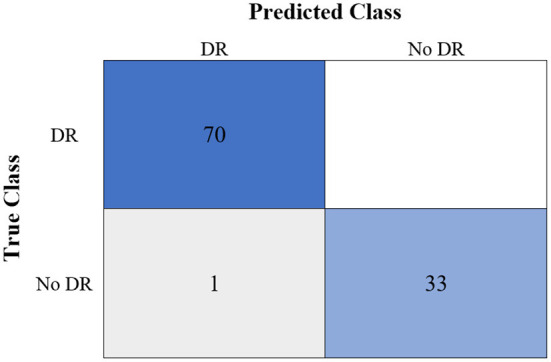
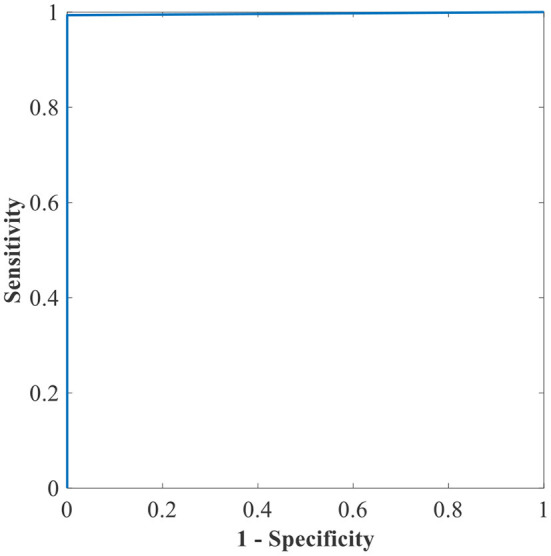
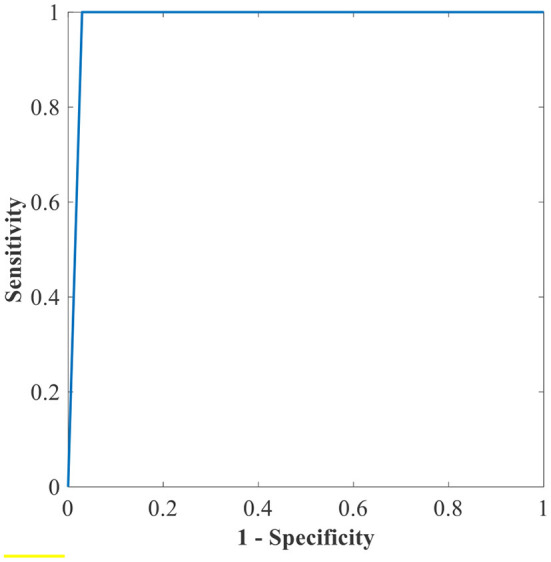
Many works have employed Machine Learning (ML) techniques in the detection of Diabetic Retinopathy (DR), a disease that affects the human eye. However, the accuracy of most DR detection methods still need improvement. Gray Wolf Optimization-Extreme Learning Machine (GWO-ELM) is one of the most popular ML algorithms, and can be considered as an accurate algorithm in the process of classification, but has not been used in solving DR detection. Therefore, this work aims to apply the GWO-ELM classifier and employ one of the most popular features extractions, Histogram of Oriented Gradients-Principal Component Analysis (HOG-PCA), to increase the accuracy of DR detection system. Although the HOG-PCA has been tested in many image processing domains including medical domains, it has not yet been tested in DR. The GWO-ELM can prevent overfitting, solve multi and binary classifications problems, and it performs like a kernel-based Support Vector Machine with a Neural Network structure, whilst the HOG-PCA has the ability to extract the most relevant features with low dimensionality. Therefore, the combination of the GWO-ELM classifier and HOG-PCA features might produce an effective technique for DR classification and features extraction. The proposed GWO-ELM is evaluated based on two different datasets, namely APTOS-2019 and Indian Diabetic Retinopathy Image Dataset (IDRiD), in both binary and multi-class classification. The experiment results have shown an excellent performance of the proposed GWO-ELM model where it achieved an accuracy of 96.21% for multi-class and 99.47% for binary using APTOS-2019 dataset as well as 96.15% for multi-class and 99.04% for binary using IDRiD dataset. This demonstrates that the combination of the GWO-ELM and HOG-PCA is an effective classifier for detecting DR and might be applicable in solving other image data types.
Keywords: Diabetic Retinopathy; Histogram of Oriented Gradients; Principal Component Analysis; extreme learning machine; gray wolf optimization.
Copyright © 2022 Albadr, Ayob, Tiun, AL-Dhief and Hasan.
Conflict of interest statement
The authors declare that the research was conducted in the absence of any commercial or financial relationships that could be construed as a potential conflict of interest.
Figures

References
-
- Akram MU, Khalid S. Khan SIdentification A. and classification of microaneurysms for early detection of diabetic retinopathy. Pattern Recognit. (2013) 46:107–16. 10.1016/j.patcog.2012.07.002 - DOI
-
- Taylor R, Batey D. Handbook of Retinal Screening in Diabetes: Diagnosis and Management. Hoboken, NJ: John Wiley and Sons; (2012).
-
- AL-Dhief FT, Latiff ANM, Baki MM, Malik NNA N, Sabri N, Albadr MAA. Voice pathology detection using support vector machine based on different number of voice signals. In: 2021 26th IEEE Asia-Pacific Conference on Communications (APCC). Kuala Lumpur: IEEE; (2021). p. 1–6.
-
- AL-Dhief FT, Latiff ANM, Malik NNA N, Sabri N, Baki MM, Albadr MAA, et al. Voice pathology detection using machine learning technique. In: 2020 IEEE 5th International Symposium on Telecommunication Technologies (ISTT). Shah Alam: IEEE; (2020). p. 99–104.
-
- Al-Dhief FT, Latiff ANM, Malik NNA N, Salim NS, Baki MM, Albadr MAA, et al. A survey of voice pathology surveillance systems based on Internet of Things and machine learning algorithms. IEEE Access. (2020) 8:64514–33. 10.1109/ACCESS.2020.2984925 - DOI
MeSH terms
LinkOut - more resources
Full Text Sources
Other Literature Sources
Medical
