A retrospective study of risk factors for early-onset neonatal sepsis with intrapartum maternal fever
- PMID: 35979478
- PMCID: PMC9377330
- DOI: 10.7717/peerj.13834
A retrospective study of risk factors for early-onset neonatal sepsis with intrapartum maternal fever
Abstract
Background: Intrapartum fever is a well-known risk factor for adverse perinatal outcomes. In this study, we evaluated the clinical features for intrapartum maternal fever and investigated the risk factors for neonatal early-onset sepsis (EOS) with intrapartum maternal fever.
Methods: This retrospective cohort study involved a total of 568 neonates born to mothers with intrapartum maternal fever (temperature peak ≥38 degree Celsius) in Hangzhou Women's Hospital from January 1st to December 31st, 2019. Neonates were assigned to the EOS and non-sepsis groups based on the diagnostic criteria for early-onset neonatal sepsis,. Demographic data, clinical information and laboratory test results were evaluated to assess the risk factors for EOS.
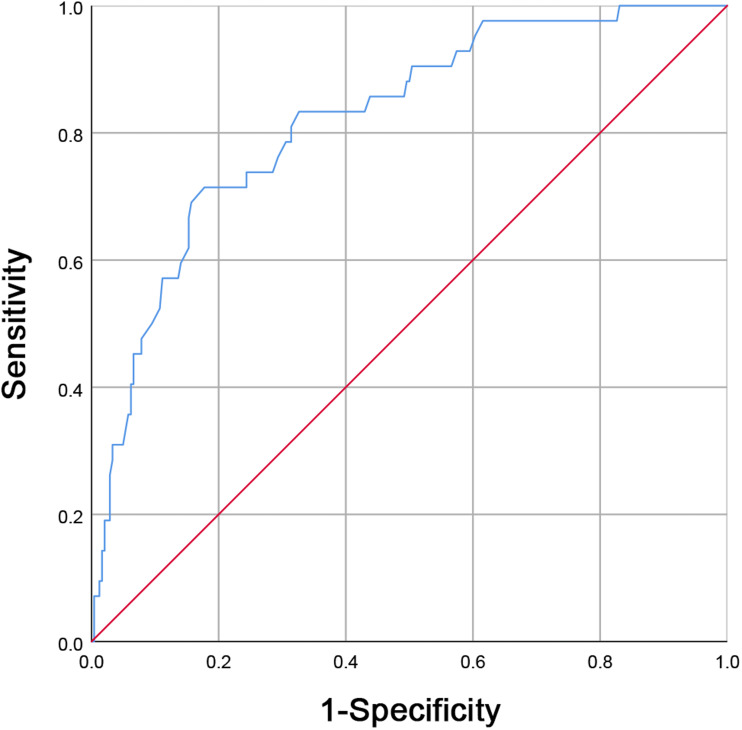
Results: A total of 568 neonates were included in this study, 84 of whom were diagnosed with EOS. The EOS group was significantly different from the non-sepsis group in 11 items including the both white blood cell (WBC) count and C-reactive protein (CRP) level of the mother before delivery (p < 0.05). A logistic regression analysis revealed that a high maternal WBC count before delivery (OR = 3.261, p = 0.019) and a maternal histological chorioamnionitis (HCA) diagnosis (OR = 5.608, p = 0.002) were independent risk factors for EOS. The optimal cut-off value for WBC (before delivery) was 16.75 × 10*9/L for EOS, according to receiver operating characteristic analysis (area under curve was 0.821).
Conclusions: Elevated prenatal maternal WBC counts and maternal HCA diagnosis are both independently associated with EOS. Prenatal maternal WBC counts can be used as a sensitive indicator to predict EOS early.
Keywords: Chorioamnionitis; Maternal fever; Neonatal sepsis; Risk factors; White blood cell.
©2022 An et al.
Conflict of interest statement
The authors declare there are no competing interests.
Figures
References
-
- Ashwal E, Salman L, Tzur Y, Aviram A, Ben-Mayor Bashi T, Yogev Y, Hiersch L. Intrapartum fever and the risk for perinatal complications—the effect of fever duration and positive cultures. Journal of Maternal-Fetal and Neonatal Medicine. 2018;31:1418–1425. doi: 10.1080/14767058.2017.1317740. - DOI - PubMed
Publication types
MeSH terms
LinkOut - more resources
Full Text Sources
Medical
Research Materials
Miscellaneous