


May the Nitrosative and Carbonyl Stress Promote Inflammation in Patients with Colorectal Cancer?
- PMID: 35979507
- PMCID: PMC9377401
- DOI: 10.2147/JIR.S374387
May the Nitrosative and Carbonyl Stress Promote Inflammation in Patients with Colorectal Cancer?
Abstract
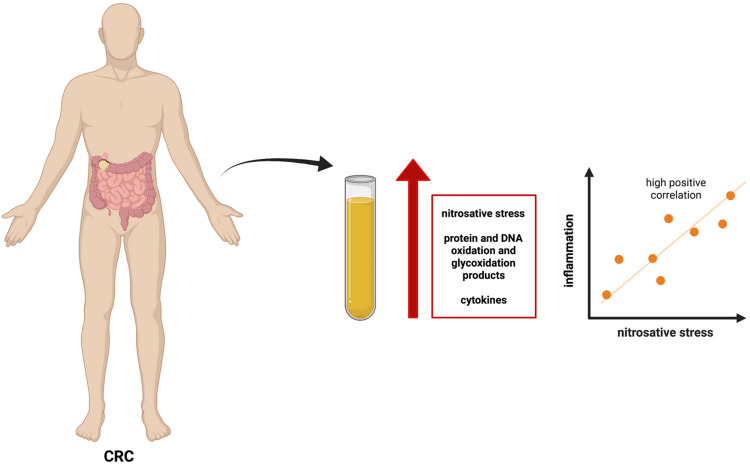
Purpose: Overproduction of reactive nitrogen species (RNS) causes the nitrosative stress, which plays a vital role in the development of metabolic, inflammatory, and cancerous diseases. However, the role of nitrosative and carbonyl stress in the biology of colorectal cancer (CRC) is still not well understood. Therefore, this study evaluated nitrosative stress, protein and DNA oxidation/glycoxidation, and pro- and anti-inflammatory cytokines in CRC patients compared with healthy controls.
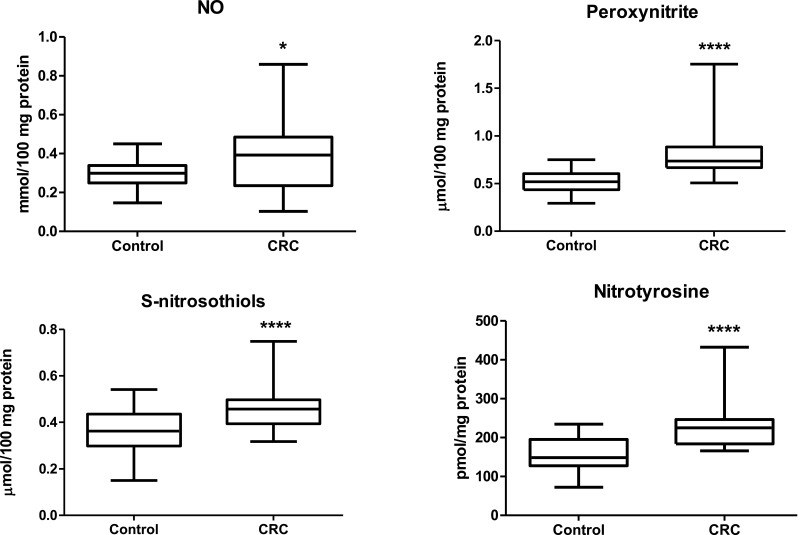
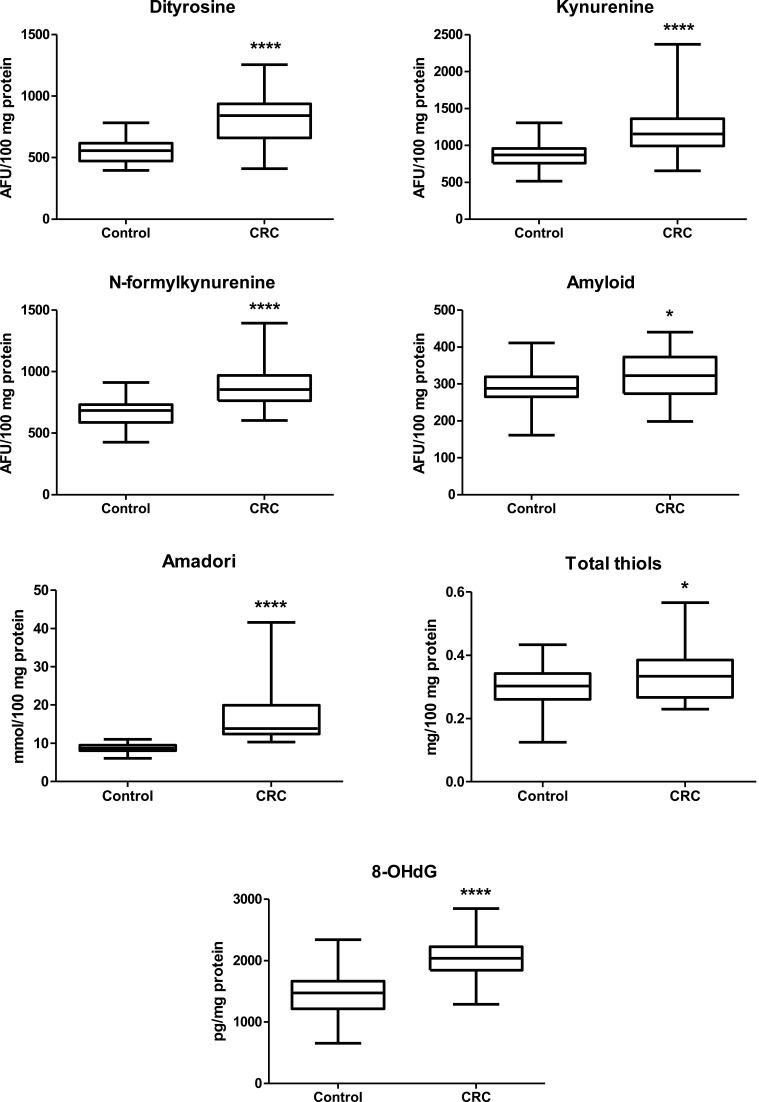
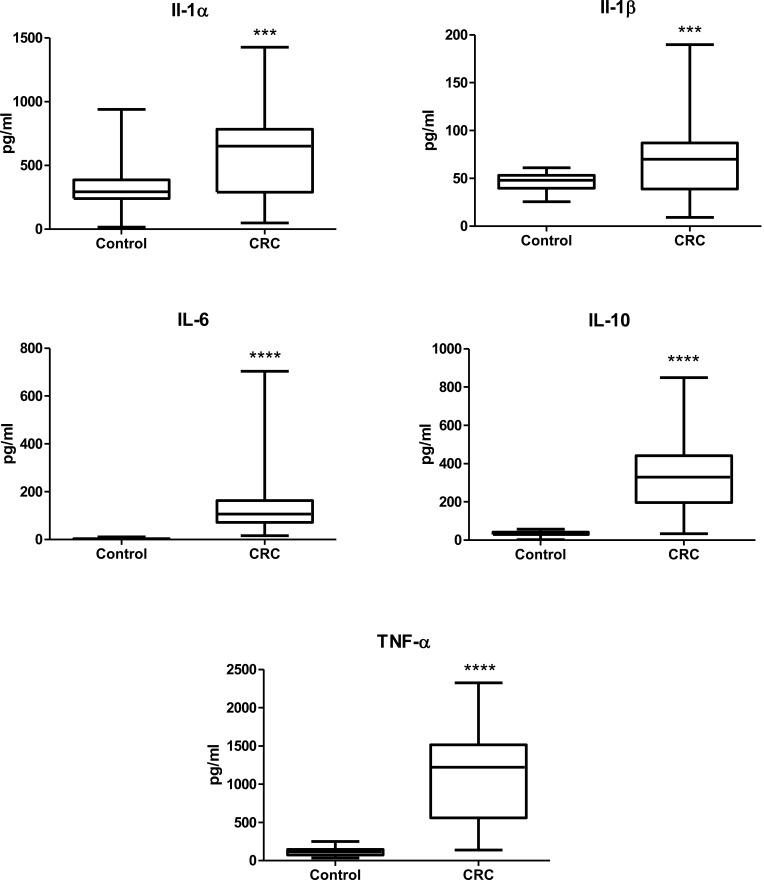
Patients and methods: Fifty-five CRC patients (21 women, 34 men) and 55 healthy controls matched for sex and age were included in the experiment. Nitrosative stress parameters (nitric oxide (NO), peroxynitrite, S-nitrosothiols, and nitrotyrosine), protein oxidation (total thiols) and glycoxidation products (kynurenine N-formylkynurenine, dityrosine, Amadori products, and amyloid), and DNA damage markers (8-hydroxydeoxyguanosine (8-OHdG)), as well as levels of pro- and anti-inflammatory cytokines, were measured in serum or plasma samples.
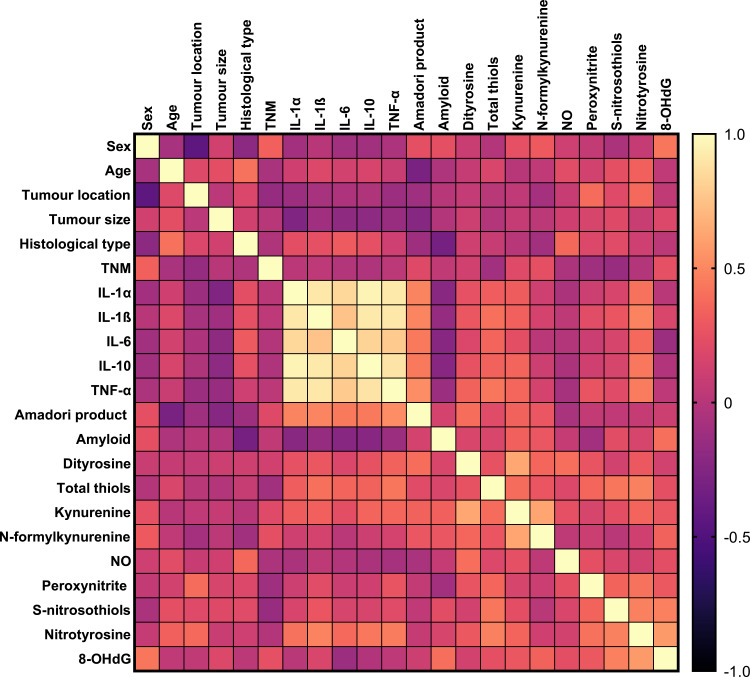
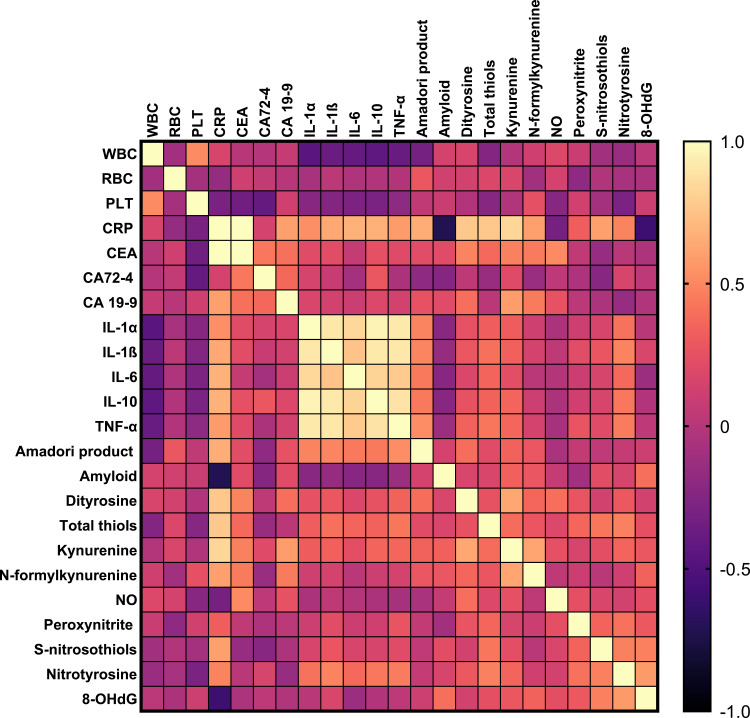
Results: The levels of NO, peroxynitrite, S-nitrosothiols, nitrotyrosine, total thiols, kynurenine, N-formylkynurenine, dityrosine, Amadori product, amyloid, and 8-OHdG, as well as IL1α, IL1β, IL6, IL10, and TNF-α, were significantly higher in CRC patients than in controls. Oxidation and glycoxidation products were positively correlated with pro-inflammatory (IL1α, IL1β, IL6, TNFα) and anti-inflammatory cytokines (IL10), indicating that redox damages may promote inflammation in CRC patients. Many redox biomarkers differentiate patients with CRC from healthy individuals with high sensitivity and specificity.
Conclusion: Correlations of chosen oxidative products with pro-inflammatory (IL1α, IL1β, IL6, TNFα) and anti-inflammatory cytokines (IL10) suggest that redox damages may promote inflammation in CRC patients. Thus, our research is the first point for further clinical trials focusing on the evaluation of the diagnostic utility of nitrosative stress biomarkers in a larger group of CRC patients.
Keywords: colorectal cancer; cytokines; inflammation; nitrosative stress.
© 2022 Dorf et al.
Conflict of interest statement
The authors declare that they have no competing interests.
Figures
References
-
- Ferlay J, Ervik M, Lam F, et al. Global cancer observatory: cancer tomorrow. Lyon, France: International Agency for Research on Cancer; 2020. Available from: https://gco.iarc.fr/tomorrow/en. Accessed November 23, 2021.
LinkOut - more resources
Full Text Sources
