


Dysregulated glucuronic acid metabolism exacerbates hepatocellular carcinoma progression and metastasis through the TGFβ signalling pathway
- PMID: 35979621
- PMCID: PMC9386326
- DOI: 10.1002/ctm2.995
Dysregulated glucuronic acid metabolism exacerbates hepatocellular carcinoma progression and metastasis through the TGFβ signalling pathway
Erratum in
-
Corrigendum to "Dysregulated glucuronic acid metabolism exacerbates hepatocellular carcinoma progression and metastasis through the TGFβ signalling pathway".Clin Transl Med. 2023 Mar;13(3):e1231. doi: 10.1002/ctm2.1231. Clin Transl Med. 2023. PMID: 36941752 Free PMC article. No abstract available.
Abstract
Background: Glucuronic acid metabolism participates in cellular detoxification, extracellular matrix remodeling and cell adhesion and migration. Here, we aimed to explore the crosstalk between dysregulated glucuronic acid metabolism and crucial metastatic signalling in glutathione S-transferase zeta 1 (GSTZ1)-deficient hepatocellular carcinoma (HCC).
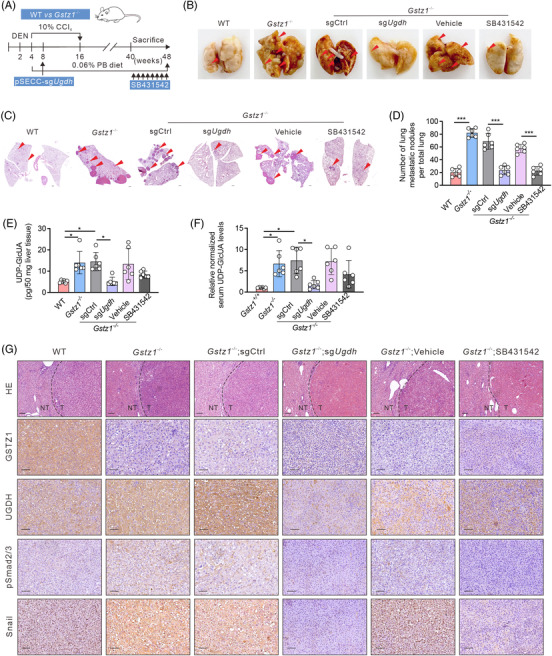
Methods: Transwell, HCC xenograft and Gstz1-/- mouse models were used to examine the role of GSTZ1 in HCC metastasis. Non-targeted and targeted metabolomics and global transcriptomic analyses were performed to screen significantly altered metabolic and signalling pathways in GSTZ1 overexpressing hepatoma cells. Further, RNA-binding protein immunoprecipitation, Biotin-RNA pull-down, mRNA decay assays and luciferase reporter assays were used to explore the interaction between RNA and RNA-binding proteins.
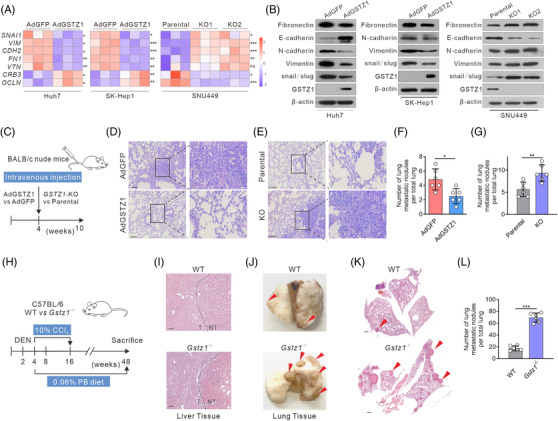
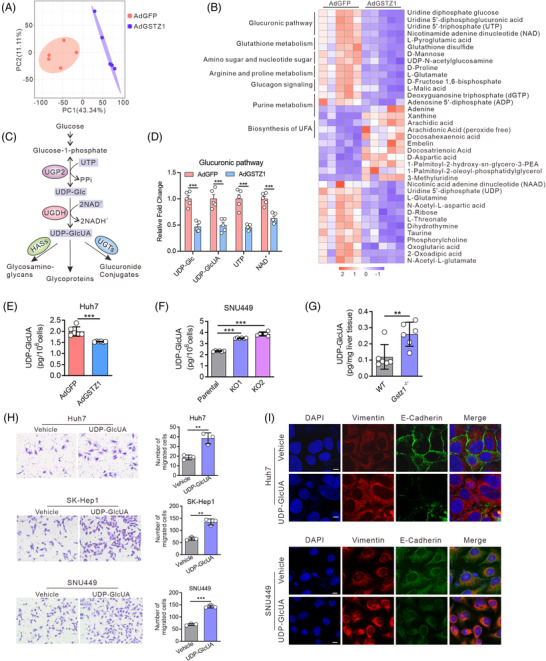
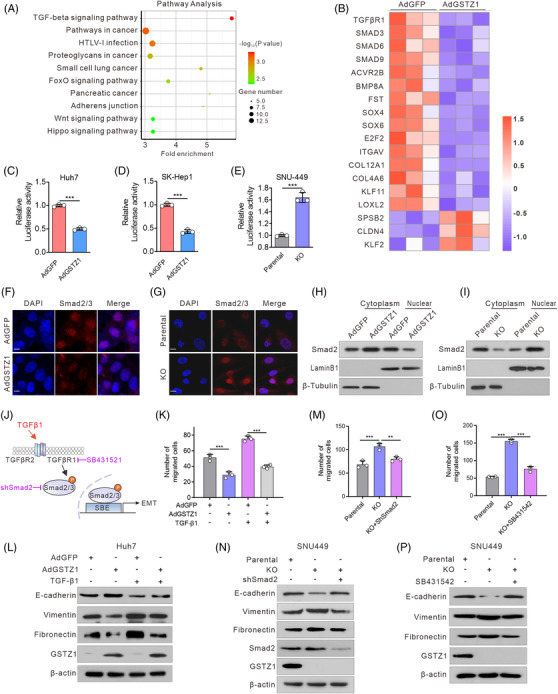
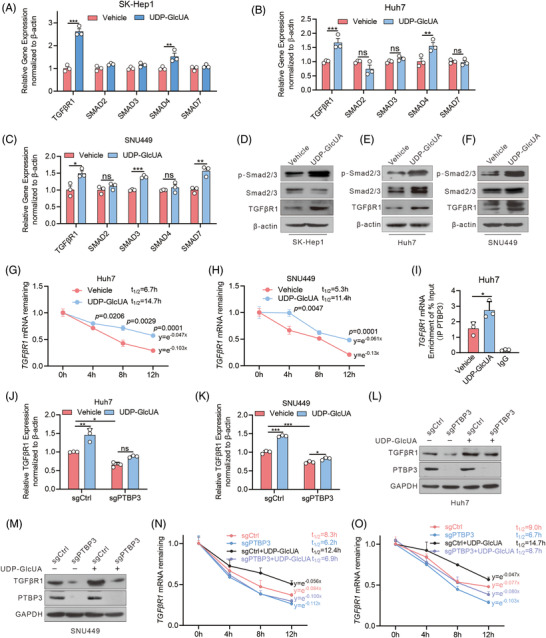
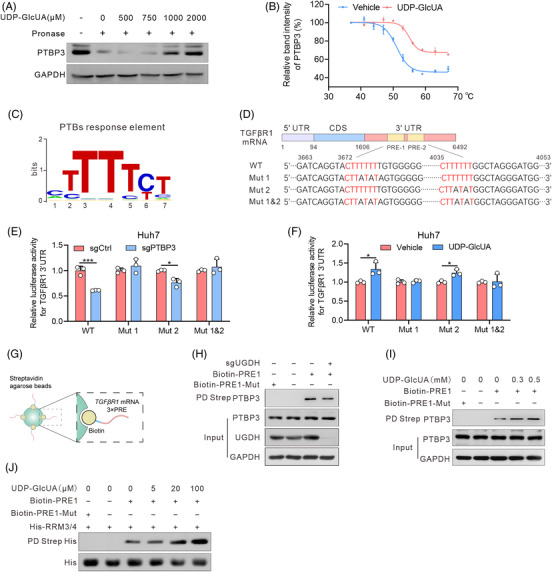
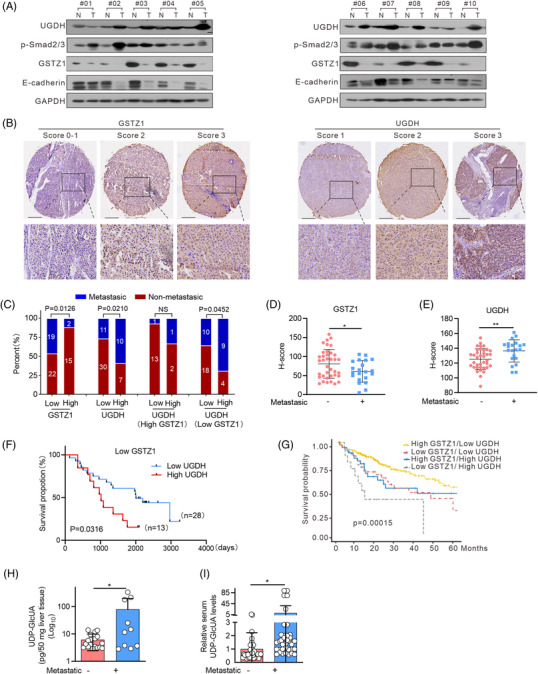
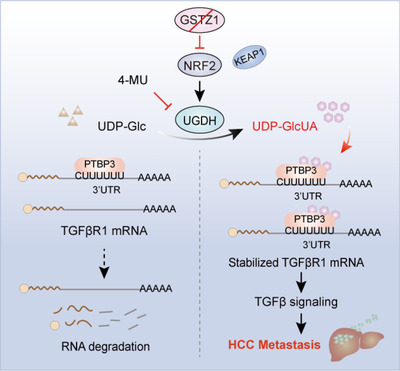
Results: GSTZ1 was universally silenced in both human and murine HCC cells, and its deficiency contributed to HCC metastasis in vitro and in vivo. UDP-glucose 6-dehydrogenase (UGDH)-mediated UDP-glucuronic acid (UDP-GlcUA) accumulation promoted hepatoma cell migration upon GSTZ1 loss. UDP-GlcUA stabilized TGFβR1 mRNA by enhancing its binding to polypyrimidine tract binding protein 3, contributing to the activation of TGFβ/Smad signalling. UGDH or TGFβR1 blockade impaired HCC metastasis. In addition, UGDH up-regulation and UDP-GlcUA accumulation correlated with increased metastatic potential and decreased patient survival in GSTZ1-deficient HCC.
Conclusions: GSTZ1 deficiency and subsequent up-regulation of the glucuronic acid metabolic pathway promotes HCC metastasis by increasing the stability of TGFβR1 mRNA and activating TGFβ/Smad signalling. UGDH and a key metabolite, UDP-GlcUA, may serve as prognostic markers. Targeting UGDH might be a promising strategy for HCC therapy.
Keywords: TGFβ/Smad signalling; UDP-GlcUA; UGDH; hepatocellular carcinoma metastasis.
© 2022 The Authors. Clinical and Translational Medicine published by John Wiley & Sons Australia, Ltd on behalf of Shanghai Institute of Clinical Bioinformatics.
Conflict of interest statement
The authors have declared that no conflict of interest exists.
Figures
References
-
- Fransvea E, Angelotti U, Antonaci S, Giannelli G. Blocking transforming growth factor‐beta up‐regulates E‐cadherin and reduces migration and invasion of hepatocellular carcinoma cells. Hepatology 2008;47:1557‐1566. - PubMed
-
- Lehuédé C, Dupuy F, Rabinovitch R, Jones R, Siegel P. Metabolic plasticity as a determinant of tumor growth and metastasis. Cancer Res 2016;76:5201‐5208. - PubMed
Publication types
MeSH terms
Substances
LinkOut - more resources
Full Text Sources
Medical