


Monkeypox: A clinical update for paediatricians
- PMID: 35979896
- PMCID: PMC9545589
- DOI: 10.1111/jpc.16171
Monkeypox: A clinical update for paediatricians
Abstract
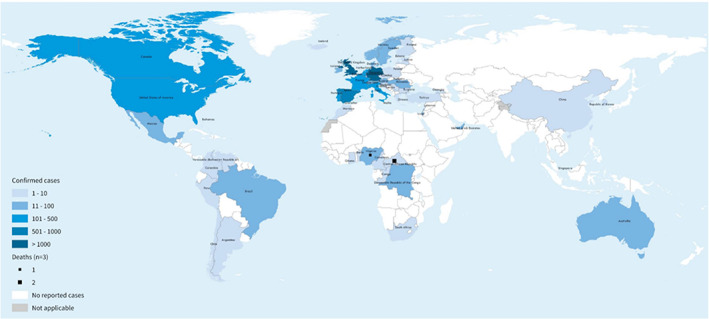
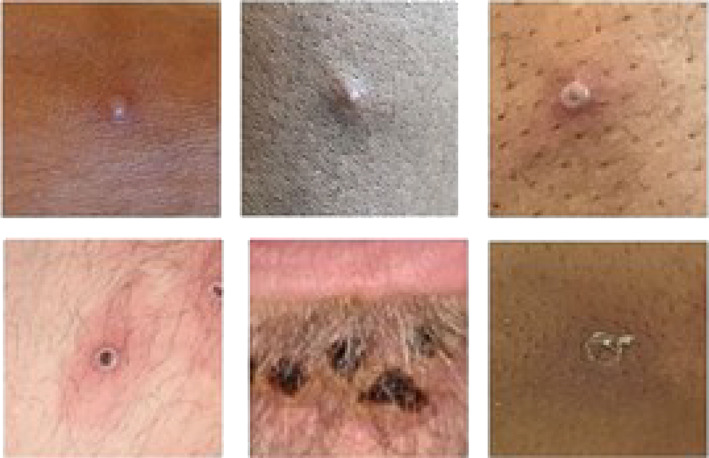
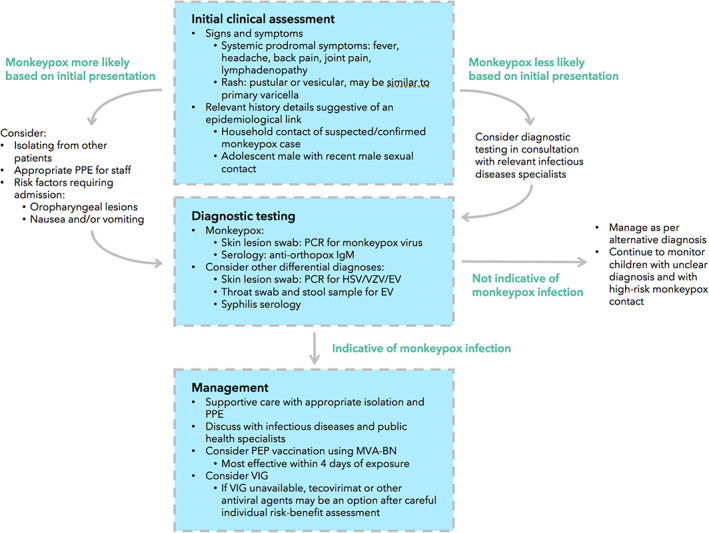
The global spread of human monkeypox disease, a zoonotic infection related to smallpox and endemic to West and Central Africa, presents serious challenges for health systems. As of July 2022, 14 533 cases have been reported world-wide, leading to designation as a Public Health Emergency of International Concern. Monkeypox disease is spread from animals to humans through infected lesions or fluids; human-human transmission occurs through fomites, droplets or direct contact. Illness is usually self-limiting, but severe disease can occur in specific groups - particularly children, and people who are immunocompromised or pregnant. Clinical presentation may include fever, lymphadenopathy and skin rash, but the rash may occur without other symptoms. Complications can include secondary bacterial infection of skin lesions, vision loss from corneal involvement, pneumonia, sepsis and encephalitis. Diagnosis of monkeypox requires consideration of epidemiological, clinical and laboratory findings, with sensitive history-taking, to elicit close contacts, critical. Supportive management is usually sufficient, but treatment options (where required) include antivirals and vaccinia immune globulin. A paucity of safety data for relevant antivirals may limit their use. There are two types of monkeypox vaccines: a replication-competent vaccinia vaccine, the use of which is logistically and clinically complex, and a replication-deficient modified vaccinia Ankara virus vaccine. Preparedness of health systems for addressing the current outbreak is constrained by historic underfunding for research, and compounded by stigma and discrimination against cases and affected communities. Key challenges in halting transmission include improving vaccine equity and countering discrimination against men who have sex with men to aid diagnosis and treatment.
Keywords: ACAM2000; MVA; child health; monkeypox; stigma; vaccinia immunoglobulin.
© 2022 The Authors. Journal of Paediatrics and Child Health published by John Wiley & Sons Australia, Ltd on behalf of Paediatrics and Child Health Division (The Royal Australasian College of Physicians).
Figures
References
-
- Durski KN, McCollum AM, Nakazawa Y et al. Emergence of monkeypox in West Africa and Central Africa, 1970–2017. Wkly. Epidemiol. Rec. 2018; 11: 117–32.
-
- World Health Organization . Second meeting of the International Health Regulations (2005) (IHR) Emergency Committee regarding the multi‐country outbreak of monkeypox. 2022, updated July 2022. Available from: https://www.who.int/news/item/23-07-2022-second-meeting-of-the-internati...
-
- von Magnus P, Krag Andersen E, Birkum Petersen K, Birch‐Andersen A. A pox‐like disease in cynomolgus monkeys. Acta Pathol. Microbiol. Scand. 1959; 46: 156–76.
Publication types
MeSH terms
Substances
LinkOut - more resources
Full Text Sources
Medical
Research Materials
