


Detecting Colorectal Adenomas and Cancer Using Volatile Organic Compounds in Exhaled Breath: A Proof-of-Principle Study to Improve Screening
- PMID: 35981245
- PMCID: PMC10476860
- DOI: 10.14309/ctg.0000000000000518
Detecting Colorectal Adenomas and Cancer Using Volatile Organic Compounds in Exhaled Breath: A Proof-of-Principle Study to Improve Screening
Abstract
Introduction: Early detection of colorectal cancer (CRC) by screening programs is crucial because survival rates worsen at advanced stages. However, the currently used screening method, the fecal immunochemical test (FIT), suffers from a high number of false-positives and is insensitive for detecting advanced adenomas (AAs), resulting in false-negatives for these premalignant lesions. Therefore, more accurate, noninvasive screening tools are needed. In this study, the utility of analyzing volatile organic compounds (VOCs) in exhaled breath in a FIT-positive population to detect the presence of colorectal neoplasia was studied.
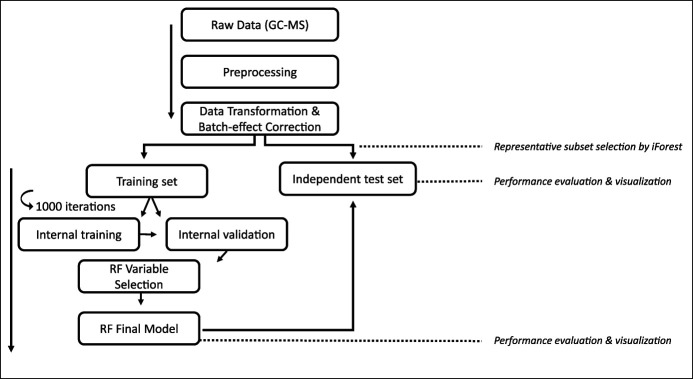
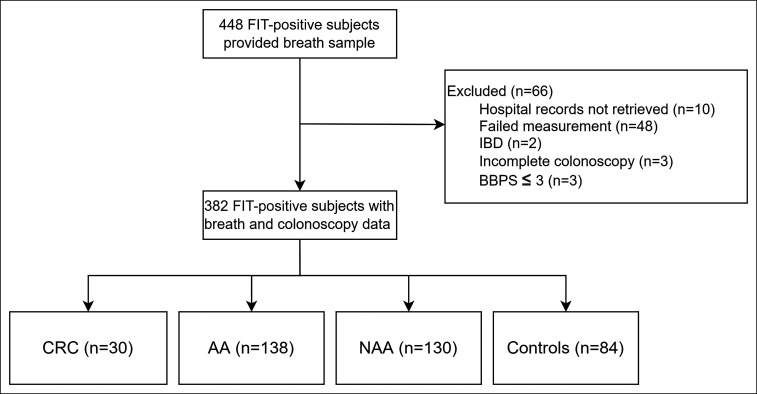
Methods: In this multicenter prospective study, breath samples were collected from 382 FIT-positive patients with subsequent colonoscopy participating in the national Dutch bowel screening program (n = 84 negative controls, n = 130 non-AAs, n = 138 AAs, and n = 30 CRCs). Precolonoscopy exhaled VOCs were analyzed using thermal desorption-gas chromatography-mass spectrometry, and the data were preprocessed and analyzed using machine learning techniques.
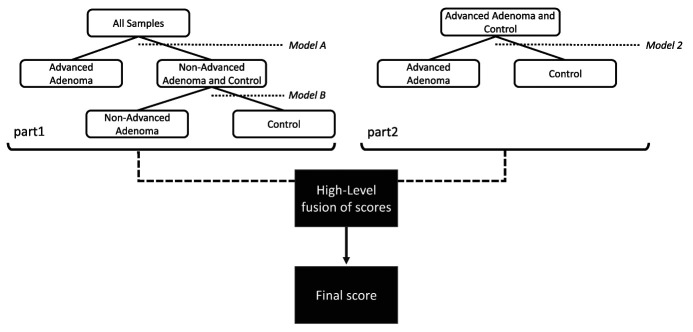
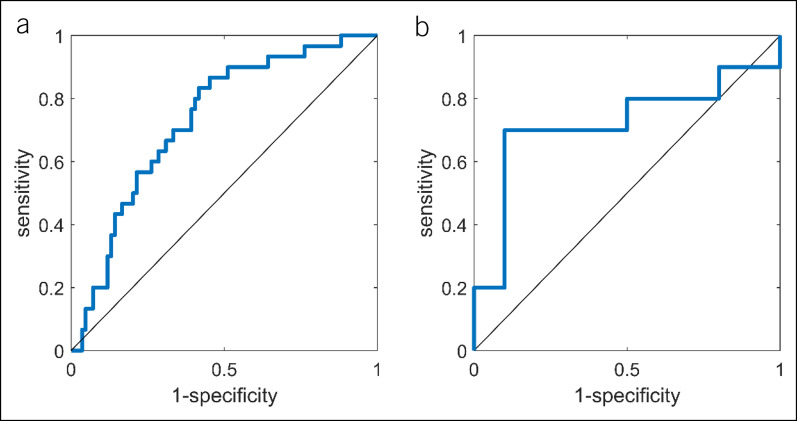
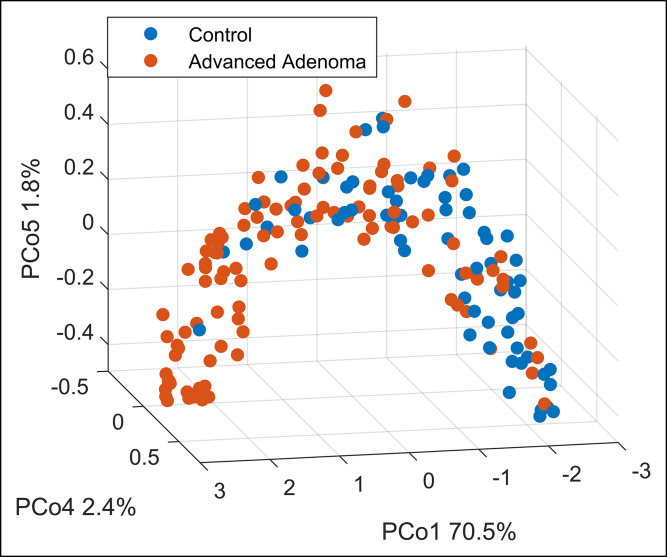
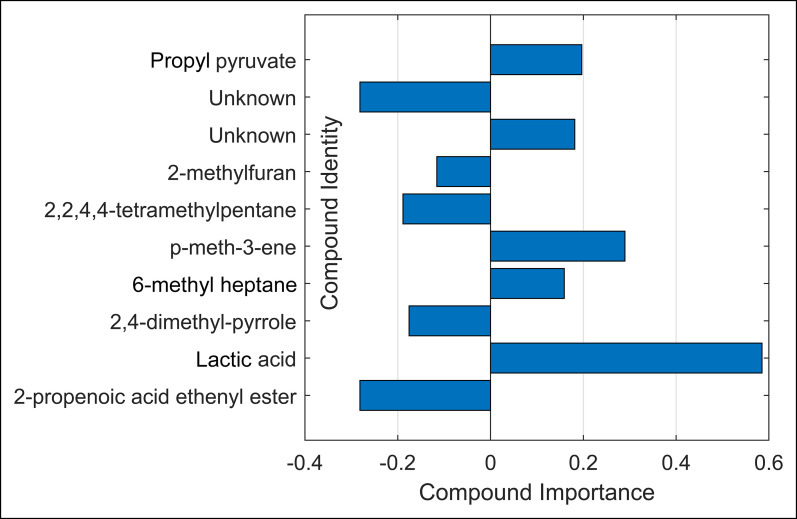
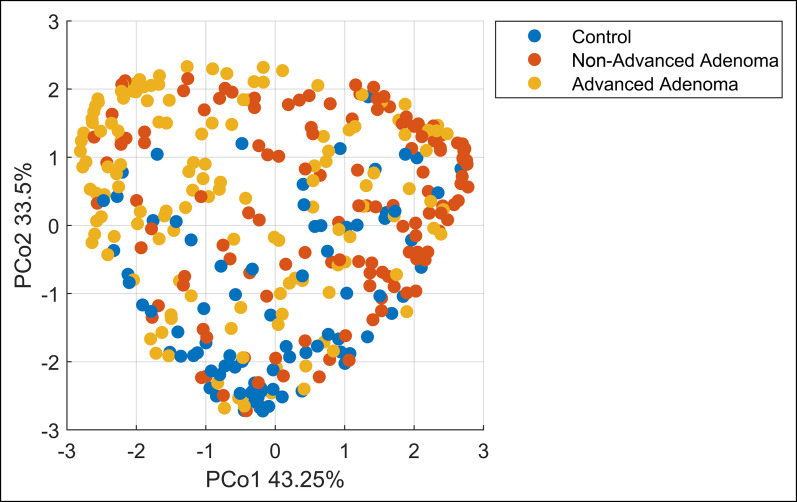
Results: Using 10 discriminatory VOCs, AAs could be distinguished from negative controls with a sensitivity and specificity of 79% and 70%, respectively. Based on this biomarker profile, CRC and AA combined could be discriminated from controls with a sensitivity and specificity of 77% and 70%, respectively, and CRC alone could be discriminated from controls with a sensitivity and specificity of 80% and 70%, respectively. Moreover, the feasibility to discriminate non-AAs from controls and AAs was shown.
Discussion: VOCs in exhaled breath can detect the presence of AAs and CRC in a CRC screening population and may improve CRC screening in the future.
Copyright © 2022 The Author(s). Published by Wolters Kluwer Health, Inc. on behalf of The American College of Gastroenterology.
Conflict of interest statement
Figures
References
-
- Ferlay J, Soerjomataram I, Dikshit R, et al. Cancer incidence and mortality worldwide: Sources, methods and major patterns in GLOBOCAN 2012. Int J Cancer 2015;136(5):E359–86. - PubMed
-
- Muto T, Bussey HJR, Morson BC. The evolution of cancer of the colon and rectum. Cancer 1975;36(6):2251–70. - PubMed
-
- Dekker E, Tanis PJ, Vleugels JLA, et al. Colorectal cancer. Lancet 2019;394:1467–80. - PubMed
-
- Duvvuri A, Chandrasekar VT, Srinivasan S, et al. Risk of colorectal cancer and cancer related mortality after detection of low-risk or high-risk adenomas, compared with no adenoma, at index colonoscopy: A systematic review and meta-analysis. Gastroenterology 2021;160(6):1986–96.e3. - PubMed
Publication types
MeSH terms
Substances
LinkOut - more resources
Full Text Sources
Medical
