Review
. 2022 Nov;150(5):1011-1030.
doi: 10.1016/j.jaci.2022.06.023. Epub 2022 Aug 16.

The role of the CBM complex in allergic inflammation and disease

Affiliations
Review

The role of the CBM complex in allergic inflammation and disease

Stanley B DeVore et al. J Allergy Clin Immunol. 2022 Nov.

Abstract

The caspase activation and recruitment domain-coiled-coil (CARD-CC) family of proteins-CARD9, CARD10, CARD11, and CARD14-is collectively expressed across nearly all tissues of the body and is a crucial mediator of immunologic signaling as part of the CARD-B-cell lymphoma/leukemia 10-mucosa-associated lymphoid tissue lymphoma translocation protein 1 (CBM) complex. Dysfunction or dysregulation of CBM proteins has been linked to numerous clinical manifestations known as "CBM-opathies." The CBM-opathy spectrum encompasses diseases ranging from mucocutaneous fungal infections and psoriasis to combined immunodeficiency and lymphoproliferative diseases; however, there is accumulating evidence that the CARD-CC family members also contribute to the pathogenesis and progression of allergic inflammation and allergic diseases. Here, we review the 4 CARD-CC paralogs, as well as B-cell lymphoma/leukemia 10 and mucosa-associated lymphoid tissue lymphoma translocation protein 1, and their individual and collective roles in the pathogenesis and progression of allergic inflammation and 4 major allergic diseases (allergic asthma, atopic dermatitis, food allergy, and allergic rhinitis).

Keywords: Allergy; BCL10; CARD; CARD10; CARD11; CARD14; CARD9; CBM-opathy; MALT1; allergic rhinitis; asthma; atopic dermatitis; food allergy.


Conflict of interest statement

Competing interests: The authors declare no conflicts of interest.

Figures

Figure 1:
Figure 1:. Structure, Activation, and Signal Transduction of CBM Proteins.
A. Schematic of the protein domains within each of the CARD-CC proteins, BCL10 and MALT1. Dotted lines indicate interactions between CBM components B. Molecular interactions of autoinhibited and active CARD-CC proteins. Intramolecular binding between the ID, CARD, CC, and MAGUK domains maintain CARD-CC proteins in an autoinhibited state. Post-translational modifications or activating mutations disrupt intramolecular interactions, allowing CBM complex assembly. C. Representative signaling through CARD-CC proteins. Cellular signaling downstream of membrane-bound or intracellular receptors stimulates CBM complex formation. Recruited TRAF6 induces K63-linked polyubiquitination of MALT1 and BCL10, and LUBAC mediates M1-linked ubiquitination of BCL10. BCL10 ubiquitin chains recruit NEMO and IKKα/β, which phosphorylate IκKα to induce its degradation, thereby upregulating NFκB activity. Ubiquitin chains on MALT1 recruit TAB2/3 and TAK1 which promote MAPK signaling and optimal NFκB activation. MALT1 paracaspase activity modulates CBM signaling and inflammation by cleaving various cellular proteins. The CBM can also promote mTORC1 signaling. CBM activity is downregulated reversibly by PTMs and irreversibly by proteasomal degradation or selective autophagy.
Figure 2:
Figure 2:. Working Model for the Role of CARD9 in Allergic Disease.
A. Microbial PAMPs activate CARD9 signaling in APCs by stimulating extracellular or intracellular PRRs. CARD9 activation is promoted by phosphorylation or ubiquitination,,. The DN mutation Δ11 and its mimetic BDR5529 reduce TRIM62-mediated induction. CARD9 stimulates MAPK and NFκB signaling; MALT1 cleaves RelB allowing preferential activation of RelA (p65) to induce Th1/Th17 cytokines. With the DN mutation S12N, the CBM cannot cleave RelB, leading to induction of both Th17 and Th2 cytokines. The presence of allergic inflammation may have a similar effect through unknown mechanisms. CARD9 LoF mutations prevent CARD9-mediated MAPK and RelA signaling, possibly allowing increased RelB activity. B. In healthy epithelia, microbial antigens/allergens stimulate APCs to induce a Th1/Th17 immunophenotype and neutrophils which protect against allergic inflammation and promote homeostasis. With allergic inflammation, HDM, or CARD9 mutations, APCs promote a Th2/Th17 immunophenotype that is less effective at maintaining microbiome (particularly fungal) homeostasis and instead promotes dysbiosis, barrier dysfunction and allergic inflammation including eosinophilia and B-cell IgE production. C. Schematic of known CARD9 mutations that are associated with features of allergic and inflammatory diseases,,. Numbers signify amino acid residues; approximate domain locations are based on Uniprot data.
Figure 3:
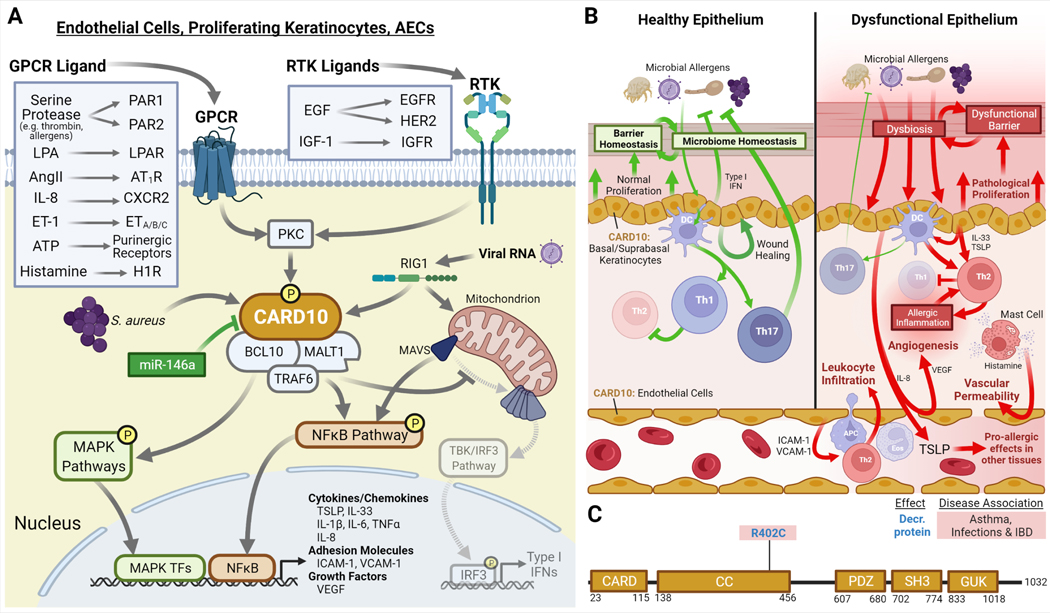
Figure 3:. Working Model for the Role of CARD10 in Allergic Disease.
A. Ligands for various GPCRs and RTKs activate CARD10 signaling through PKC-mediated phosphorylation. S. aureus upregulates CARD10 expression through an undefined mechanism. In response to RNA viruses, RIG1 activates CARD10 and MAVs to stimulate NFκB and inflammatory cytokines; however, CARD10 inhibits MAVS aggregation and its downstream induction of TBK/IRF3 signaling and type I interferons. CARD10 stimulates MAPK and NFκB pathways to induce numerous cytokines, chemokines, adhesion molecules and growth factors. CARD10 expression is attenuated by the anti-inflammatory miRNA miR-146a. B. In healthy epithelia, homeostatic CARD10 activity in keratinocytes mediates keratinocyte proliferation and wound healing and allows APCs to induce Th1/Th17 polarization, which synergize to promote barrier homeostasis. However, in response to allergens (e.g., in the context of barrier dysfunction), elevated CARD10 activity can contribute to dysbiosis, allergic inflammation and enhance barrier dysfunction by mediating Th2 polarization, leukocyte infiltration, epidermal hyperproliferation, angiogenesis, and vascular permeability. CARD10-induced TSLP may become systemic, promoting allergic disease progression in other tissues. C. Schematic of known CARD10 mutations that are associated with features of allergic diseases. Numbers signify amino acid residues; approximate domain locations are based on Uniprot data and Wang et al.
Figure 4:
Figure 4:. Working Model for the Role of CARD11 in Allergic Disease.
A. The BCR, NKG2D and FcϵRI receptors activate CARD11 in B-cells, NK cells, and Mast cells, respectively. In T-cells, the TCR activates CARD11 (assisted by the scaffolding protein RLTPR). CARD11 upregulates ASCT2-mediated glutamine uptake to stimulate mTORC1 signaling. mTORC1, MAPK and NFκB signaling induce cell-type-specific effects. DN mutations (via “oligomeric poisoning”), CRADD and A20 downregulate CARD11 signaling. B. Homeostatic CARD11 signalingpromotes a Th1/Th17 immunophenotype. However, hypomorphic CARD11 signaling favors Th2/Th17 polarization which promotes allergic inflammation, barrier dysfunction, and increased allergen susceptibility. C. Schematic of how CARD11 signaling magnitude affects T-cell polarization. Reduced activity promotes Th2 over Th1 polarization (e.g., CADINS), but complete LoF mutations preclude polarization by preventing naïve T-cell activation (e.g., CID). Elevated activity may promote Th1 over Th2 polarization, but complete GoF mutations induce immunodeficiency via T-cell anergy (e.g., BENTA). D. Schematic of known CARD11 mutations that are associated with features of allergic diseases. Mouse symbol designates the DN CARD11 mutations L298Q and R30W that are modeled by the CARD11unm and CARD11R30W/+ CADINS models, respectively,. Numbers signify amino acid residues; approximate domain locations are based on Uniprot data and Wang et al. Somatic second-site reversion mutation.
Figure 5:
Figure 5:. Working Model for the Role of CARD14 in Allergic Disease.
A. In basal epithelial cells, CARD14 is activated downstream of the Dectin-1, IL-17R and TLR3 receptors, as well as an unknown receptor stimulated by S. aureus. Like CARD10, CARD14 coordinates with MAVS to stimulate NFκB and inflammatory cytokine production; however, CARD14 inhibits the aggregation of MAVS and its induction of the TBK/IRF3 pathway and type I interferons. CARD14 signaling through MAPK and NFκB pathways induces a variety of cytokines and chemokines, terminal differentiation genes, and antimicrobial peptides. CARD14 DN mutations reduces CARD14 signaling activity. B. In healthy epithelia, CARD14 promotes barrier homeostasis by coordinating proliferation and differentiation, and microbiome homeostasis by inducing antimicrobial Th17 immunity. However, in the context of DN mutations or pre-existing allergic inflammation, CARD14 cannot support barrier nor microbiome homeostasis, thereby amplifying allergic inflammation within the epithelium. C: Schematic of known CARD14 mutations that are associated with features of allergic diseases. Asterisk (*) indicates that AD is the prominent allergic disease associated with the SNP, but that AD may co-present with allergic asthma, AR and/or food allergy. Numbers signify amino acid residues; approximate domain locations are based on Uniprot data and Wang et al.
Figure 6:
Figure 6:. Working Model for the Role of BCL10 and MALT1 in Allergic Disease.
A: Schematic of known BCL10 mutations that are associated with features of allergic diseases to date. Numbers signify amino acid residues; approximate domain locations are based on Uniprot data and Koseki et al.. B: In the absence of mutations, MALT1 is able to assist the CARD-CC paralogs in various cell types to maintain microbiome and barrier homeostasis, resulting in healthy epithelia. However, in the absence of functional MALT1 (i.e., LoF mutations), Treg populations are severely attenuated, leading to an expanded Th2 immunophenotype that may drive IgE production and allergic inflammation that ultimately disrupts barrier homeostasis. C: Schematic of known MALT1 mutations that are associated with features of allergic diseases. Numbers signify amino acid residues; approximate domain locations are based on Sefer et al.. Mouse symbol designates the murine Malt1 mutation C472A that results in Malt1PD/PD mouse models,,.
Figure 7:
Figure 7:. Working Model for the Coordinated Role of CARD-CC Paralogs in Allergic Disease.
A. In non-allergic tissues, the CARD-CC paralogs within distinct cell types may coordinate to guide formation of the epithelial barrier and Th1/Th17 immunity, which promote barrier and microbiome homeostasis. However, dysregulation of one CARD-CC paralog may promote dysregulation of the paralogs in different cell types, thereby allowing them to synergize to induce and amplify allergic inflammation, skin dysbiosis, and barrier dysfunction. This phenomenon may originate from defects intrinsic to a CARD-CC protein itself, or in response to other allergy-inducing factors (e.g., HDM or FLG mutations). B. Defects in the epithelial paralogs CARD10 and CARD14 can induce dysregulation of the leukocyte paralogs CARD11 and CARD9, thereby contributing to the “outside-in” model of allergic disease pathogenesis. However, defects in the leukocyte paralogs may induce dysregulation of the epithelial paralogs, contributing to the “inside-out” model of allergic disease pathogenesis. C. CARD-CC dysfunction within the skin (i.e., causing atopic dermatitis) may contribute to the atopic march by promoting cytokine (e.g., CARD10-induced TSLP) secretion into systemic circulation that exerts pro-allergic effects in other tissues, including the lungs (allergic asthma), gastrointestinal tract (food allergy) and nasopharynx (allergic rhinitis).

References

    1. Burks AW, Holgate ST, O’Hehir RE, Broide DH, Bacharier LB, Hershey GKK, et al. Middleton’s allergy: principles and practice [Internet]. 2020. [cited 2020 Mar 25]. Available from: https://www.clinicalkey.com/dura/browse/bookChapter/3-s2.0-C20161002419
    1. Akdis CA, Arkwright PD, Brüggen MC, Busse W, Gadina M, Guttman-Yassky E, et al. Type 2 immunity in the skin and lungs. Allergy. 2020;75(7):1582–605. - PubMed
    1. Davidson WF, Leung DYM, Beck LA, Berin CM, Boguniewicz M, Busse WW, et al. Report from the National Institute of Allergy and Infectious Diseases workshop on “Atopic dermatitis and the atopic march: Mechanisms and interventions.” Journal of Allergy and Clinical Immunology. 2019. Mar 1;143(3):894–913. - PMC - PubMed
    1. van Ree R, Hummelshøj L, Plantinga M, Poulsen LK, Swindle E. Allergic sensitization: host-immune factors. Clinical and Translational Allergy. 2014. Apr 15;4(1):12. - PMC - PubMed
    1. Regulation Mellett M. and dysregulation of CARD14 signalling and its physiological consequences in inflammatory skin disease. Cellular Immunology. 2020. Jun 13;104147. - PubMed

Publication types

MeSH terms

Substances