


Patient Safety Issues From Information Overload in Electronic Medical Records
- PMID: 35985047
- PMCID: PMC9422765
- DOI: 10.1097/PTS.0000000000001002
Patient Safety Issues From Information Overload in Electronic Medical Records
Abstract
Background and objective: Electronic health records (EHRs) have become ubiquitous in medicine and continue to grow in informational content. Little has been documented regarding patient safety from the resultant information overload. The objective of this literature review is to better understand how information overload in EHR affects patient safety.
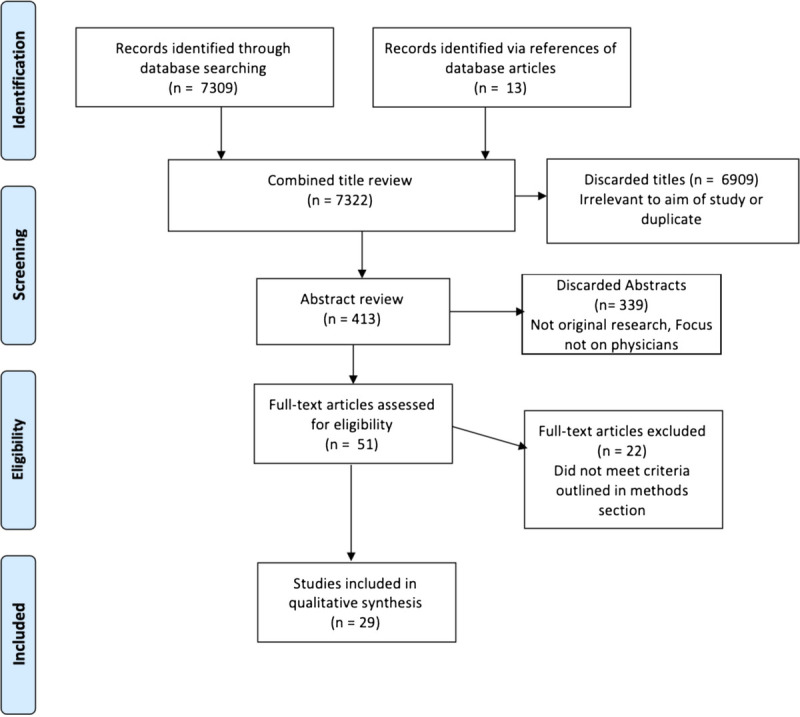
Methods: A literature search was performed using the Transparent Reporting of Systematic Reviews and Meta-Analyses standards for literature review. PubMed and Web of Science were searched and articles selected that were relevant to EHR information overload based on keywords.
Results: The literature search yielded 28 articles meeting the criteria for the study. Information overload was found to increase physician cognitive load and error rates in clinical simulations. Overabundance of clinically irrelevant information, poor data display, and excessive alerting were consistently identified as issues that may lead to information overload.
Conclusions: Information overload in EHRs may result in higher error rates and negatively impact patient safety. Further studies are necessary to define the role of EHR in adverse patient safety events and to determine methods to mitigate these errors. Changes focused on the usability of EHR should be considered with the end user (physician) in mind. Federal agencies have a role to play in encouraging faster adoption of improved EHR interfaces.
Copyright © 2022 The Author(s). Published by Wolters Kluwer Health, Inc.
Conflict of interest statement
The authors disclose no conflict of interest.
References
-
- United States, Congress, House, Committee on Oversight and Government Reform . The American Recovery and Reinvestment Act of 2009: 111 AD. 111th Congress, 5th Session, Bill Title XIII.
-
- Sinsky C Colligan L Li L, et al. Allocation of physician time in ambulatory practice: a time and motion study in 4 specialties. Ann Intern Med. 2016;165:753. - PubMed
Publication types
MeSH terms
LinkOut - more resources
Full Text Sources
