


Infective endocarditis by HACEK: a review
- PMID: 35986339
- PMCID: PMC9389832
- DOI: 10.1186/s13019-022-01932-5
Infective endocarditis by HACEK: a review
Abstract
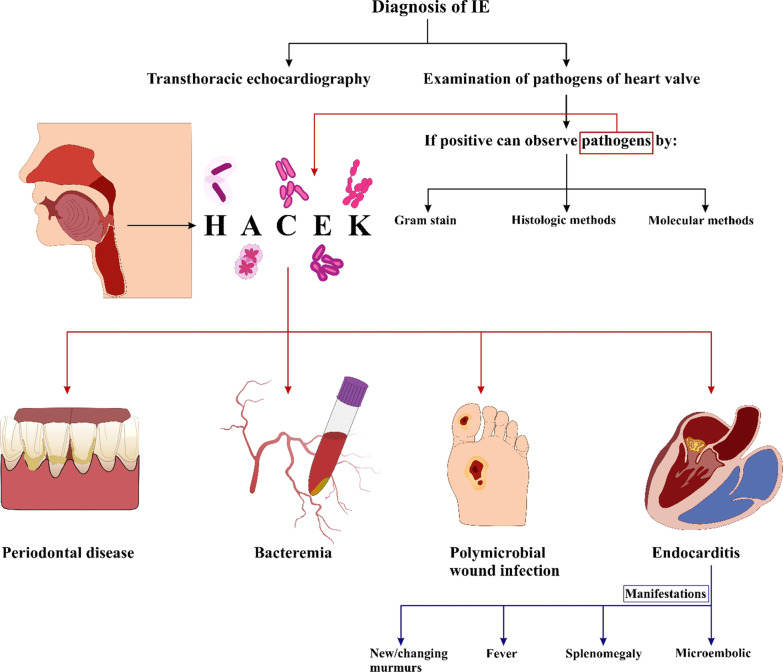
Infective endocarditis (IE) is a severe disease that is still associated with high mortality despite recent advances in diagnosis and treatment. HACEK organisms (Haemophilus spp., Aggregatibacter actinomycetemcomitans, Cardiobacterium hominis, Eikenella corrodens, and Kingella kingae) are gram-negative bacteria that are part of the normal flora of the mouth and upper respiratory tract in humans. These organisms cause a wide range of infections, of which IE is one of the most notable. In order to control and prevent endocarditis caused by HACEK, measures such as oral hygiene and the use of prophylactic drugs should be used for people at risk, including people with underlying heart disease and people with artificial valves. This review is a summary of the main aspects of IE focusing on HACEK organisms.
Keywords: Congenital heart disease; Echocardiography; Endocarditis; HACEK.
© 2022. The Author(s).
Conflict of interest statement
The authors have declared that no competing interests exist.
References
-
- Yallowitz AW, Decker LC. Infectious endocarditis. StatPearls [Internet]. 2020. - PubMed
Publication types
MeSH terms
LinkOut - more resources
Full Text Sources
Medical
Miscellaneous
