


First clinical application of cord blood mesenchymal stromal cells in children with multi-drug resistant nephrotic syndrome
- PMID: 35986374
- PMCID: PMC9389735
- DOI: 10.1186/s13287-022-03112-7
First clinical application of cord blood mesenchymal stromal cells in children with multi-drug resistant nephrotic syndrome
Abstract
Background and objectives: Children with multi-drug resistant idiopathic nephrotic syndrome (MDR-INS) usually progress to end-stage kidney disease with a consistent risk of disease recurrence after transplantation. New therapeutic options are needed for these patients. Mesenchymal stromal cells (MSCs) are multipotential non-hematopoietic cells with several immunomodulatory properties and growing clinical applications. Cord blood-derived MSC have peculiar anti-inflammatory and immunosuppressive properties. We aimed at assessing safety and efficacy of cord-blood-derived MSCs (CB-MSCs) in children with MDR-INS.
Design, setting, participants: Prospective, open-label, single arm phase I-II pilot study. Pediatric patients with MDR-INS, resistant to at least two lines of therapy, were enrolled. Allogenic CB-MSCs were administered intravenously on days 0, 14, and 21 at a dose of 1.5 × 10⁶ cells/kg. Patients were followed for at least 12 months. The primary outcomes were safety and toxicity. The secondary outcome was remission at 12 months evaluated by urinary protein/urinary creatinine ratio (uPr/uCr). Circulating regulatory T cells (Tregs) were monitored.
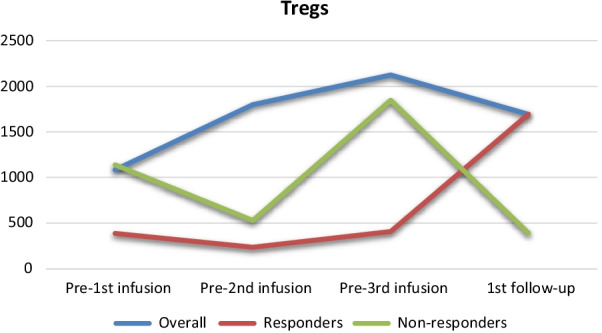
Results: Eleven pediatric patients with MDR-INS (10 females, median age 13 years) resistant to a median of 3 previous lines of therapy were enrolled. All patients completed the CB-MSC infusion schedule. No patient experienced any infusion-related adverse event or toxicity. Nine patients were assessable for efficacy. At the 12 months follow-up after the treatment, the median uPr/uCr did not change significantly from baseline (8.13 vs. 9.07; p = 0.98), while 3 patients were in partial or complete remission. A lower baseline uPr/uCr was a predictor of remission (2.55 vs. 8.74; p = 0.0238). Tregs count was not associated with CB-MSCs therapy.
Conclusions: CB-MSCs are safe and may have a role in the immunosuppressive therapy of pediatric patients with MDR-INS. This preliminary experience paves the way toward further phase II studies addressing MSC efficacy in immune-mediated kidney diseases.
Keywords: Advanced therapy medical products; Children; Cord-blood-derived mesenchymal stromal cells; Idiopathic nephrotic syndrome; Mesenchymal stromal cells; Multi-drug resistant nephrotic syndrome.
© 2022. The Author(s).
Conflict of interest statement
The authors have no conflicts of interest relevant to this article to disclose.
Figures
References
-
- Niaudet P. Etiology, clinical manifestations, and diagnosis of nephrotic syndrome in children - UpToDate. In: Post TW, ed. UpToDate; 2019.
-
- Pasini A, Benetti E, Conti G, et al. The Italian Society for Pediatric Nephrology (SINePe) consensus document on the management of nephrotic syndrome in children: Part I—diagnosis and treatment of the first episode and the first relapse. Ital J Pediatr. 2017;43(1):41. doi: 10.1186/s13052-017-0356-x. - DOI - PMC - PubMed
Publication types
MeSH terms
LinkOut - more resources
Full Text Sources
