


Amyloid pathology induces dysfunction of systemic neurotransmission in aged APPswe/PS2 mice
- PMID: 35992913
- PMCID: PMC9389227
- DOI: 10.3389/fnins.2022.930613
Amyloid pathology induces dysfunction of systemic neurotransmission in aged APPswe/PS2 mice
Erratum in
-
Corrigendum: Amyloid pathology induces dysfunction of systemic neurotransmission in aged APPswe/PS2 mice.Front Neurosci. 2022 Oct 17;16:1014128. doi: 10.3389/fnins.2022.1014128. eCollection 2022. Front Neurosci. 2022. PMID: 36325483 Free PMC article.
Abstract
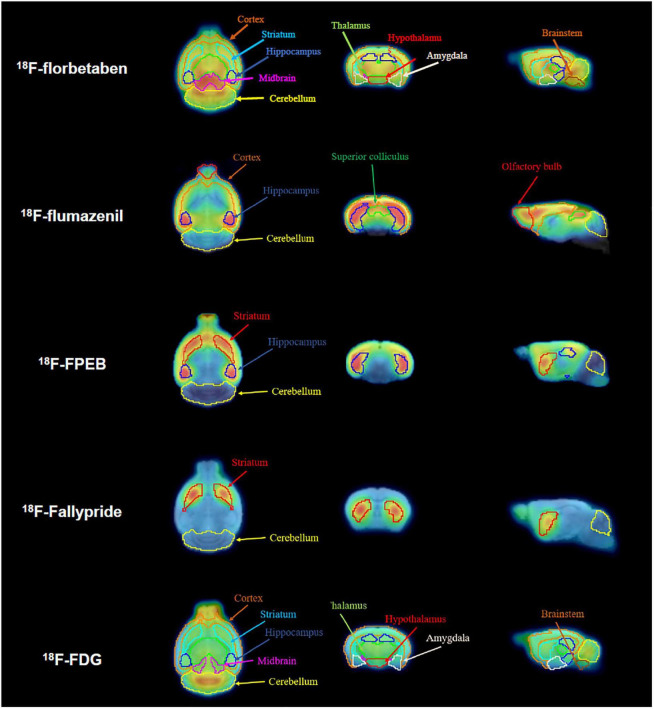
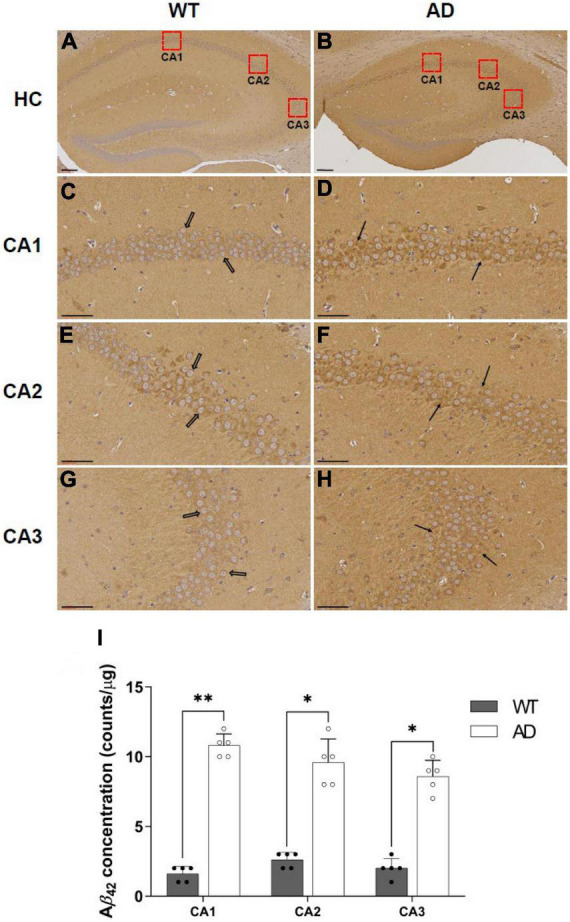
This study aimed to investigate how amyloid pathology affects the functional aspects of neurotransmitter systems in Alzheimer's disease. APPswe/PS2 mice (21 months of age) and wild-type (WT) mice underwent positron emission tomography (PET) and magnetic resonance spectroscopy (MRS). First, we obtained 18F-FDG and 18F-florbetaben PET scans to evaluate neuronal integrity and amyloid pathology. Second, 18F-FPEB and 18F-FMZ PET data were acquired to assess the excitatory-inhibitory neurotransmission. Third, to monitor the dopamine system, 18F-fallypride PET was performed. Amyloid PET imaging revealed that radioactivity was higher in the AD group than that in the WT group, which was validated by immunohistochemistry. In the cortical and limbic areas, the AD group showed a 25-27% decrease and 14-35% increase in the glutamatergic and GABAergic systems, respectively. The dopaminergic system in the AD group exhibited a 29% decrease in brain uptake compared with that in the WT group. A reduction in glutamate, N-acetylaspartate, and taurine levels was observed in the AD group using MRS. Our results suggest that dysfunction of the neurotransmitter system is associated with AD pathology. Among the systems, the GABAergic system was prominent, implying that the inhibitory neurotransmission system may be the most vulnerable to AD pathology.
Keywords: APPswe/PS2; Alzheimer’s disease; beta amyloid; neurotransmitter; positron emission tomography.
Copyright © 2022 Oh, Lee, Nam, Kang, Han, Lee, Lee and Choi.
Conflict of interest statement
The authors declare that the research was conducted in the absence of any commercial or financial relationships that could be construed as a potential conflict of interest.
Figures



References
-
- Barnard E. A., Skolnick P., Olsen R. W., Mohler H., Sieghart W., Biggio G., et al. (1998). International Union of Pharmacology. XV. Subtypes of γ-aminobutyric acidA receptors: Classification on the basis of subunit composition, pharmacology, and function. Pharmacol. Rev. 50 291–313. - PubMed
LinkOut - more resources
Full Text Sources
