Review
. 2022 Aug 22:42:45-66.
doi: 10.1146/annurev-nutr-062220-025831.

Dietary Fructose and Fructose-Induced Pathologies

Affiliations
Review

Dietary Fructose and Fructose-Induced Pathologies

Sunhee Jung et al. Annu Rev Nutr. .

Abstract

The consumption of fructose as sugar and high-fructose corn syrup has markedly increased during the past several decades. This trend coincides with the exponential rise of metabolic diseases, including obesity, nonalcoholic fatty liver disease, cardiovascular disease, and diabetes. While the biochemical pathways of fructose metabolism were elucidated in the early 1990s, organismal-level fructose metabolism and its whole-body pathophysiological impacts have been only recently investigated. In this review, we discuss the history of fructose consumption, biochemical and molecular pathways involved in fructose metabolism in different organs and gut microbiota, the role of fructose in the pathogenesis of metabolic diseases, and the remaining questions to treat such diseases.

Keywords: fatty liver; fructose; gut microbiota; intestine; ketohexokinase; lipogenesis.


Figures
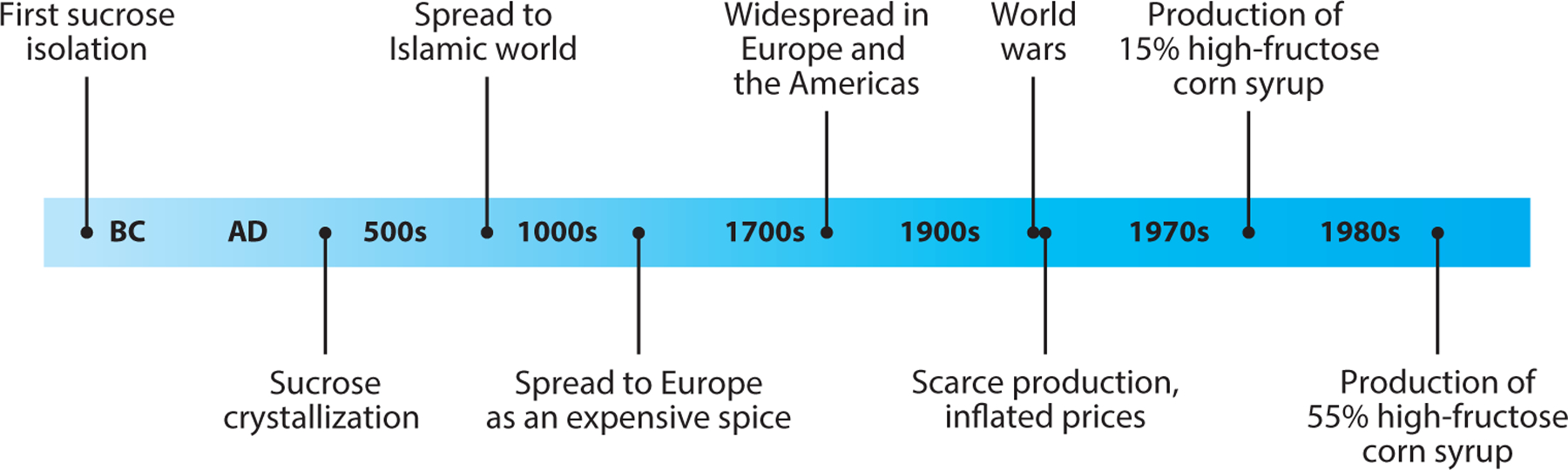
Figure 1
Figure 1
Fructose history: from the isolation of plant-based sucrose to the industrial production of 55% high-fructose corn syrup, a common sweetener in modern society.
Figure 2
Figure 2
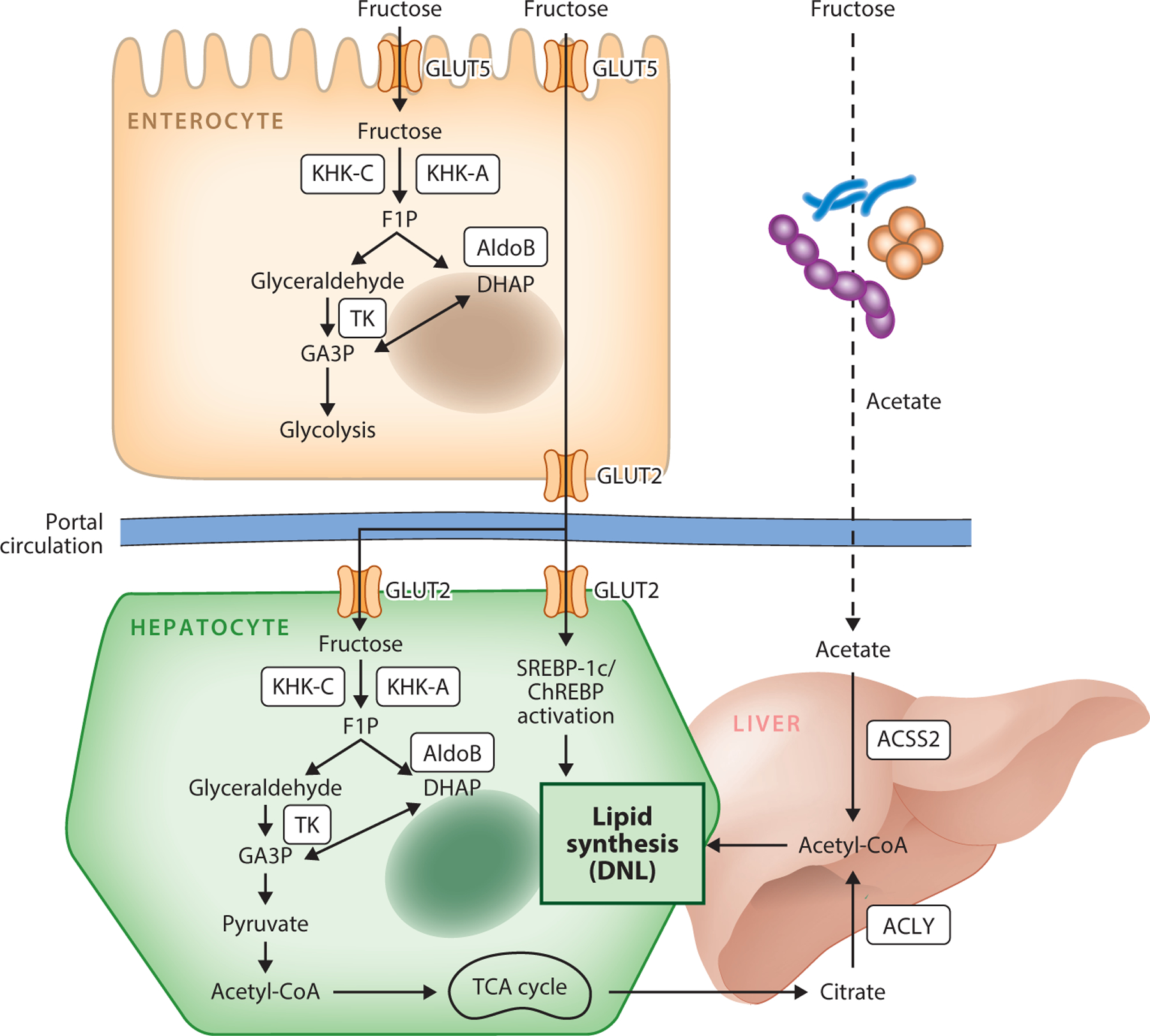
Fructose metabolism. Fructose is taken up by GLUT5 or GLUT2 in enterocytes or hepatocytes. Fructose is subsequently phosphorylated by KHK-C/A into F1P, which is cleaved by AldoB into DHAP and glyceraldehyde. Both then enter the glycolysis and TCA cycle. In liver, some citrate is converted to cytosolic acetyl-CoA via the ACLY enzyme. Alternatively, acetate, which is catabolized from fructose by gut microbiota, is converted into cytosolic acetyl-CoA by ACSS2 and is used for hepatic lipid synthesis. Fructose catabolism also activates DNL signaling pathways via the transcription factors SREBP-1c and ChREBP. Abbreviations: acetyl-CoA, acetyl coenzyme A; ACLY, ATP citrate lyase; ACSS2, acetyl-CoA synthetase 2; AldoB, aldolase B; ChREBP, carbohydrate-responsive element-binding protein; DHAP, dihydroxyacetone phosphate; DNL, de novo lipogenesis; F1P, fructose-1-phosphate; GA3P, glyceraldehyde-3-phosphate; GLUT2, glucose transporter 2; GLUT5, glucose transporter 5; KHK-A, ketohexokinase-A; KHK-C, ketohexokinase-C; SREBP-1c, sterol-responsive element-binding protein; TCA, tricarboxylic acid; TK, triose kinase.
Figure 3
Figure 3
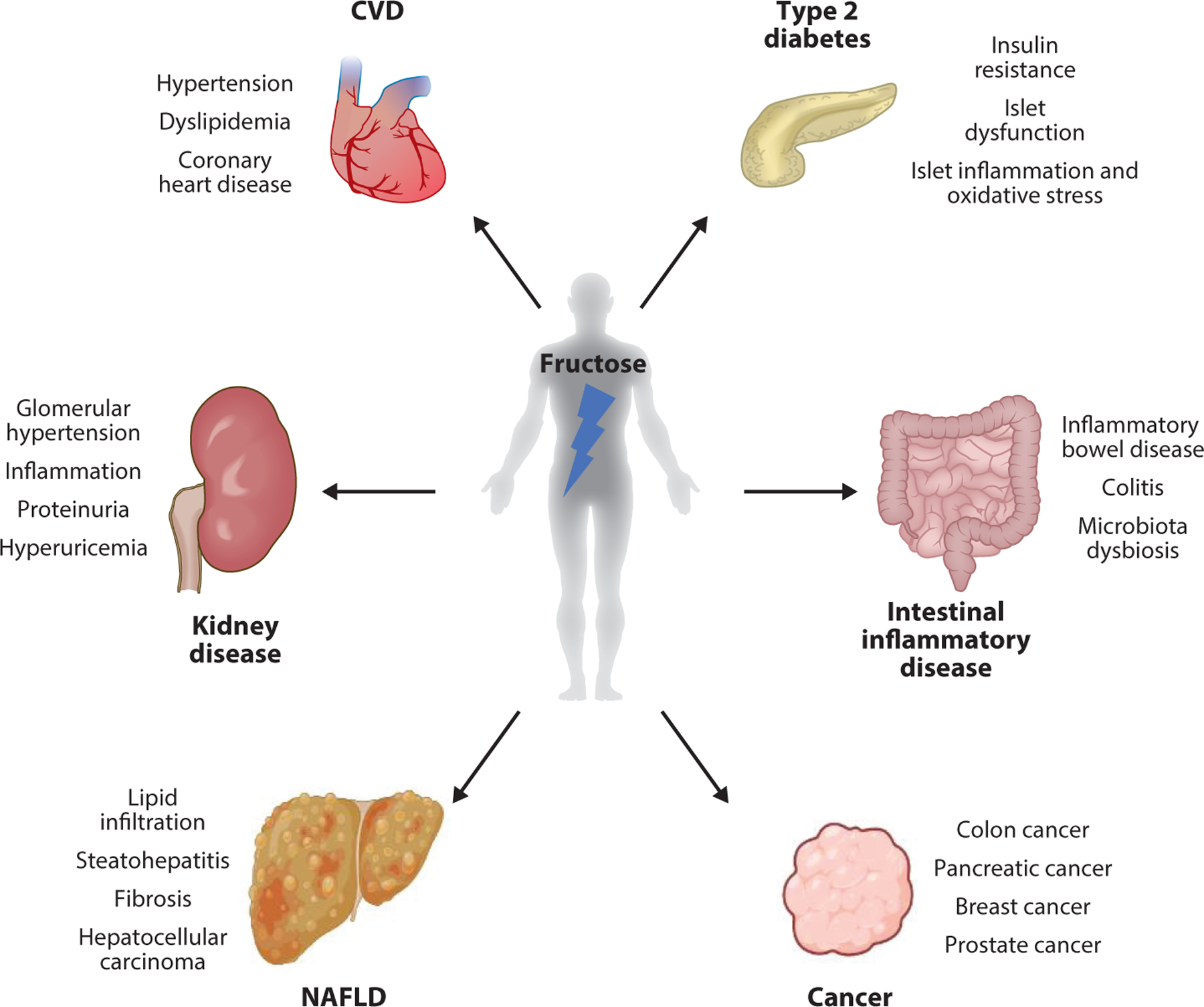
Fructose-related pathologies. Excessive fructose metabolism and consequent metabolic products contribute to diverse metabolic and inflammatory diseases, including nonalcoholic fatty liver disease (NAFLD), type 2 diabetes, dyslipidemia, colitis, cardiovascular disease (CVD), and renal disease. Fructose consumption is also linked to many different types of cancers.
Figure 4
Figure 4
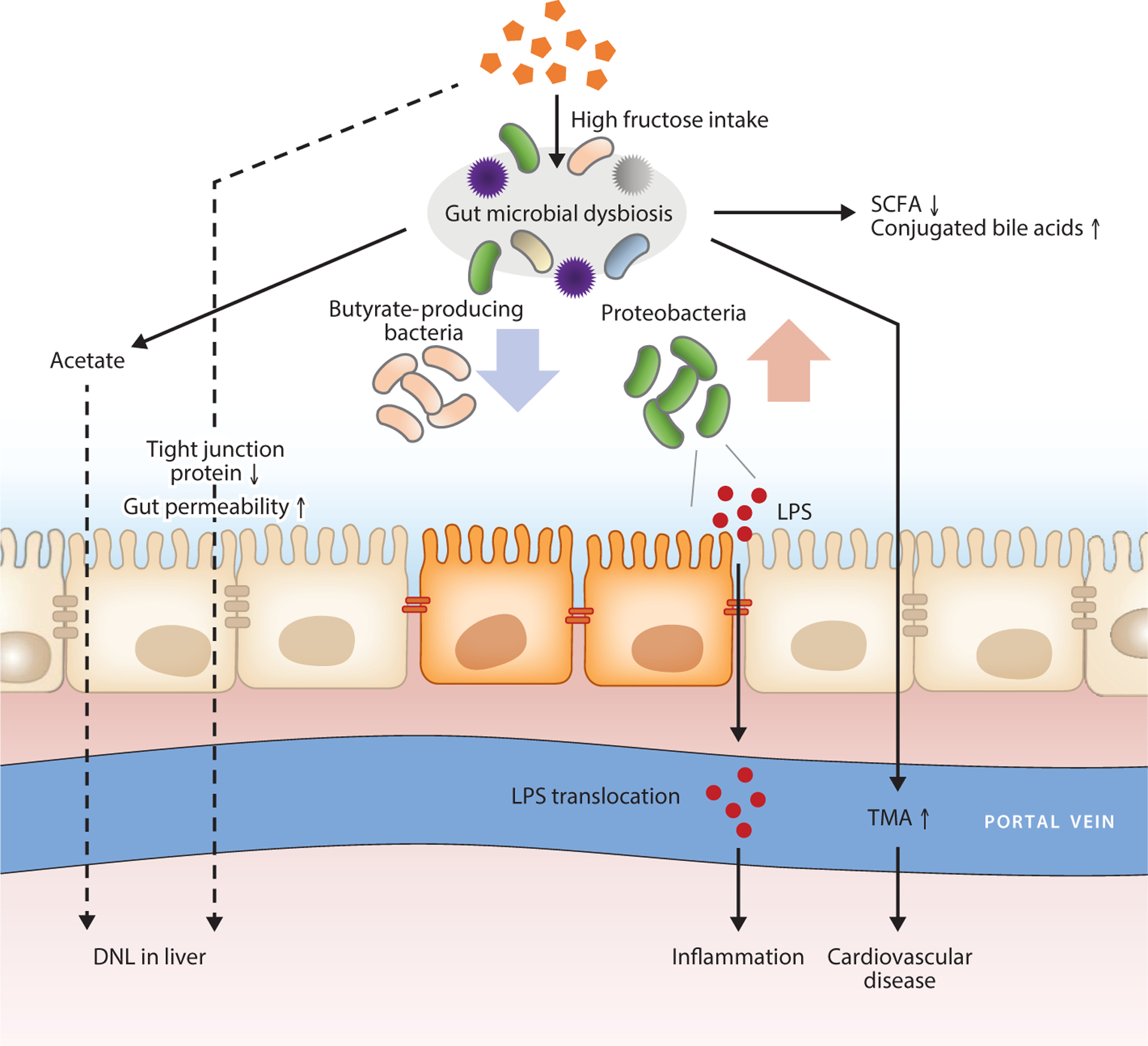
Role of gut microbiota in fructose-related pathologies. Chronic overconsumption of fructose induces gut dysbiosis, with decreased butyrate-producing bacteria and increased gram-negative Proteobacteria, which induces changes in microbial metabolites including SCFAs, TMA, LPS, and bile acids. Fructose also induces leaky gut, facilitating translocation of microbial toxic chemicals to the host organs. Abbreviations: DNL, de novo lipogenesis; LPS, lipopolysaccharide; SCFA, short-chain fatty acid; TMA, trimethylamine.

References

    1. Abdelmalek MF, Suzuki A, Guy C, Unalp-Arida A, Colvin R, et al. 2010. Increased fructose consumption is associated with fibrosis severity in patients with nonalcoholic fatty liver disease. Hepatology 51:1961–71 - PMC - PubMed
    1. Ahn IS, Lang JM, Olson CA, Diamante G, Zhang G, et al. 2020. Host genetic background and gut micro-biota contribute to differential metabolic responses to fructose consumption in mice. J. Nutr 150:2716–28 - PMC - PubMed
    1. Andres-Hernando A, Cicerchi C, Kuwabara M, Orlicky DJ, Sanchez-Lozada LG, et al. 2021. Umami-induced obesity and metabolic syndrome is mediated by nucleotide degradation and uric acid generation. Nat. Metab 3:1189–201 - PMC - PubMed
    1. Andres-Hernando A, Li N, Cicerchi C, Inaba S, Chen W, et al. 2017. Protective role of fructokinase blockade in the pathogenesis of acute kidney injury in mice. Nat. Commun 8:14181. - PMC - PubMed
    1. Barone S, Fussell SL, Singh AK, Lucas F, Xu J, et al. 2009. Slc2a5 (Glut5) is essential for the absorption of fructose in the intestine and generation of fructose-induced hypertension. J. Biol. Chem 284:5056–66 - PMC - PubMed

Publication types

MeSH terms