


Exploring actinomycetes natural products to identify potential multi-target inhibitors against Leishmania donovani
- PMID: 35999912
- PMCID: PMC9392678
- DOI: 10.1007/s13205-022-03304-1
Exploring actinomycetes natural products to identify potential multi-target inhibitors against Leishmania donovani
Abstract
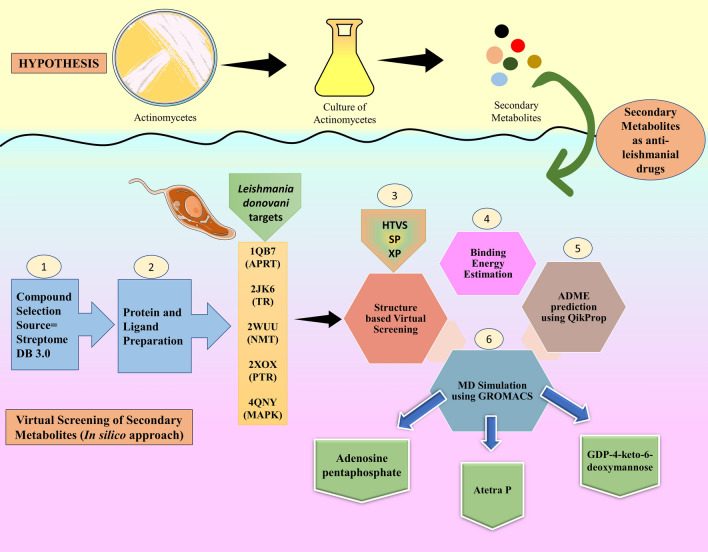
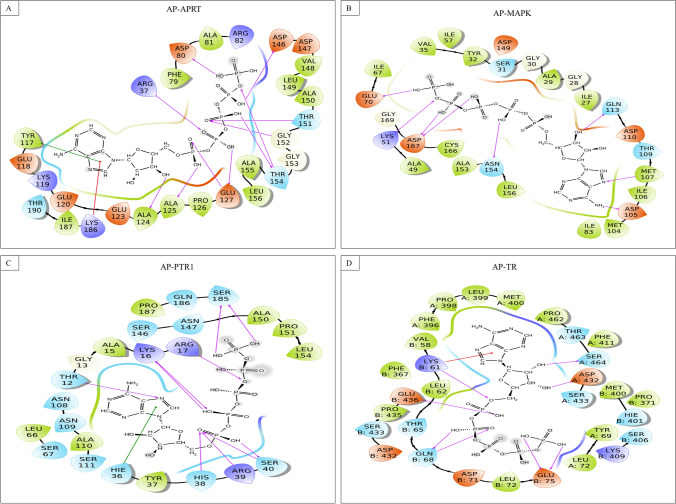
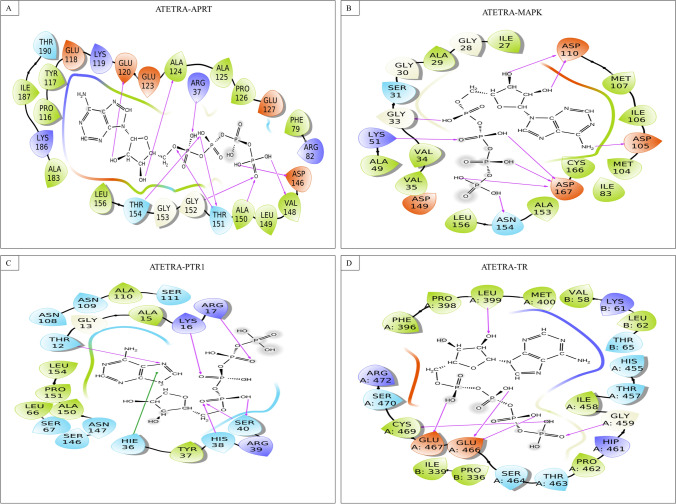
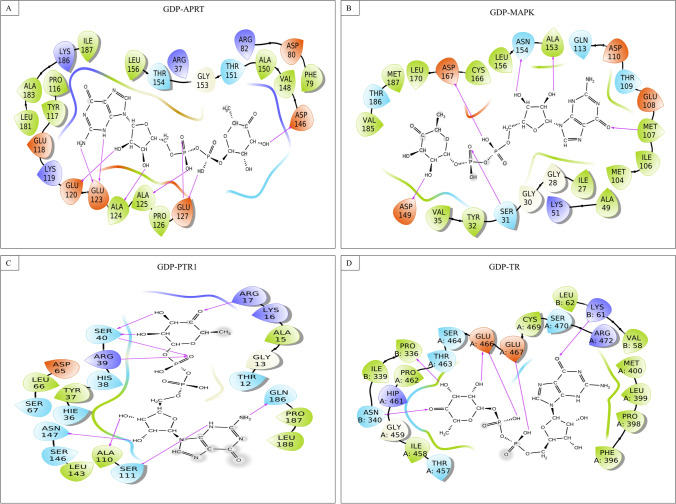
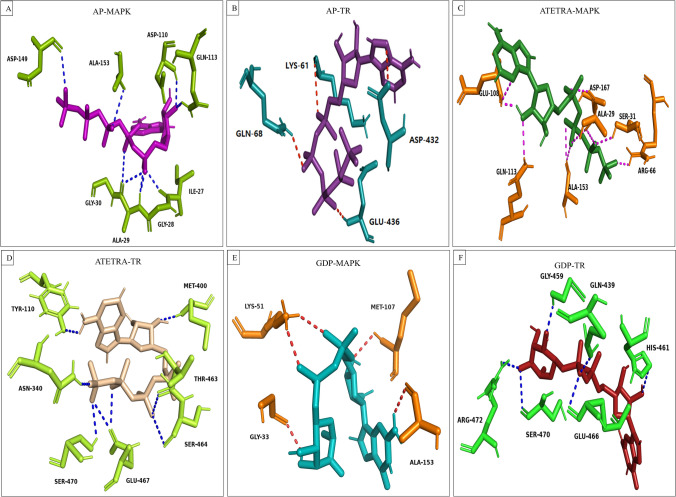
Visceral leishmaniasis (VL) is a neglected tropical disease that mainly affects the poor population of the Indian, African, and South American subcontinent. The increasing resistance to antimonial and miltefosine and frequent toxicity of amphotericin B drives an urgent need to develop an anti-leishmanial drug with excellent efficacy and safety profile. In this study, three sequential docking protocols (HTVS, SP, and XP) were performed to screen the secondary metabolites (n = 6519) from the actinomycetes source against five key proteins involved in the metabolic pathway of Leishmania donovani. Those proteins were adenine phosphoribosyltransferase (PDB ID: 1QB7), trypanothione reductase (PDB ID: 2JK6), N-myristoyl transferase (PDB ID: 2WUU), pteridine reductase (PDB ID: 2XOX), and MAP kinase (PDB ID: 4QNY). Although the binding energy of top ligands was predicted using the MM-GBSA module of the Schrödinger suite. SP and XP docking mode resulted in 55 multi-targeted ligands against L donovani. MM-GBSA analysis selected the top 18 ligands with good-binding affinity and the binding-free energy for four proteins, as mentioned earlier, when compared with the miltefosine, paromomycin, and a reference ligand selected for each target. Finally, molecular dynamics simulation, post-MD-binding-free energy (MM-PBSA), and principal component analysis (PCA) proposed three best ligands (Adenosine pentaphosphate, Atetra P, and GDP-4-keto-6-deoxymannose) qualifying the above screening parameters and confirmed as a potential drug candidate to fight against Leishmania donovani parasites.
Keywords: Actinomycetes; HTVS; Leishmania donovani; MM-PBSA; PCA; Secondary metabolites; Visceral leishmaniasis infection.
© King Abdulaziz City for Science and Technology 2022, Springer Nature or its licensor holds exclusive rights to this article under a publishing agreement with the author(s) or other rightsholder(s); author self-archiving of the accepted manuscript version of this article is solely governed by the terms of such publishing agreement and applicable law.
Conflict of interest statement
Conflict of interestThe Authors have declared no competing interest.
Figures


References
-
- Agarwal KC. Purines and myocardial protection. Boston, MA, US: Springer; 1996. Purines and regulation of platelet activation; pp. 409–418.
-
- Balasubramaniam DM, Williams DP (2020) WebGRO for Macromolecular Simulations.
LinkOut - more resources
Full Text Sources
