


γδ T cell exhaustion: Opportunities for intervention
- PMID: 36000310
- PMCID: PMC9804355
- DOI: 10.1002/JLB.5MR0722-777R
γδ T cell exhaustion: Opportunities for intervention
Abstract
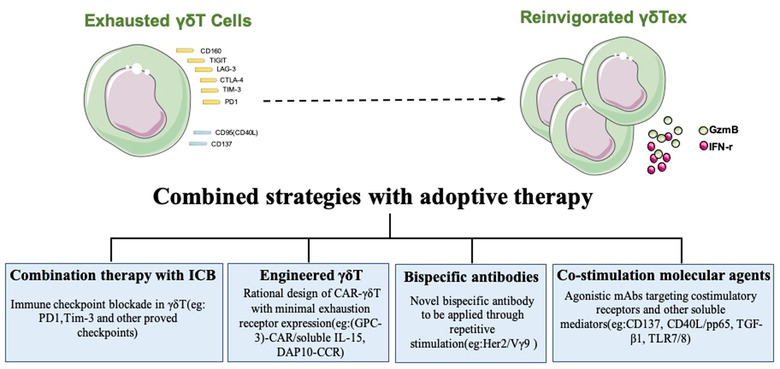
T lymphocytes are the key protective contributors in chronic infection and tumor, but experience exhaustion by persistent antigen stimulation. As an unconventional lineage of T cells, γδ T cells can rapidly response to varied infectious and tumor challenges in a non-MHC-restricted manner and play key roles in immune surveillance via pleiotropic effector functions, showing promising as candidates for cellular tumor immunotherapy. Activated γδ T cells can also acquire exhaustion signature with elevated expression of immune checkpoints, such as PD-1, decreased cytokine production, and functional impairment. However, the exhaustion features of γδ T cells are distinct from conventional αβ T cells. Here, we review the researches regarding the characteristics, heterogeneity, and mechanisms of γδ T cell exhaustion. These studies provide insights into the combined strategies to overcome the exhaustion of γδ T cells and enhance antitumor immunity. Summary sentence: Review of the characteristics, heterogeneity, and mechanisms of γδ T cell exhaustion provides insights into the combined strategies to enhance γδ T cell-based antitumor immunotherapy.
Keywords: PD-1; exhaustion; immune checkpoints; immunotherapy; γδ T cells.
© 2022 The Authors. Journal of Leukocyte Biology published by Wiley Periodicals LLC on behalf of Society for Leukocyte Biology.
Conflict of interest statement
None of the authors have any conflict of interests.
Figures
References
Publication types
MeSH terms
Substances
LinkOut - more resources
Full Text Sources
Medical
Research Materials
