


A risk calculator to predict suicide attempts among individuals with early-onset bipolar disorder
- PMID: 36002150
- PMCID: PMC12532099
- DOI: 10.1111/bdi.13250
A risk calculator to predict suicide attempts among individuals with early-onset bipolar disorder
Abstract
Objectives: To build a one-year risk calculator (RC) to predict individualized risk for suicide attempt in early-onset bipolar disorder.
Methods: Youth numbering 394 with bipolar disorder who completed ≥2 follow-up assessments (median follow-up length = 13.1 years) in the longitudinal Course and Outcome of Bipolar Youth (COBY) study were included. Suicide attempt over follow-up was assessed via the A-LIFE Self-Injurious/Suicidal Behavior scale. Predictors from the literature on suicidal behavior in bipolar disorder that are readily assessed in clinical practice were selected and trichotomized as appropriate (presence past 6 months/lifetime history only/no lifetime history). The RC was trained via boosted multinomial classification trees; predictions were calibrated via Platt scaling. Half of the sample was used to train, and the other half to independently test the RC.
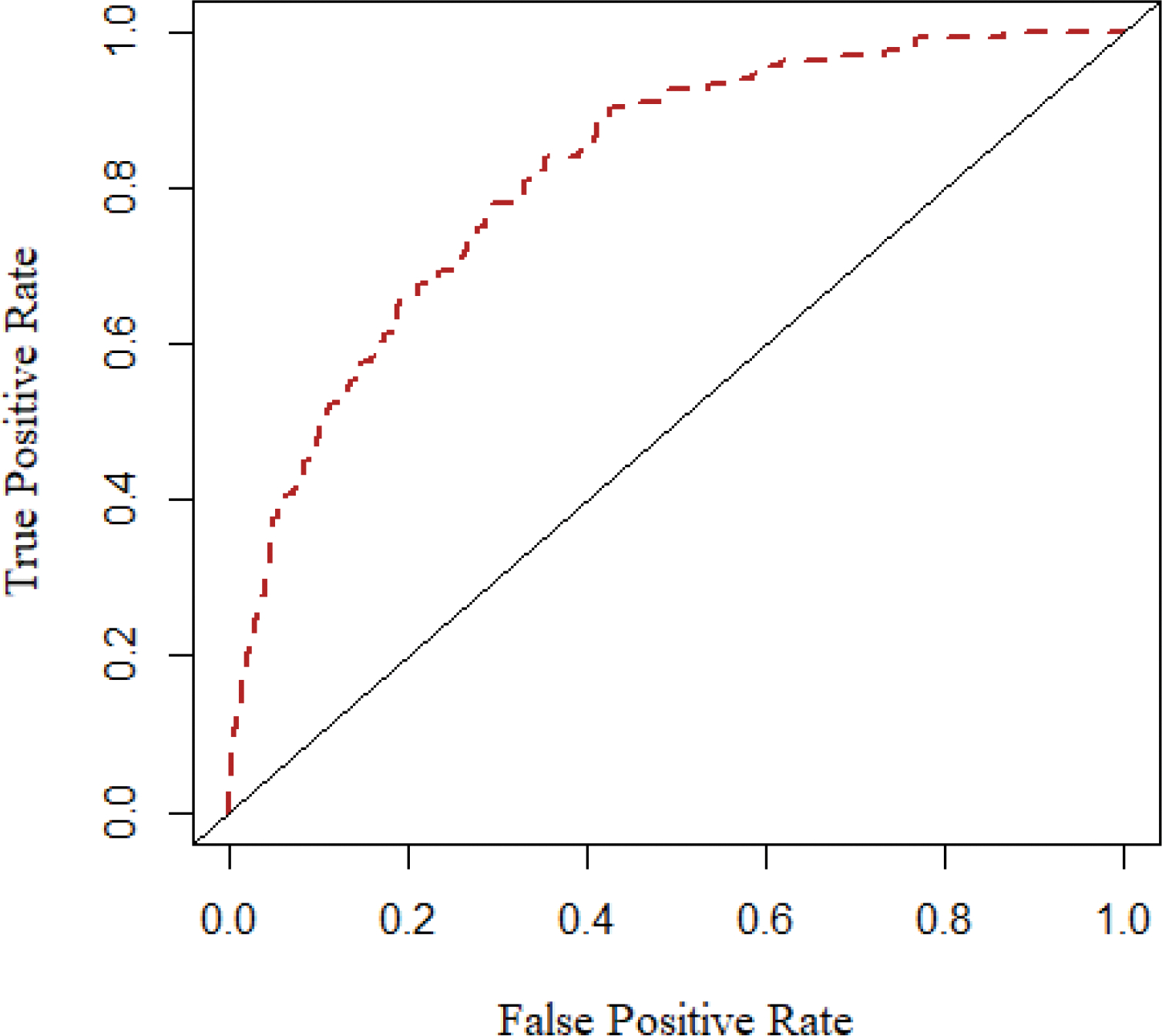
Results: There were 249 suicide attempts among 106 individuals. Ten predictors accounted for >90% of the cross-validated relative influence in the model (AUC = 0.82; in order of relative influence): (1) age of mood disorder onset; (2) non-suicidal self-injurious behavior (trichotomized); (3) current age; (4) psychosis (trichotomized); (5) socioeconomic status; (6) most severe depressive symptoms in past 6 months (trichotomized none/subthreshold/threshold); (7) history of suicide attempt (trichotomized); (8) family history of suicidal behavior; (9) substance use disorder (trichotomized); (10) lifetime history of physical/sexual abuse. For all trichotomized variables, presence in the past 6 months reliably predicted higher risk than lifetime history.
Conclusions: This RC holds promise as a clinical and research tool for prospective identification of individualized high-risk periods for suicide attempt in early-onset bipolar disorder.
Keywords: bipolar disorder; child and adolescent; risk calculator; suicide.
© 2022 John Wiley & Sons A/S. Published by John Wiley & Sons Ltd.
Figures
References
-
- Curtin SC, Heron M. Death rates due to suicide and homicide among persons aged 10–24: United States, 2000–2017. Vol. 352. 2019. NCHS Data Brief. https://www.cdc.gov/nchs/products/index.htm. - PubMed
Publication types
MeSH terms
Grants and funding
LinkOut - more resources
Full Text Sources
Medical
Miscellaneous
