


Genetic diversity of Brazilian Bacillus thuringiensis isolates with toxicity against Aedes aegypti (Diptera: Culicidae)
- PMID: 36002607
- PMCID: PMC9402949
- DOI: 10.1038/s41598-022-18559-0
Genetic diversity of Brazilian Bacillus thuringiensis isolates with toxicity against Aedes aegypti (Diptera: Culicidae)
Abstract
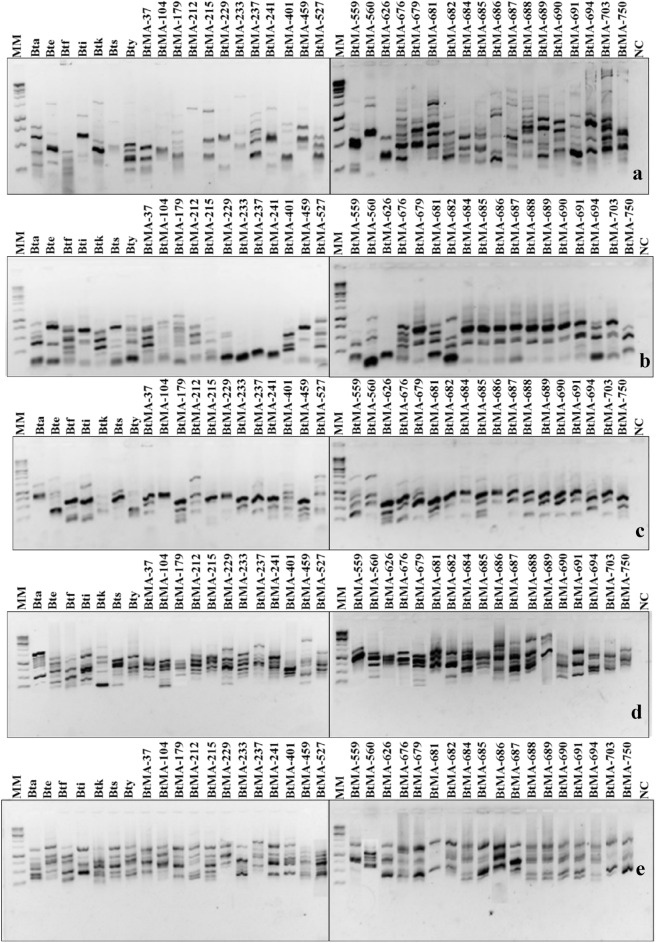
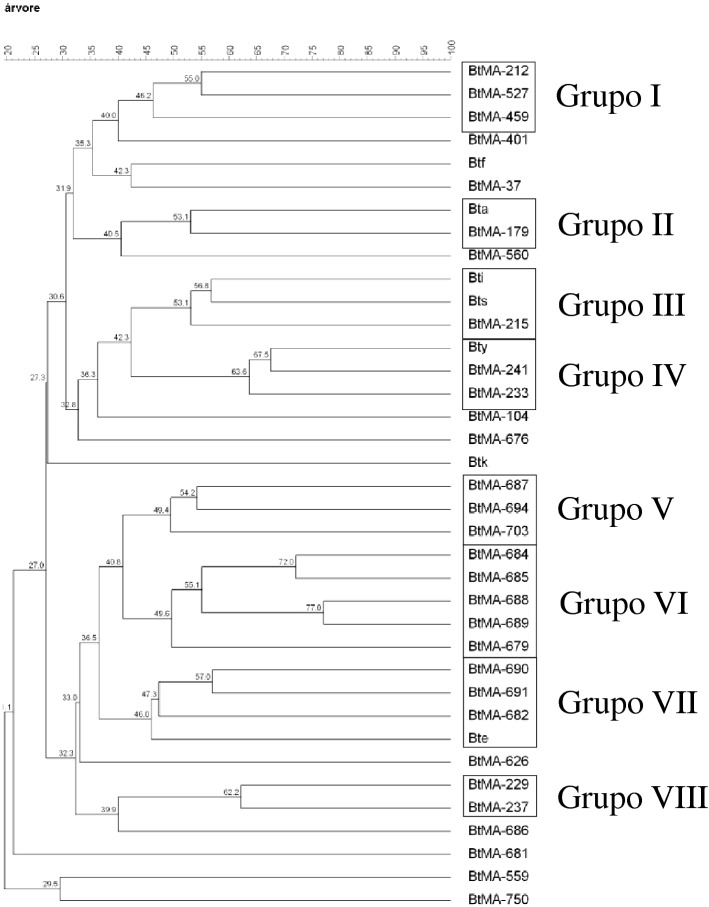
Bacillus thuringiensis (Bt) isolates native to Maranhão (BtMA) that are highly toxic to Aedes aegypti larvae and seven standard subspecies of Bt were analyzed for genetic diversity using the rep-PRC technique with BOX, ERIC, REP, MB1, and GTG5 markers. The rep-PCR technique is considered an extremely reliable, reproducible, fast and highly discriminatory technique that may be used even among populations of the same species. These five markers revealed a total of 38 polymorphic DNA fragments for 30 BtMA isolates. Eight groups were obtained with the dendrogram generated through Pearson's correlation analysis, with four groups formed only with BtMA isolates and four comprised of isolates of BtMA and the standard subspecies toxic to dipterans and lepidopterans. Despite the high genetic diversity of BtMA, a low correlation between the collection site, gene content and mortality against A. aegypti larvae was evidenced. The clustering of the standard subspecies of Bt that were toxic against dipterans with BtMA isolates confirm the mosquitocidal action of the native isolates from Maranhão, and they can be used as an alternative for A. aegypti control and other insects of medical importance and for the control of agricultural pests.
© 2022. The Author(s).
Conflict of interest statement
The authors declare no competing interests.
Figures
References
-
- Federici BA, Park H-W, Bideshi DK. Overview of the basic biology of Bacillus thuringiensis with emphasis on genetic engineering of bacterial larvicides for mosquito control. Open Toxinol. J. 2010;3:154–171. doi: 10.2174/1875414701003010083. - DOI
Publication types
MeSH terms
Substances
LinkOut - more resources
Full Text Sources
Medical
Miscellaneous
