


Challenges and lessons from a school-based human papillomavirus (HPV) vaccination program for adolescent girls in a rural Nigerian community
- PMID: 36002832
- PMCID: PMC9400556
- DOI: 10.1186/s12889-022-13975-3
Challenges and lessons from a school-based human papillomavirus (HPV) vaccination program for adolescent girls in a rural Nigerian community
Abstract
Background: Over 80% of new cervical cancer cases occur in women living in low- and middle-income countries. It is the second highest cause of female cancer deaths in Nigeria. School based vaccination programs are an effective strategy for delivering the HPV vaccine to adolescent girls. This study aims to understand the challenges to implementing school-based HPV vaccination programs, particularly in a remote rural setting where vaccine hesitancy is high.
Methods: A 22- item interviewer administered questionnaire was used to evaluate HPV knowledge and willingness to get the HPV vaccinate among 100 female secondary school students as part of an HPV vaccination pilot in a rural community in Kebbi State, Nigeria. Additionally, semi-structured interviews were used to assess community knowledge and attitudes on cervical cancer and HPV vaccination. Data collected were analyzed thematically to understand challenges and generate lessons for vaccine delivery in the study setting.
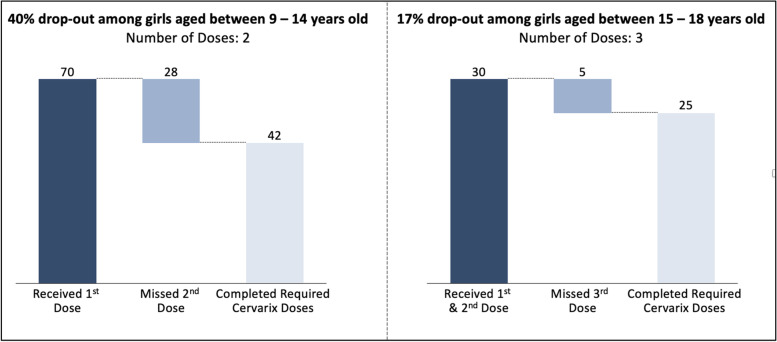
Results: Knowledge of HPV and cervical cancer among junior secondary school aged girls was fair with a mean score of 66.05%. For senior secondary school aged girls, the knowledge score ranged from 70 to 100% with a mean of 96.25% indicating good knowledge of HPV and cervical cancer. All participants (n = 100) received the first vaccine dose but due to COVID-19, 33 participants were not able to complete the vaccine dosage within the recommended 6-month schedule. Of the parents who provided consent, none could afford the vaccine out of pocket. Challenges to vaccine delivery included operational costs exacerbated by lack of adequate health workforce and infrastructure in the study setting.
Conclusion: An exploration of sociocultural perspectives and contextual realities is crucial to understanding the complexities of HPV vaccine introduction from the perspective of the target audience, and the local community. Strategies for introducing the HPV vaccine should address community concerns through effective communication, appropriate delivery, and targeted advocacy to make the vaccination program locally relevant. While school-based HPV immunization programs have been shown to be successful, adequate design, planning and monitoring is important. Additionally, considerations must be made to account for the high operational cost of vaccine delivery in rural, hard to reach areas where human resources and infrastructure are limited.
Keywords: Adolescent girls; Cervical cancer; Human papillomavirus (HPV); Nigeria; Vaccination.
© 2022. The Author(s).
Conflict of interest statement
The authors have read and understood the policy in declaration of interest and declare that they have no competing interests.
Figures
References
-
- Sung H, Ferlay J, Siegel RL, Laversanne M, Soerjomataram I, Jemal A, et al. Global Cancer statistics 2020: GLOBOCAN estimates of incidence and mortality worldwide for 36 cancers in 185 countries. CA Cancer J Clin. 2021;71(3):209–249. - PubMed
-
- World Health Organization . WHO | guide to introducing HPV vaccine into national immunization programmes. World Health Organization; 2016.
-
- Asempah E. Cervical Cancer prevalence in sub-Saharan Africa and HPV vaccination policy: a public health grand challenge? J Cancer Immunol. 2021;3(2):87–97.
Publication types
MeSH terms
Substances
LinkOut - more resources
Full Text Sources
Medical
