


Force-velocity relationship in Paralympic powerlifting: two or multiple-point methods to determine a maximum repetition
- PMID: 36002849
- PMCID: PMC9400284
- DOI: 10.1186/s13102-022-00552-9
Force-velocity relationship in Paralympic powerlifting: two or multiple-point methods to determine a maximum repetition
Abstract
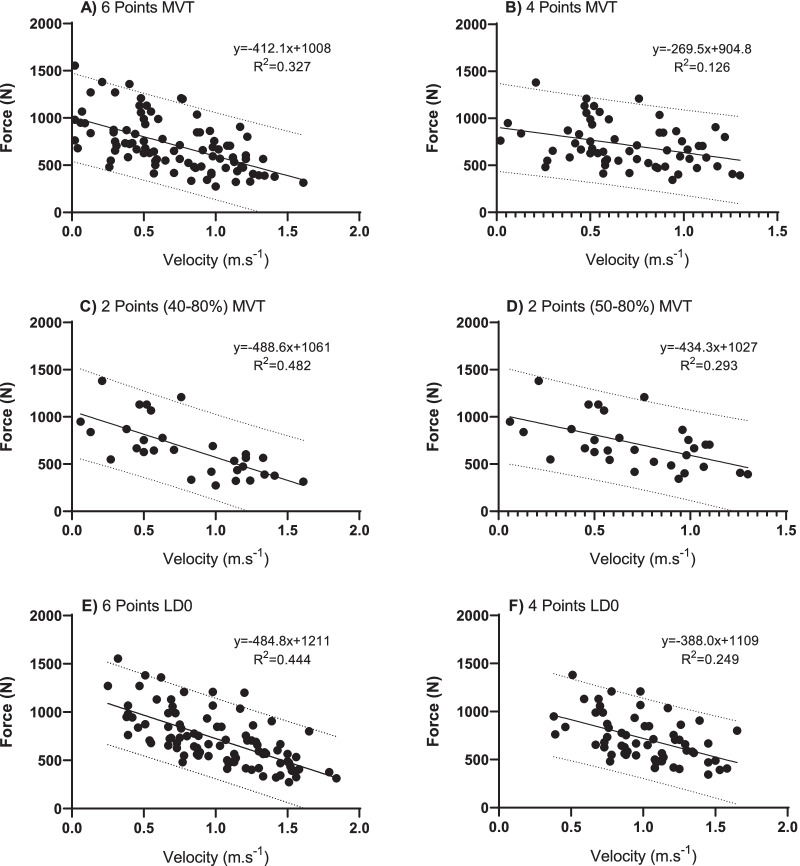
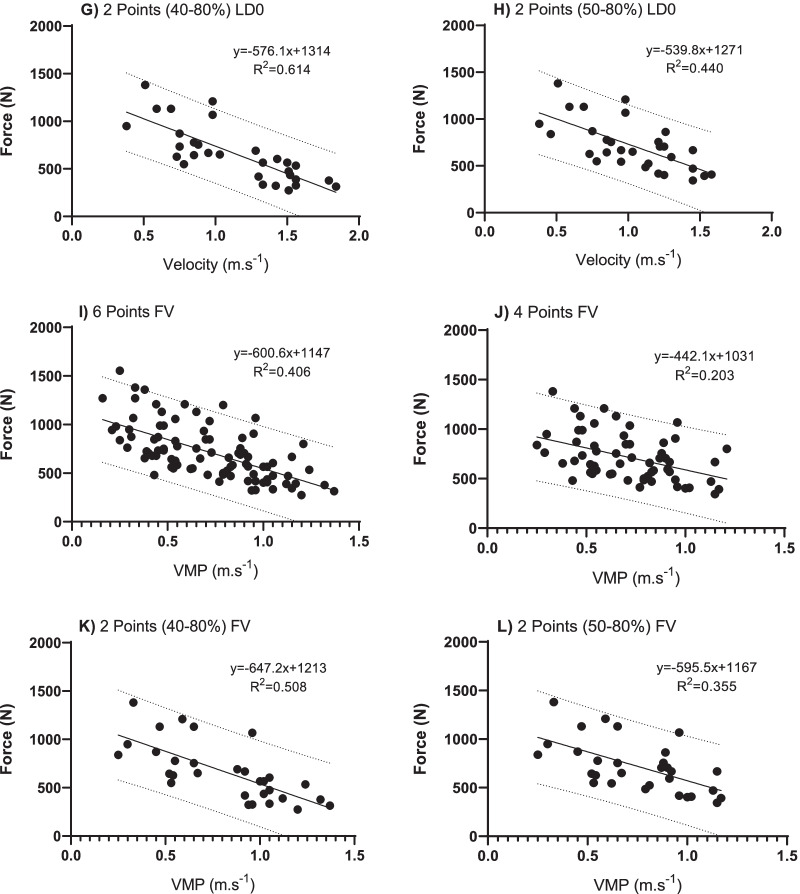
Background: Due to the absence of evidence in the literature on Paralympic Powerlifting the present study investigated various methods to assess bench press maximum repetition and the way each method influences the measurement of minimum velocity limit (MVT), load at zero velocity (LD0), and force-velocity (FV).
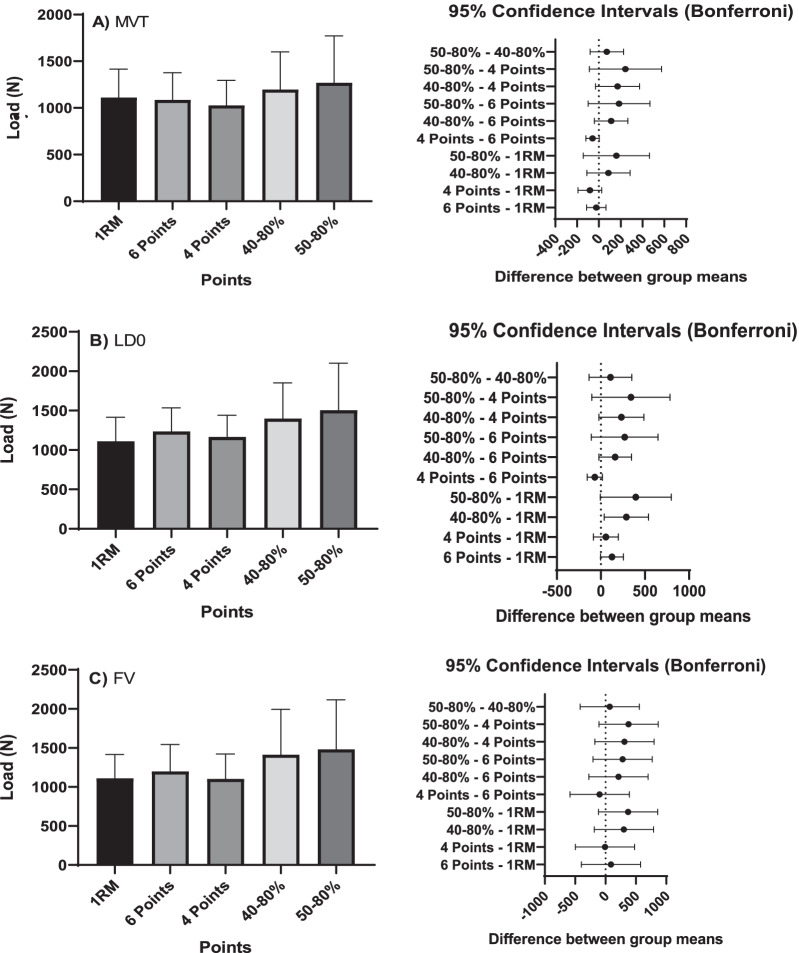
Objective: To evaluate the precision of the multi-point method using proximal loads (40, 50, 60, 70, 80, and 90% of one repetition maximum; 1RM) compared to the four-point method (50, 60, 70, and 80% of 1RM) and the two-point method using distant loads (40 and 80% and 50 and 80% of 1RM) in in the MVT, LD0, and FV, in bench press performed by Paralympic Powerlifters (PP).
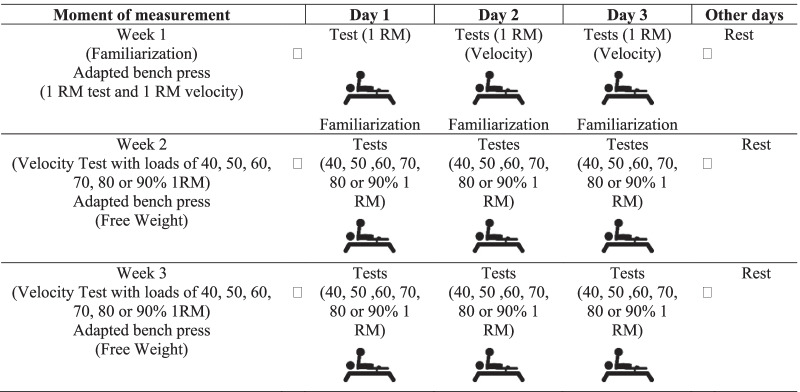
Methods: To accomplish this, 15 male elite PP athletes participated in the study (age: 27.7 ± 5.7 years; BM: 74.0 ± 19.5 kg). All participants performed an adapted bench press test (free weight) with 6 loads (40, 50, 60, 70, 80, and 90% 1RM), 4 loads (50, 60, 70, and 80% 1RM), and 2 loads (40-80% and 50-80% 1RM). The 1RM predictions were made by MVT, LD0, and FV.
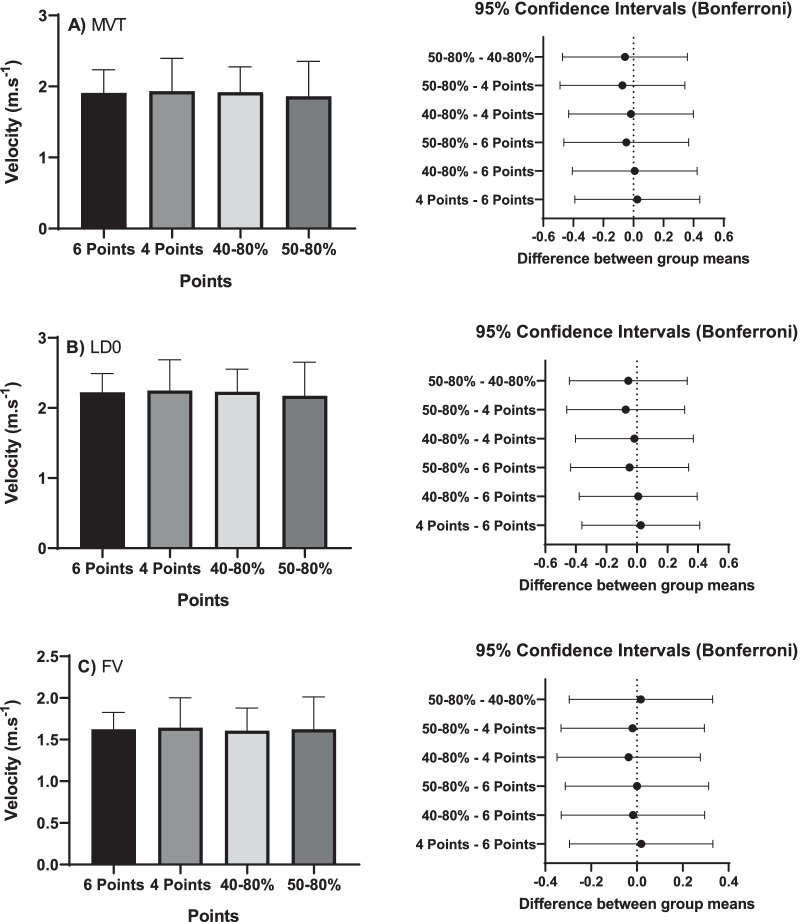
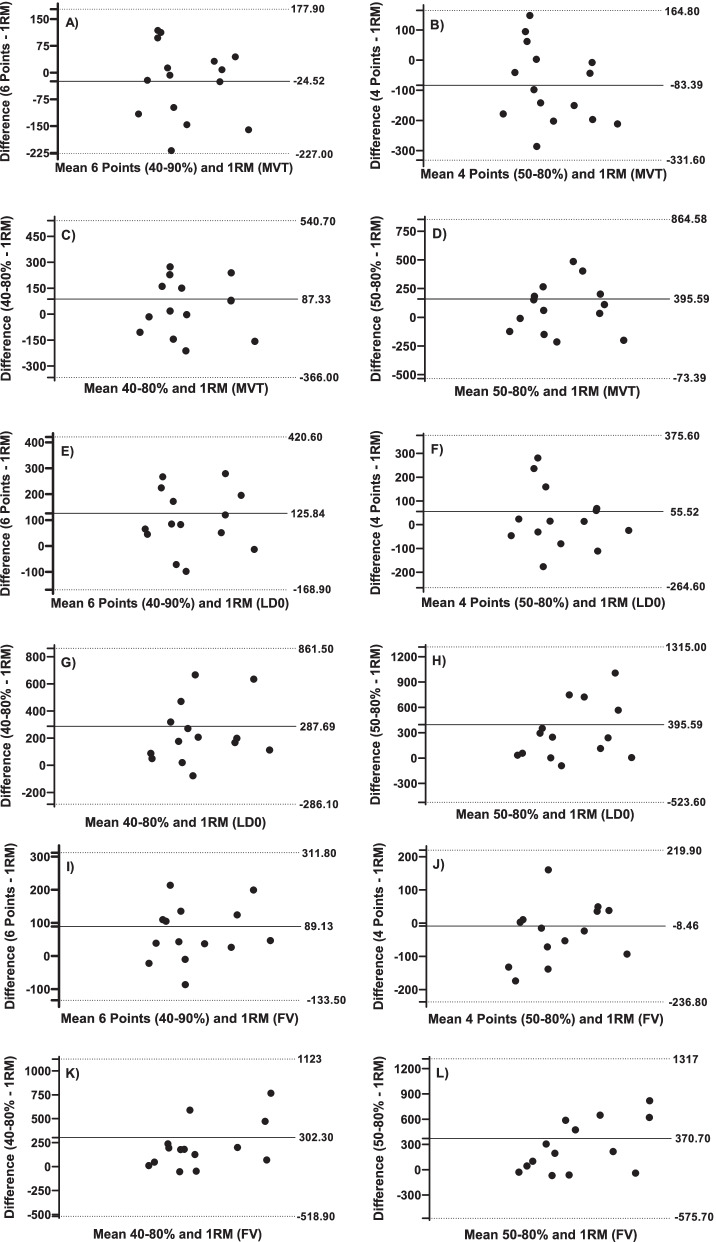
Results: The main results indicated that the multiple (4 and 6) pointsmethod provides good results in the MVT (R2 = 0.482), the LD0 (R2 = 0.614), and the FV (R2 = 0.508). The two-point method (50-80%) showed a higher mean in MVT [1268.2 ± 502.0 N; ICC95% 0.76 (0.31-0.92)], in LD0 [1504.1 ± 597.3 N; 0.63 (0.17-0.86)], and in FV [1479.2 ± 636.0 N; 0.60 (0.10-0.86)].
Conclusion: The multiple-point method (4 and 6 points) and the two-point method (40-80%) using the MVT, LD0, and FV all showed a good ability to predict bench press 1RM in PP.
Keywords: Force–velocity relationship; Load estimation; Multiple-load method; Paralympics; Powerlifting.
© 2022. The Author(s).
Conflict of interest statement
The authors declare that they have no competing interests.
Figures
References
-
- Aidar FJ, de Oliveira RJ, de Matos DG, Mazini Filho ML, Moreira OC, de Oliveira CE, Hickner RC, Reis VM. A Randomized trial investigating the influence of strength training on quality of life in ischemic stroke. Top Stroke Rehabil. 2016;23(2):84–89. doi: 10.1080/10749357.2015.1110307. - DOI - PubMed
-
- Mazini Filho ML, Aidar FJ, Gama de Matos D, Costa Moreira O, de Oliveira CEP, de Oliveira R, Venturini G, Magalhães Curty V, Menezes Touguinha H, Caputo Ferreira ME. Circuit strength training improves muscle strength, functional performance and anthropometric indicators in sedentary elderly women. J Sports Med Phys Fitness. 2018;58(7–8):1029–1036. - PubMed
-
- Mazini Filho ML, Aidar FJ, Moreira OC, Matos DG, Oliveira CEP, Venturini GRO, Costa SP, Curty VM, Ferreira MEC. Comparison of the effect of two physical exercise programs on the functional autonomy, balance and flexibility of elderly women. Med Sport. 2017;70:288–298. doi: 10.23736/S0025-7826.17.03012-5. - DOI
LinkOut - more resources
Full Text Sources
Miscellaneous
