


The process evaluation of a citizen science approach to design and implement workplace health promotion programs
- PMID: 36002884
- PMCID: PMC9399973
- DOI: 10.1186/s12889-022-14009-8
The process evaluation of a citizen science approach to design and implement workplace health promotion programs
Abstract
Background: Many workplace health promotion programs (WHPPs) do not reach blue-collar workers. To enhance the fit and reach, a Citizen Science (CS) approach was applied to co-create and implement WHPPs. This study aims to evaluate i) the process of this CS approach and ii) the resulting WHPPs.
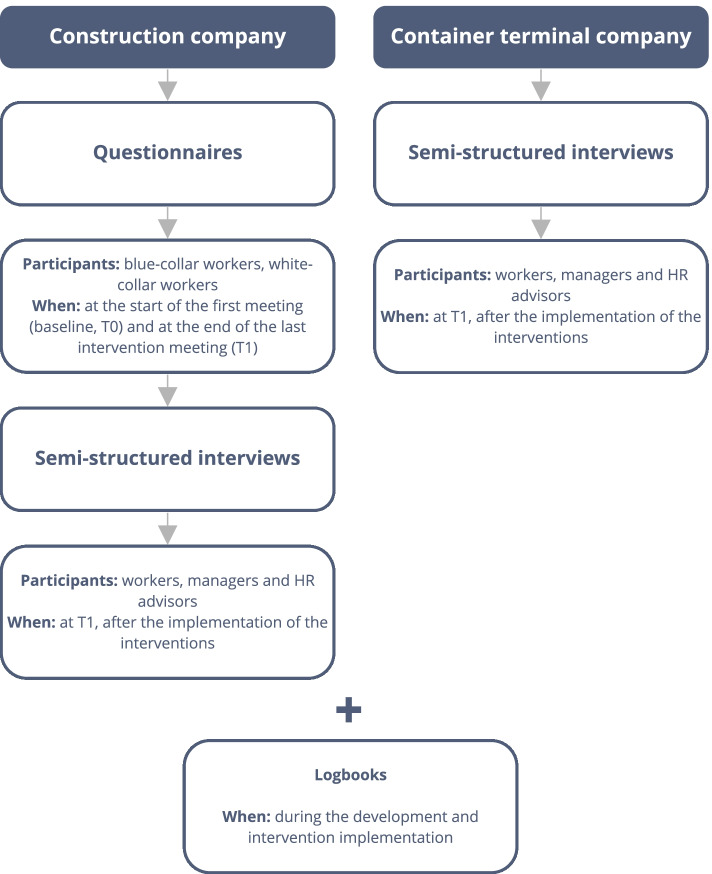
Methods: The study was performed in two companies: a construction company and a container terminal company. Data were collected by questionnaires, interviews and logbooks. Using the framework of Nielsen and Randall, process measures were categorized in the intervention, context and mental models. Interviews were transcribed and thematically coded using MaxQDA software.
Results: The involvement in the CS approach and co-creating the WHPPs was positively experienced. Information provision, sustained engagement over time and alignment with the workplace's culture resulted in barriers in the CS process. As to the resulting WHPPs, involvement and interaction during the intervention sessions were particularly experienced in small groups. The reach was affected by the unfavorable planning off the WHPPs and external events of re-originations and the covid-19 pandemic.
Discussion: Continuous information provision and engagement over time, better alignment with the workplace's culture and favorable planning are considered to be important factors for facilitating involvement, reach and satisfaction of the workers in a Citizen science approach to design and implement a WHPP. Further studies continuously monitoring the process of WHPPs using the CS approach could be helpful to anticipate on external factors and increase the adaptability.
Conclusions: Workers were satisfied with the involvement in WHPPs. Organizational and social cultural factors were barriers for the CS approach and its reach. Involvement and interaction in WHPPs were particularly experienced in small grouped sessions. Consequently, contextual and personal factors need be considered in the design and implementation of WHPPs with CS approach among blue-collar workers.
Keywords: Blue-collar workers; Citizen science; Process evaluation; Workplace health promotion program.
© 2022. The Author(s).
Conflict of interest statement
The authors declare that they have no competing interests.
Figures
References
-
- Schreuder K, Roelen C, Koopmans P, Groothoff J. Job demands and health complaints in white and blue collar workers. Work. 2008;31:425–432. - PubMed
-
- Heikkilä K, Fransson EI, Nyberg ST, Zins M, Westerlund H, Westerholm P, Virtanen M, Vahtera J, Suominen S, Steptoe A. Job strain and health-related lifestyle: findings from an individual-participant meta-analysis of 118 000 working adults. Am J Public Health. 2013;103:2090–2097. doi: 10.2105/AJPH.2012.301090. - DOI - PMC - PubMed
-
- Andersen LL, Fallentin N, Thorsen SV, Holtermann A. Physical workload and risk of long-term sickness absence in the general working population and among blue-collar workers: prospective cohort study with register follow-up. Occup Environ Med. 2016;73:246–253. doi: 10.1136/oemed-2015-103314. - DOI - PubMed
Publication types
MeSH terms
LinkOut - more resources
Full Text Sources
Medical
Research Materials
