


Meta-analysis of the benefit of beta-blockers for the reduction of isolated atrial fibrillation incidence after cardiac surgery
- PMID: 36003876
- PMCID: PMC9390535
- DOI: 10.1016/j.xjon.2020.07.004
Meta-analysis of the benefit of beta-blockers for the reduction of isolated atrial fibrillation incidence after cardiac surgery
Abstract
Objectives: Postoperative atrial fibrillation (POAF) is a common problem of cardiac surgery. Beta-blockers are recognized as effective prophylactic agents available for POAF management. To better understand its effect on isolated atrial fibrillation after cardiac surgery, a meta-analysis was conducted.
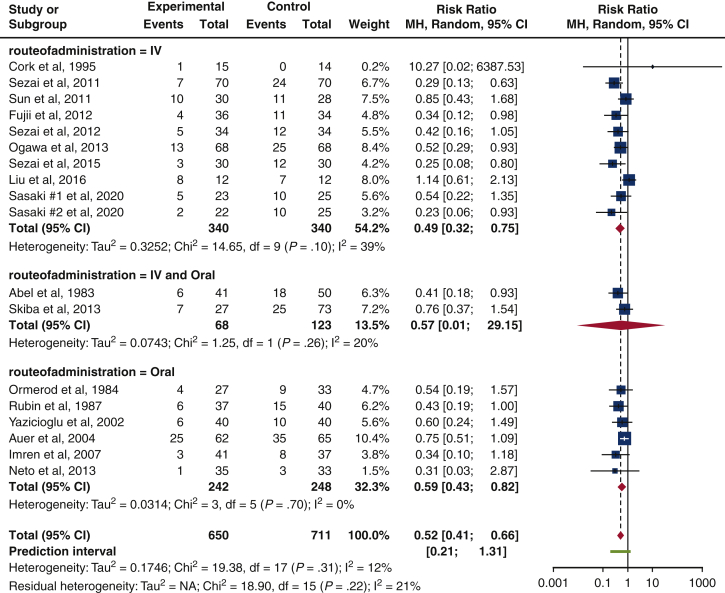
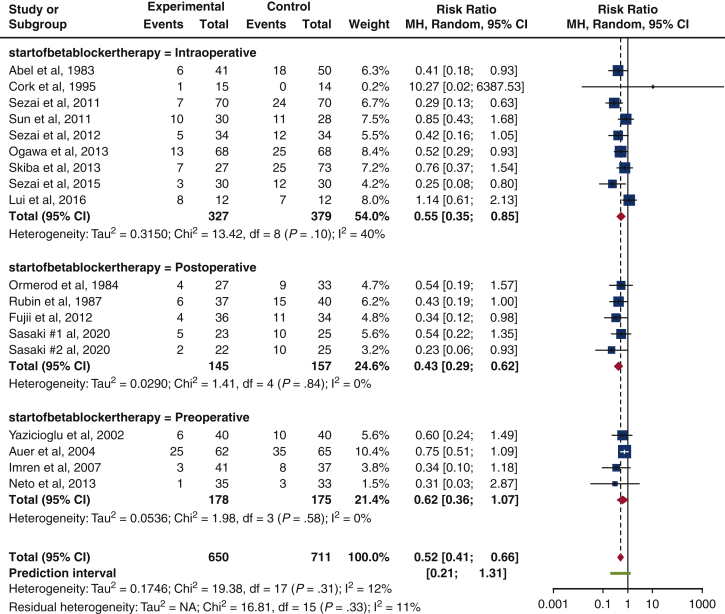
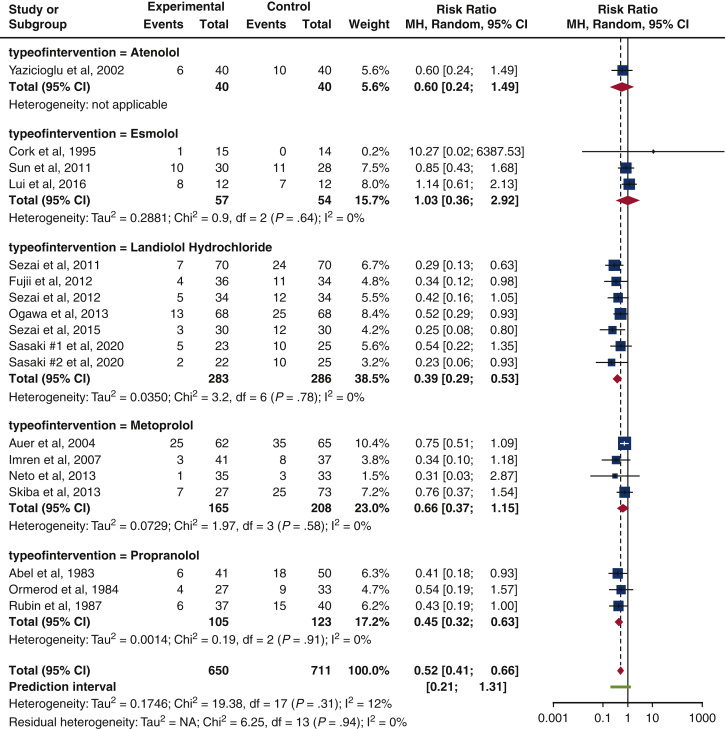
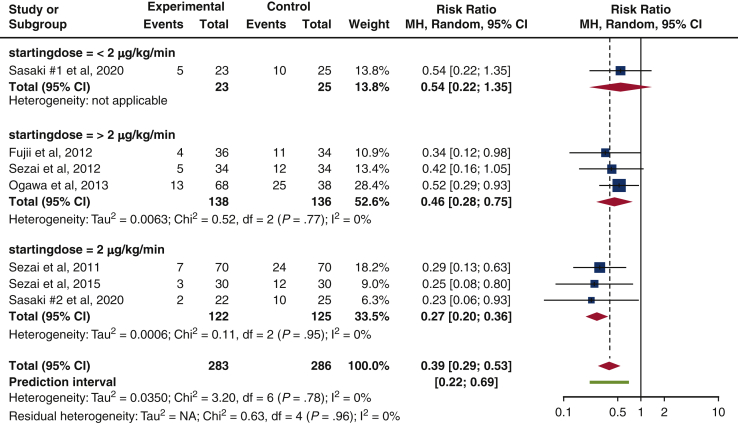
Methods: Randomized controlled trials (RCTs) were searched and filtered by comparing the efficacy of beta-blockers and control users in isolated POAF for cardiac surgery. Seventeen RCTs were identified and analyzed by typical meta-analysis methods. The search was performed from inception to May 31, 2020. Subgroup analyses were conducted for type of surgery and beta-blocker, starting time and route of administration of beta-blocker, and dosage of intravenous landiolol hydrochloride.
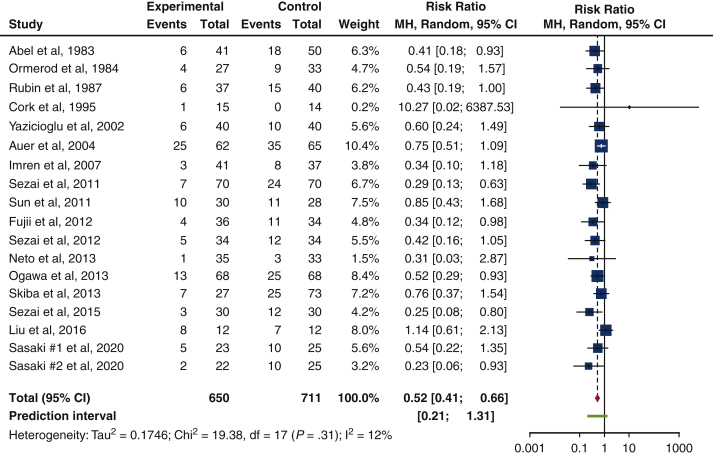
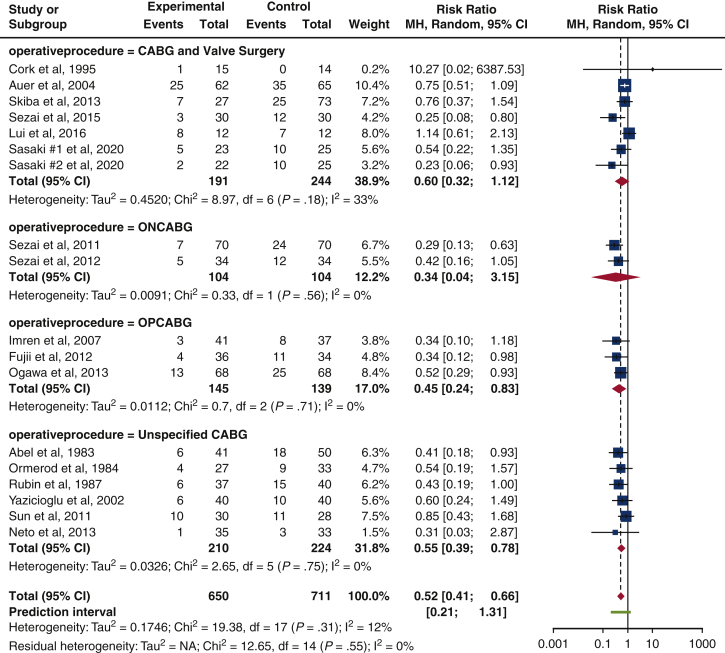
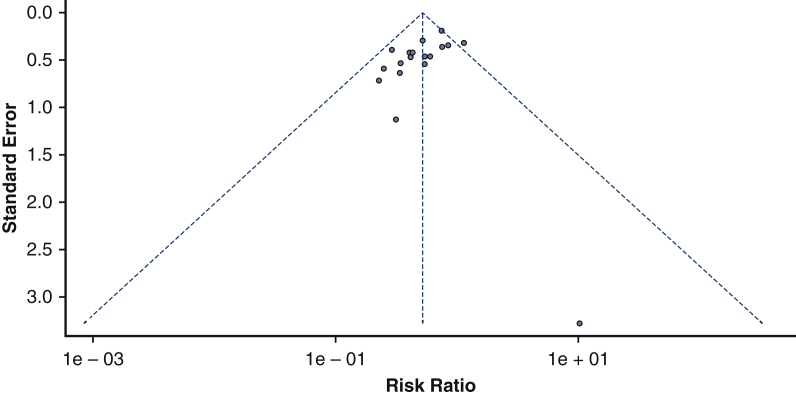
Results: Beta-blockers were effective in reducing isolated POAF risk (risk ratio [RR], 0.52 [0.41, 0.66], P = .31, I2 = 12%). In subgroup analyses, beta-blocker administration during postoperative period (RR, 0.43 [0.29, 0.62], P = .84, I2 = 0%) and on-pump coronary artery bypass graft (RR, 0.34 [0.04, 3.15], P = .56, I2 = 0%) had lowest risk of isolated POAF incidence. Intravenous landiolol hydrochloride at 2 μg/kg/min also had low risk of isolated POAF occurrence.
Conclusions: Beta-blocker treatment helps to reduce isolated atrial fibrillation incidence after cardiac surgery. Our subgroup analyses also reveal postoperative beta-blocker administration after on-pump coronary artery bypass graft surgery is most effective in reducing isolated POAF risk. Intravenous landiolol hydrochloride at a dosage of 2 μg/kg/min has also displayed favorable results. Further trials may be required to explore these factors.
Keywords: ACC/AHA, American College of Cardiology/American Heart Association; AF, atrial fibrillation; AFL, atrial flutter; CABG, coronary artery bypass surgery; COPD, chronic obstructive pulmonary disease; CPG, Clinical Practice Guidelines; IV, intravenous; ONCABG, on-pump coronary artery bypass grafting; OPCABG, off-pump coronary artery bypass grafting; POAF, postoperative atrial fibrillation; RCT, randomized controlled trial; RR, risk ratio; SVT, supraventricular tachycardia; atrial fibrillation; b-blocker, beta-blocker; beta-blocker; bypass graft; coronary disease; meta-analysis.
© 2020 The Authors.
Figures
References
-
- Villareal R.P., Hariharan R., Liu B.C., Kar B., Lee V.V., Elayda M., et al. Postoperative atrial fibrillation and mortality after coronary artery bypass surgery. J Am Coll Cardiol. 2004;43:742–748. - PubMed
-
- January C.T., Wann L.S., Alpert J.S., Calkins H., Cigarroa J.E., Cleveland J.C., Jr., et al. 2014 AHA/ACC/HRS guideline for the management of patients with atrial fibrillation: a report of the American College of Cardiology/American Heart Association task force on practice guidelines and the Heart Rhythm Society. J Am Coll Cardiol. 2014;64:e1–e76. - PubMed
-
- Crystal E., Connolly S.J., Sleik K., Ginger T.J., Yusuf S. Interventions on prevention of postoperative atrial fibrillation in patients undergoing heart surgery: a meta-analysis. Circulation. 2002;106:75–80. - PubMed
LinkOut - more resources
Full Text Sources
Other Literature Sources
