


Carbapenem-Resistant Enterobacteriaceae: A Retrospective Review of Presentation, Treatment, and Clinical Outcomes in a Tertiary Care Referral Hospital
- PMID: 36004017
- PMCID: PMC9392368
- DOI: 10.7759/cureus.27094
Carbapenem-Resistant Enterobacteriaceae: A Retrospective Review of Presentation, Treatment, and Clinical Outcomes in a Tertiary Care Referral Hospital
Abstract
Background: Carbapenem-resistant Enterobacteriaceae (CRE) is an emerging infectious threat with an increasing incidence locally and worldwide. It carries a high morbidity and mortality; focusing on this topic should be a priority in clinical research as local data are not widely available. The objective of this study is to describe the presentation, risk factors, treatment pattern and clinical outcomes associated with CRE infections.
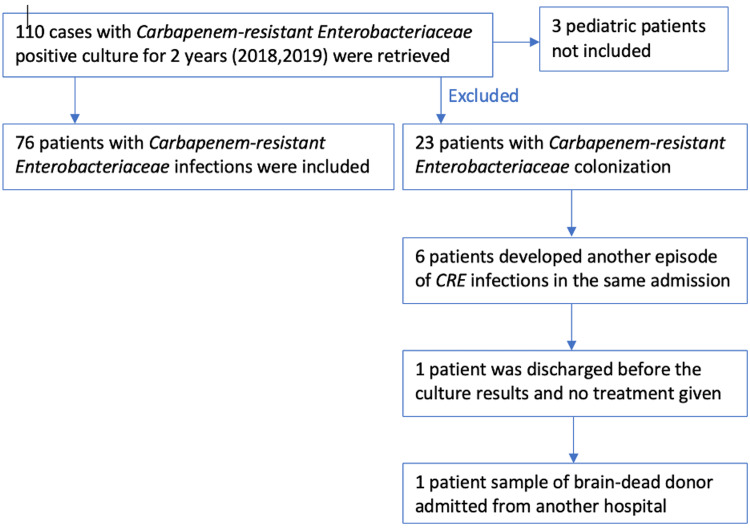
Methods: We conducted a cross-sectional retrospective study in a single center tertiary referral hospital. We included adult patients above 18 years of age with infection due to CRE between January 1, 2018, to December 30, 2019. Results: During this period, 76 cases were studied. The mean age of the cases was 54 years. The majority were immunosuppressed and admitted to the intensive care unit. The most frequent risk factors associated with CRE infection among study subjects included prior antibiotics in the preceding three months and prior hospital admission in the last one year. Klebsiella pneumoniae (77%) represented the most isolated organism. All-cause intensive care unit and in-hospital mortality were significantly higher among patients with pneumonia and bacteremia. Conclusions: CRE infections are associated with higher morbidity and mortality specifically in patients who presented with pneumonia and bacteremia. High resistance rate and limited treatment options have made a great variability in the clinical practice. Appropriate definitive treatment of CRE infections, strict infection control measures, and antimicrobial stewardship program activation are essential.
Keywords: carbapenem-resistant enterobacteriaceae; intensive care; mortality; risk factors; saudi.
Copyright © 2022, Al Khamis et al.
Conflict of interest statement
The authors have declared that no competing interests exist.
Figures
References
-
- Dramatic increase of third-generation cephalosporin-resistant E. coli in German intensive care units: secular trends in antibiotic drug use and bacterial resistance, 2001 to 2008. Meyer E, Schwab F, Schroeren-Boersch B, Gastmeier P. http://ccforum.com/content/14/3/R113. Crit Care. 2010;14:113. - PMC - PubMed
-
- The difficult-to-control spread of carbapenemase producers among Enterobacteriaceae worldwide. Nordmann P, Poirel L. http://10.1111/1469-0691.12719. Clin Microbiol Infect. 2014;20:821–830. - PubMed
-
- Epidemiology of carbapenem resistance Enterobacterales. Abou-assy RS, Aly MM, Amashah RH, Jastaniah SD, Deen HM. J Contemp Med Sci. 2022;8:9.
LinkOut - more resources
Full Text Sources