


Vitamin and Mineral Supplementation and Rate of Weight Gain during the First Trimester of Gestation in Beef Heifers Alters the Fetal Liver Amino Acid, Carbohydrate, and Energy Profile at Day 83 of Gestation
- PMID: 36005568
- PMCID: PMC9416667
- DOI: 10.3390/metabo12080696
Vitamin and Mineral Supplementation and Rate of Weight Gain during the First Trimester of Gestation in Beef Heifers Alters the Fetal Liver Amino Acid, Carbohydrate, and Energy Profile at Day 83 of Gestation
Abstract
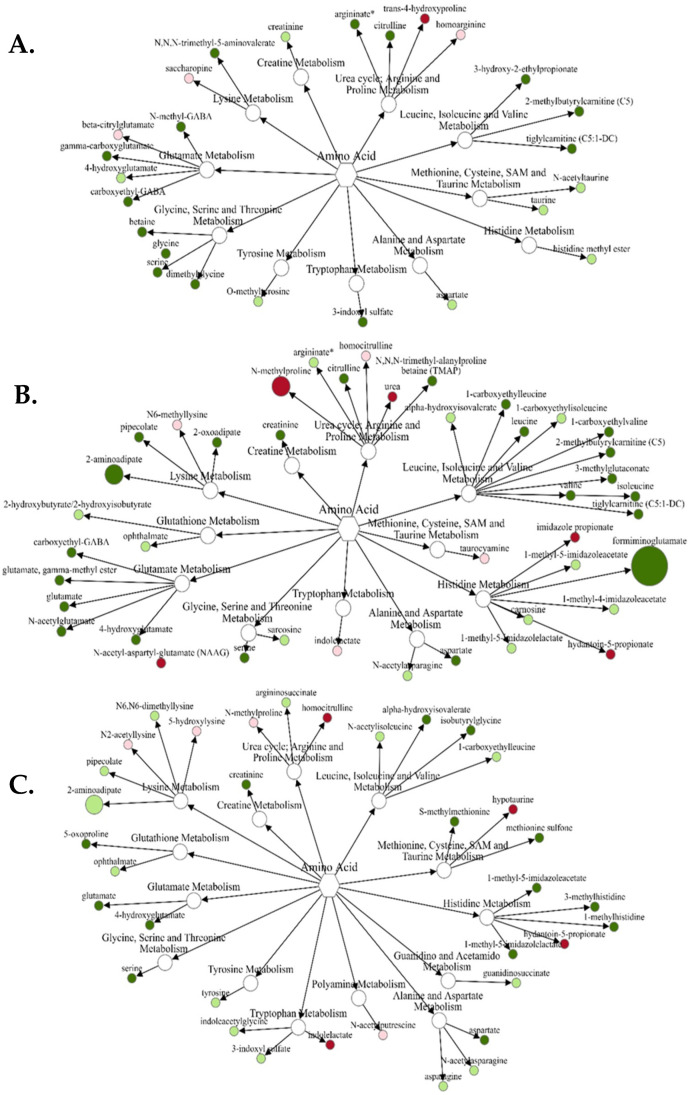
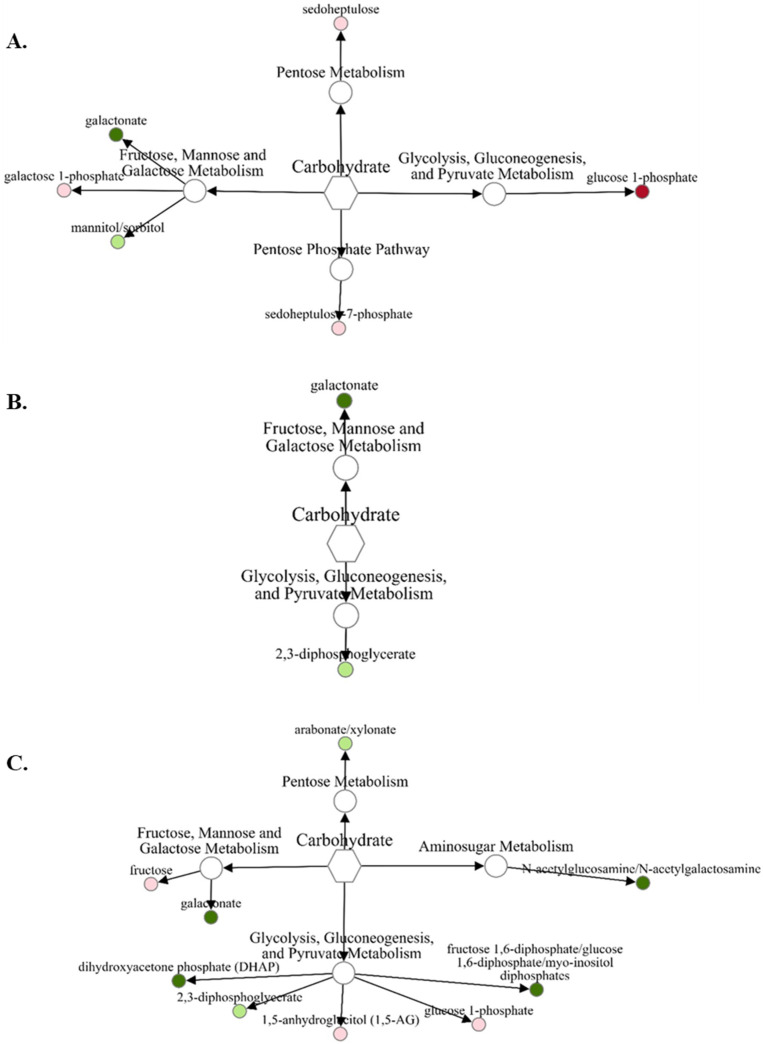
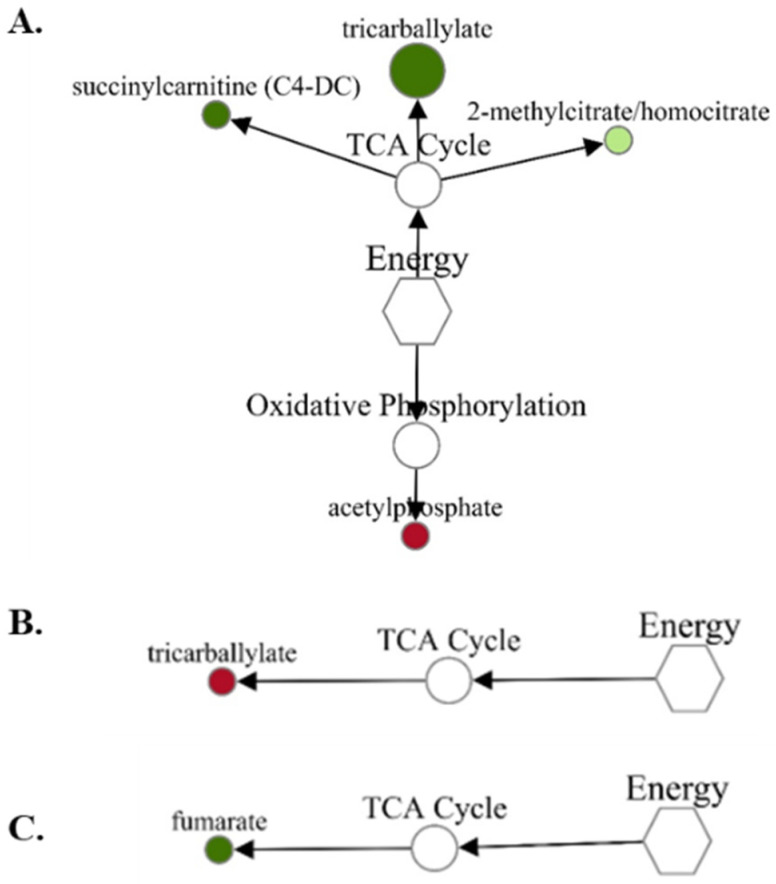
The objective of this study was to evaluate the effects of feeding heifers a vitamin and mineral supplement and targeting divergent rates of weight gain during early gestation on the fetal liver amino acid, carbohydrate, and energy profile at d 83 of gestation. Seventy-two crossbred Angus heifers were randomly assigned in a 2 × 2 factorial arrangement to one of four treatments comprising the main effects of vitamin and mineral supplementation (VTM or NOVTM) and feeding to achieve different rates of weight gain (low gain [LG] 0.28 kg/day vs. moderate gain [MG] 0.79 kg/day). Thirty-five gestating heifers with female fetuses were ovariohysterectomized on d 83 of gestation and fetal liver was collected and analyzed by reverse phase UPLC-tandem mass spectrometry with positive and negative ion mode electrospray ionization, as well as by hydrophilic interaction liquid chromatography UPLC-MS/MS with negative ion mode ESI for compounds of known identity. The Glycine, Serine, and Threonine metabolism pathway and the Leucine, Isoleucine, and Valine metabolism pathway had a greater total metabolite abundance in the liver of the NOVTM-LG group and least in the VTM-LG group (p < 0.01). Finally, both the TCA Cycle and Oxidative Phosphorylation pathways within the Energy Metabolism superpathway were differentially affected by the main effect of VTM, where the TCA cycle metabolites were greater (p = 0.04) in the NOVTM fetal livers and the Oxidative Phosphorylation biochemicals were greater (p = 0.02) in the fetal livers of the VTM supplemented heifers. These data demonstrate that the majority of metabolites that are affected by rate of weight gain or vitamin/mineral supplementation are decreased in heifers on a greater rate of weight gain or vitamin/mineral supplementation.
Keywords: early gestation; fetal liver; metabolome; mineral; rate of weight gain; vitamin.
Conflict of interest statement
J.C.F and R.S. are employees of Purina Animal Nutrition LLC (Land O’ Lakes, Inc., Arden Hills, MN, USA). Purina Animal Nutrition LLC manufactured the Purina Wind & Rain Storm All-Season 7.5 Complete mineral, the VTM and NOVTM pellets, and the protein/energy supplement used in this study. Tissues were provided to the first author for metabolomics analysis. The metabolomics analysis was not funded by Purina Animal Nutrition LLC. The funding, collection, analysis, and interpretation of the data were done entirely independently by M.S.C. The first author led the writing of the paper with inputs from the co-authors who declare no conflict of interest.
Figures
References
-
- Crouse S.M., Greseth N.P., McLean K.J., Crosswhite M.R., Pereira N.N., Ward A.K., Reynolds L.P., Dahlen C.R., Neville B.W., Borowicz P.P., et al. Maternal nutrition and stage of early pregnancy in beef heifers: Impacts on hexose and AA concentrations in maternal and fetal fluids. J. Anim. Sci. 2019;97:1296–1316. doi: 10.1093/jas/skz013. - DOI - PMC - PubMed
-
- National Academies of Sciences, Engineering, and Medicine . Nutrient Requirements of Beef Cattle: Eighth Revised Edition. The National Academies Press; Washington, DC, USA: 2016. - PubMed
Grants and funding
LinkOut - more resources
Full Text Sources
