


Understanding the Prodromal Period of Necrotizing Soft Tissue Infections of the Genitalia (Fournier's Gangrene) and the Incidence, Duration, and Risk Factors Associated With Potential Missed Opportunities for an Earlier Diagnosis: A Population-based Longitudinal Study
- PMID: 36006046
- PMCID: PMC11005462
- DOI: 10.1097/JU.0000000000002920
Understanding the Prodromal Period of Necrotizing Soft Tissue Infections of the Genitalia (Fournier's Gangrene) and the Incidence, Duration, and Risk Factors Associated With Potential Missed Opportunities for an Earlier Diagnosis: A Population-based Longitudinal Study
Abstract
Purpose: The purpose of this paper was to investigate patterns of health care utilization leading up to diagnosis of necrotizing soft tissue infections of the genitalia and to identify risk factors associated with potential diagnostic delay.
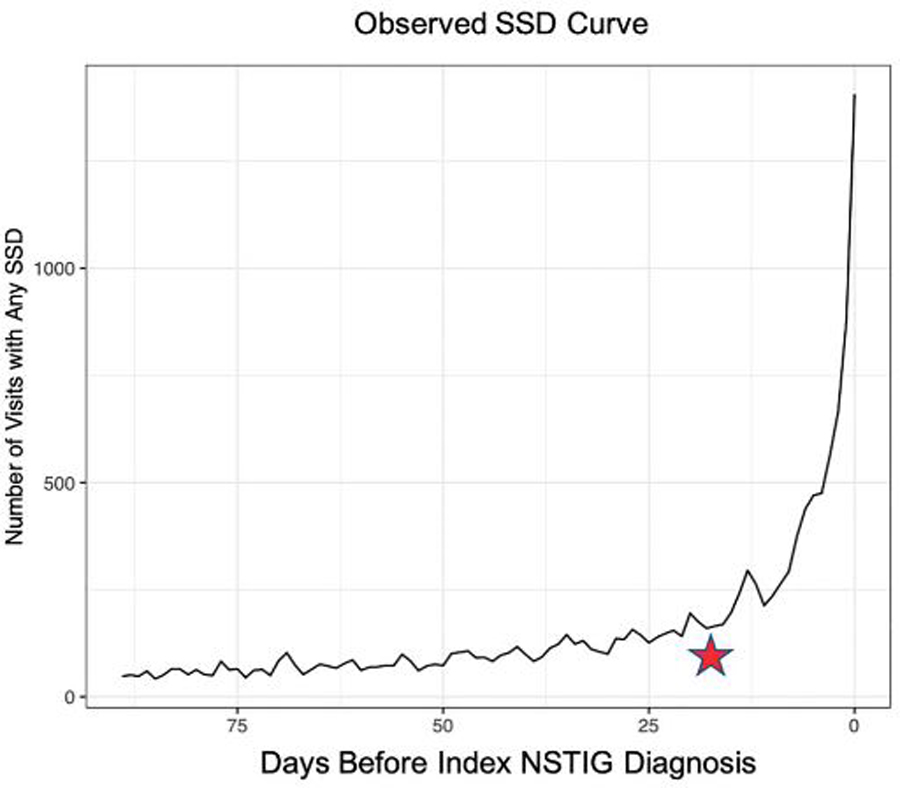
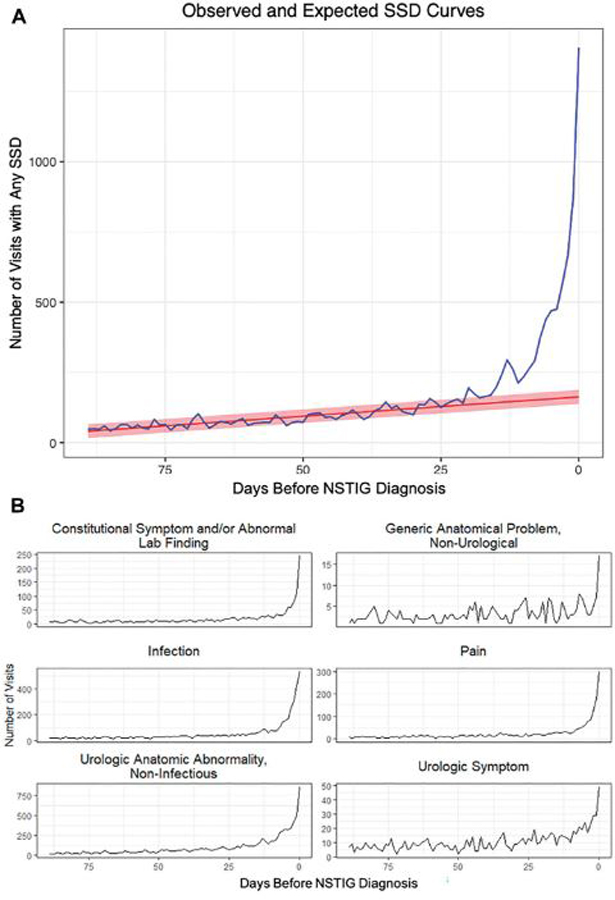
Materials and methods: IBM MarketScan Research Databases (2001-2020) were used to identify index cases of necrotizing soft tissue infections of the genitalia. We identified health care visits for symptomatically similar diagnoses (eg, penile swelling, cellulitis) that occurred prior to necrotizing soft tissue infections of the genitalia diagnosis. A change-point analysis identified the window before diagnosis where diagnostic opportunities first appeared. A simulation model estimated the likelihood symptomatically similar diagnosis visits represented a missed opportunity for earlier diagnosis. Patient and provider characteristics were evaluated for their associations with delay.
Results: We identified 8,098 patients with necrotizing soft tissue infections of the genitalia, in which 4,032 (50%) had a symptomatically similar diagnosis visit in the 21-day diagnostic window, most commonly for "non-infectious urologic abnormalities" (eg, genital swelling; 64%): 46% received antibiotics; 16% saw a urologist. Models estimated that 5,096 of the symptomatically similar diagnosis visits (63%) represented diagnostic delay (mean duration 6.2 days; mean missed opportunities 1.8). Risk factors for delay included urinary tract infection history (OR 2.1) and morbid obesity (OR 1.6). Visits to more than 1 health care provider/location in a 24-hour period significantly decreased delay risk.
Conclusions: Nearly 50% of insured patients who undergo debridement for, or die from, necrotizing soft tissue infections of the genitalia will present to a medical provider with a symptomatically similar diagnosis suggestive of early disease development. Many of these visits likely represent diagnostic delay. Efforts to minimize logistic and cognitive biases in this rare condition may lead to improved outcomes if they lead to earlier interventions.
Keywords: Fournier gangrene; delayed diagnosis; diagnostic errors; fasciitis; necrotizing; prodromal symptoms.
Conflict of interest statement
Conflict of Interest: The Authors have no conflicts of interest to disclose.
Figures
Comment in
-
Prodromal Fournier's Gangrene: A Potential Opportunity for Early Intervention.J Urol. 2022 Dec;208(6):1176-1177. doi: 10.1097/JU.0000000000002960. Epub 2022 Sep 8. J Urol. 2022. PMID: 36073867 No abstract available.
References
-
- Kiran RP. Fournier’s gangrene: a review of 1726 cases. Br J Surg 2000;87(11):1596. - PubMed
-
- Czymek R, Hildebrand P, Kleemann M, et al. New insights into the epidemiology and etiology of Fournier’s gangrene: a review of 33 patients. Infection 2009;37(4):306–312. - PubMed
-
- Ferreira PC, Reis JC, Amarante JM, et al. Fournier’s gangrene: a review of 43 reconstructive cases. Plast Reconstr Surg 2007;119(1):175–184. - PubMed
MeSH terms
Grants and funding
LinkOut - more resources
Full Text Sources
