


Impact of Mycotoxin Contaminations on Aquatic Organisms: Toxic Effect of Aflatoxin B1 and Fumonisin B1 Mixture
- PMID: 36006180
- PMCID: PMC9414388
- DOI: 10.3390/toxins14080518
Impact of Mycotoxin Contaminations on Aquatic Organisms: Toxic Effect of Aflatoxin B1 and Fumonisin B1 Mixture
Erratum in
-
Correction: Di Paola et al. Impact of Mycotoxin Contaminations on Aquatic Organisms: Toxic Effect of Aflatoxin B1 and Fumonisin B1 Mixture. Toxins 2022, 14, 518.Toxins (Basel). 2025 May 15;17(5):246. doi: 10.3390/toxins17050246. Toxins (Basel). 2025. PMID: 40423342 Free PMC article.
Abstract
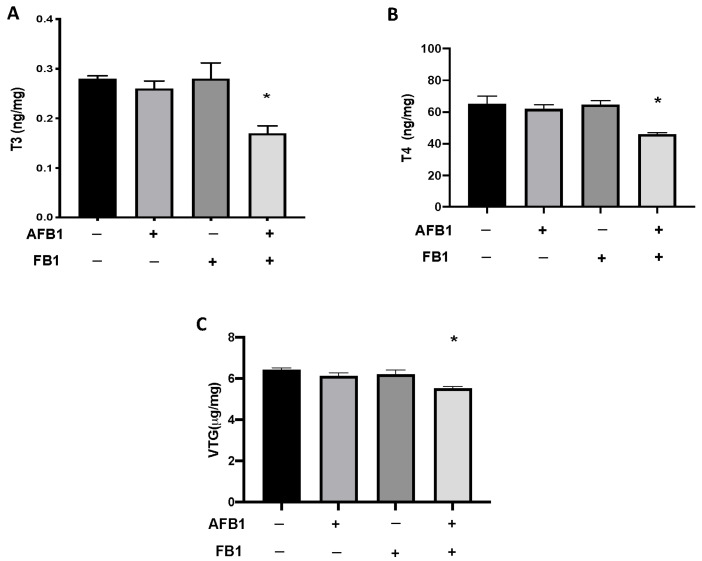
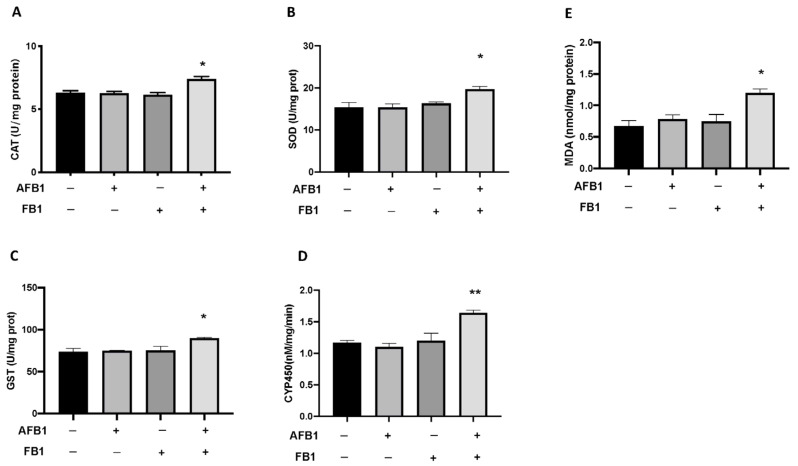
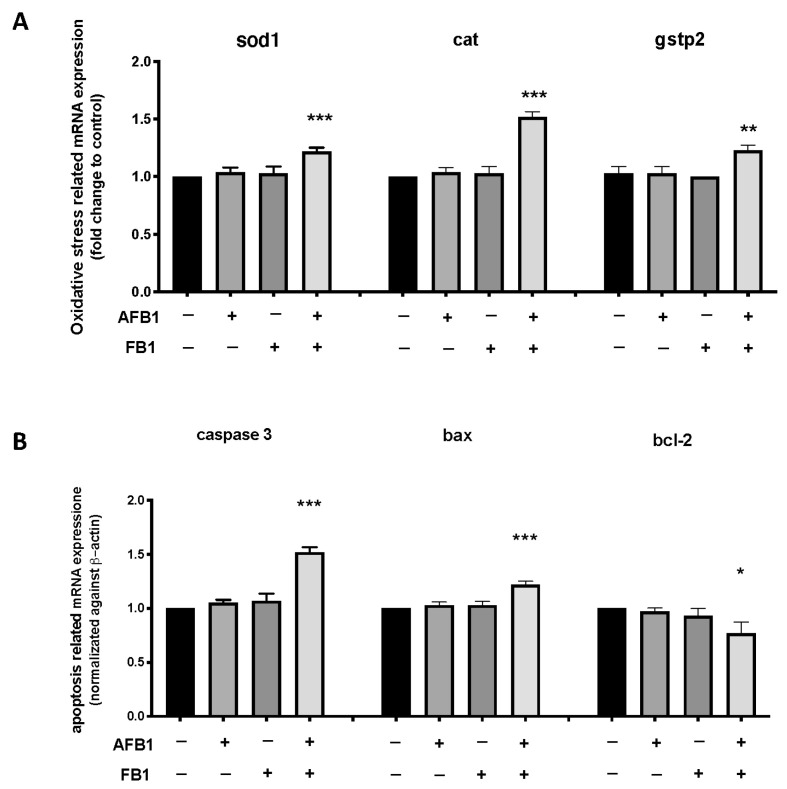
(1) Background: Multiple contaminations of several mycotoxins have been detected in human and veterinary food and feed worldwide. To date, a number of studies on the combined effects of mycotoxins have been conducted on cell and animal models, but very limited studies have been done on aquatic organisms. (2) The purpose of the present study was to evaluate the combined toxic effects of Aflatoxin B1 (AFB1) and Fumonisin B1 (FB1) on zebrafish (Danio rerio) embryos. (3) Results: Our results showed that the combination of AFB1 and FB1 at nontoxic concentrations exerted a negative effect on the lethal endpoints analyzed, such as survival, hatching, and heart rate. In addition, the mixture of mycotoxins caused an increase in the levels of enzymes and proteins involved in the antioxidant process, such as superoxide dismutase (SOD) and catalase (CAT), both in terms of protein levels and gene expression, as well as an increase in the levels of the detoxification enzymes glutathione s-transferases (GST) and cytochromes P450 (CYP450). Furthermore, we showed that the mycotoxin mixture induced an increase in pro-apoptotic proteins such as bax and caspase 3, and at the same time reduced the gene expression of the anti-apoptotic bcl-2 protein. Finally, a significant decrease in thyroid function was observed in terms of triiodothyronine (T3), thyroxine (T4), and vitellogenin (VTG) levels. (4) Conclusion: We can say that the mixture of mycotoxins carries a greater risk factor than individual presences. There is a greater need for effective detoxification methods to control and reduce the toxicity of multiple mycotoxins and reduce the toxicity of multiple mycotoxins in feed and throughout the food chain.
Keywords: combined toxicity; mycotoxins; oxidative stress.
Conflict of interest statement
The authors declare no conflict of interest.
Figures

References
-
- Dirican S. A review of effects of aflatoxins in aquaculture. Appl. Res. J. 2015;1:1191–1196.
-
- Barbosa T.S., Pereyra C.M., Soleiro C.A., Dias E.O., Oliveira A.A., Keller K.M., Silva P.P., Cavaglieri L.R., Rosa C.A. Mycobiota and mycotoxins present in finished fish feeds from farms in the Rio de Janeiro State, Brazil. Int. Aquat. Res. 2013;5:3. doi: 10.1186/2008-6970-5-3. - DOI
-
- Anater A., Manyes L., Meca G., Ferrer E., Luciano F.B., Pimpao C.T., Font G. Mycotoxins and their consequences in aquaculture: A review. Aquaculture. 2016;451:1–10. doi: 10.1016/j.aquaculture.2015.08.022. - DOI
MeSH terms
Substances
LinkOut - more resources
Full Text Sources
Research Materials
Miscellaneous
