


Tolerability of Atovaquone-Proguanil Application in Common Buzzard Nestlings
- PMID: 36006311
- PMCID: PMC9414624
- DOI: 10.3390/vetsci9080397
Tolerability of Atovaquone-Proguanil Application in Common Buzzard Nestlings
Abstract
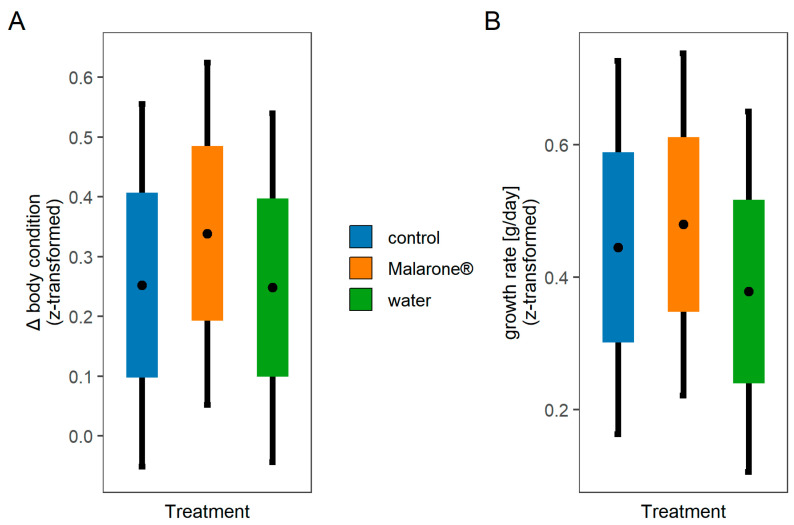
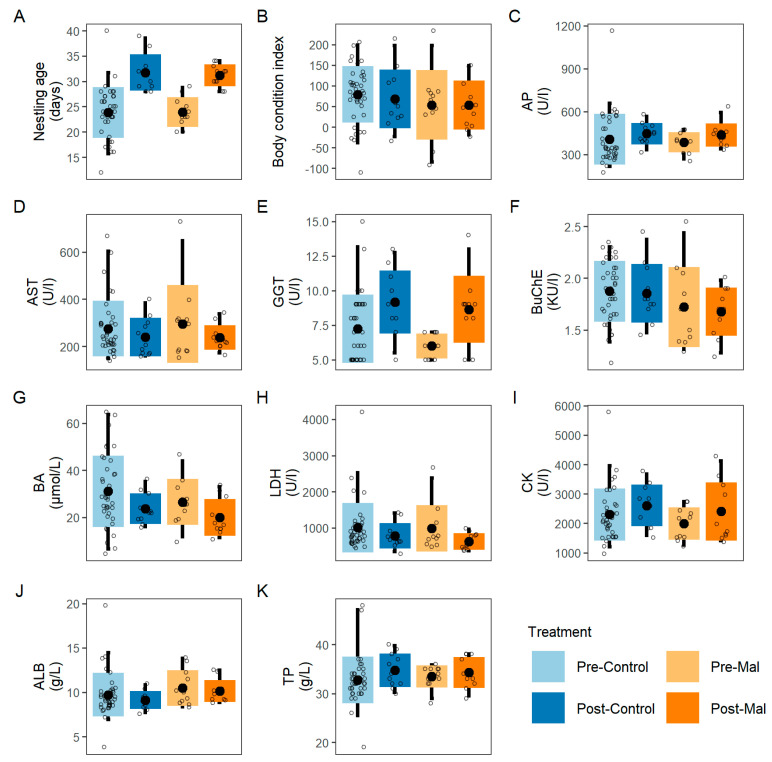
Differences in drug tolerability among vertebrate groups and species can create substantial challenges for wildlife and ex situ conservation programmes. Knowledge of tolerance in the use of new drugs is, therefore, important to avoid severe toxicity in species, which are both commonly admitted in veterinary clinics and are of conservation concern. Antimalarial drugs have been developed for use in human medicine, but treatment with different agents has also long been used in avian medicine, as haemosporidian infections play a major role in many avian species. This study investigates the effects of the application of atovaquone-proguanil (Malarone®, GlaxoSmithKline) in common buzzards (Buteo buteo). The potential effects of treatment on body condition, growth rate, and chemical blood parameters of nestlings were assessed. All individuals survived the treatment, and no effects on body condition, growth rate, and chemical blood parameters were observed. Our results suggest the tolerability of Malarone® in common buzzards at a single dose of on average 11 mg/kg body weight. For its safe use, we recommend further studies to determine pharmacokinetics in different avian species as well as to assess the effects of repeated treatment.
Keywords: Buteo buteo; Malarone; avian malaria; blood chemistry; drug tolerance; haemosporidian parasites.
Conflict of interest statement
The authors declare no conflict of interest.
Figures
References
-
- Davey D.G. The use of avian malaria for the discovery of drugs effective in the treatment and prevention of human malaria: II.—Drugs for causal prophylaxis and radical cure or the chemotherapy of exo-erythrocytic forms. Ann. Trop. Med. Parasitol. 1946;40:453–471. doi: 10.1080/00034983.1946.11685299. - DOI - PubMed
-
- Palinauskas V., la Puente J.M.-D., Hernández-Soto S.R., Marzal A. Experimental parasitology and ecoimmunology: Concepts and opportunities in avian haemosporidian studies. In: Santiago-Alarcon D., Marzal A., editors. Avian Malaria and Related Parasites in the Tropics. Springer; Cham, Switzerland: 2020. pp. 527–558. - DOI
-
- Chagas C.R.F., Valkiūnas G., Guimarães L.D.O., Monteiro E., Guida F.J.V., Simões R., Rodrigues P.T., Luna E.J.D.A., Kirchgatter K. Diversity and distribution of avian malaria and related haemosporidian parasites in captive birds from a Brazilian megalopolis. Malar. J. 2017;16:1–20. doi: 10.1186/s12936-017-1729-8. - DOI - PMC - PubMed
Grants and funding
LinkOut - more resources
Full Text Sources
