


Plasmodium falciparum resistance to artemisinin-based combination therapies
- PMID: 36007459
- PMCID: PMC9847095
- DOI: 10.1016/j.mib.2022.102193
Plasmodium falciparum resistance to artemisinin-based combination therapies
Abstract
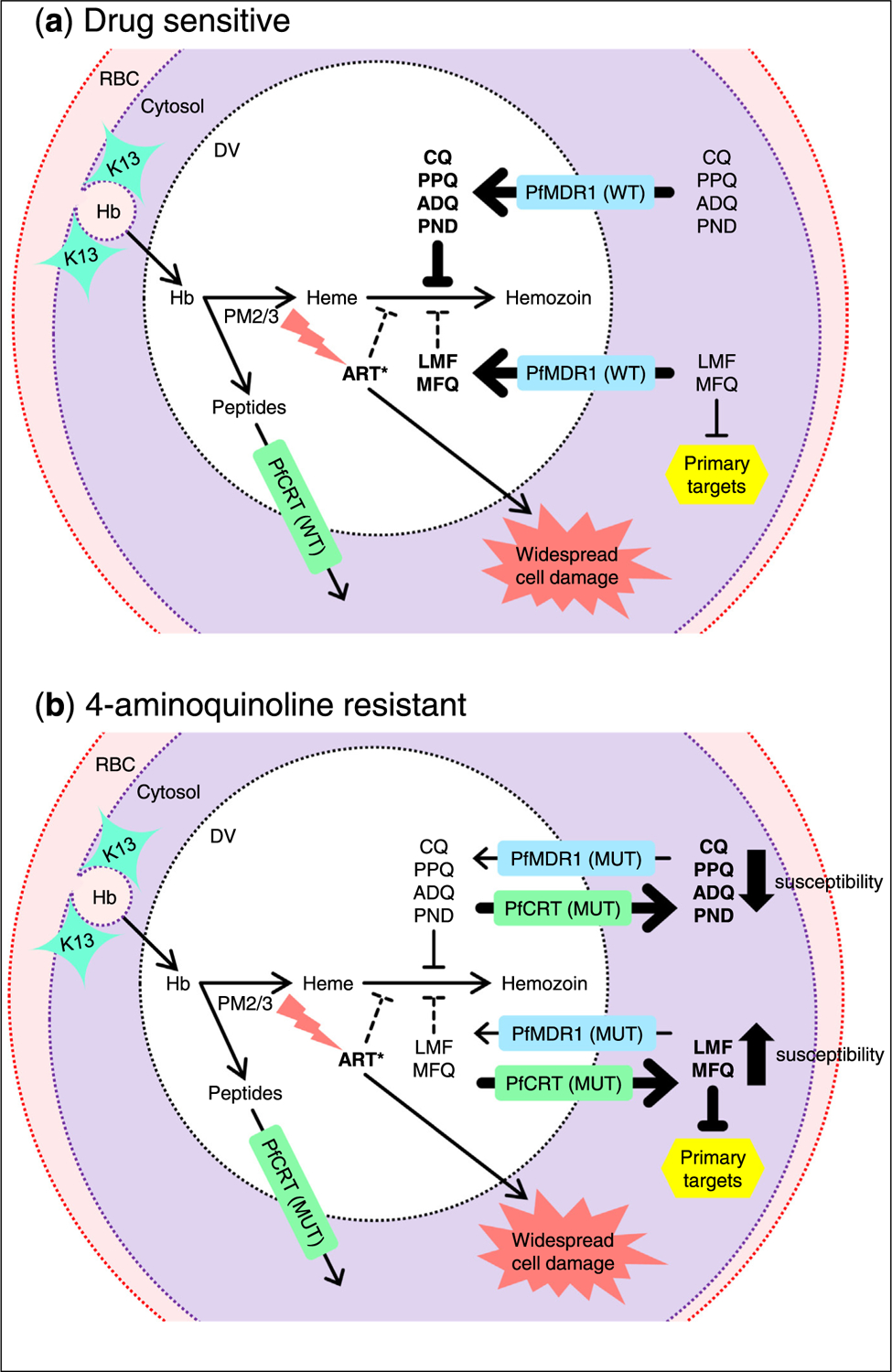
Multidrug-resistant Plasmodium falciparum parasites are a major threat to public health in intertropical regions. Understanding the mechanistic basis, origins, and spread of resistance can inform strategies to mitigate its impact and reduce the global burden of malaria. The recent emergence in Africa of partial resistance to artemisinins, the core component of first-line combination therapies, is particularly concerning. Here, we review recent advances in elucidating the mechanistic basis of artemisinin resistance, driven primarily by point mutations in P. falciparum Kelch13, a key regulator of hemoglobin endocytosis and parasite response to artemisinin-induced stress. We also review resistance to partner drugs, including piperaquine and mefloquine, highlighting a key role for plasmepsins 2/3 and the drug and solute transporters P. falciparum chloroquine-resistance transporter and P. falciparum multidrug-resistance protein-1.
Copyright © 2022 The Author(s). Published by Elsevier Ltd.. All rights reserved.
Conflict of interest statement
Conflict of interest statement
Authors declare no conflicts of interest.
Figures
References
-
- World Health Organization. World malaria report 2021. https://www.who.int/teams/global-malaria-programme/reports/world-malaria....
-
- World Health Organization. Report on antimalarial drug efficacy, resistance and response: 10 years of surveillance (2010–2019); 2020. https://www.who.int/publications/i/item/9789240012813.
-
- Saunders DL, Vanachayangkul P, Lon C: Dihydroartemisinin-piperaquine failure in Cambodia. N Engl J Med 2014, 371:484–485. - PubMed
Publication types
MeSH terms
Substances
Grants and funding
LinkOut - more resources
Full Text Sources
Research Materials
