


Indicators of central sensitization in chronic neuropathic pain after spinal cord injury
- PMID: 36008094
- PMCID: PMC9826442
- DOI: 10.1002/ejp.2028
Indicators of central sensitization in chronic neuropathic pain after spinal cord injury
Abstract
Background: Central sensitization is considered a key mechanism underlying neuropathic pain (NP) after spinal cord injury (SCI).
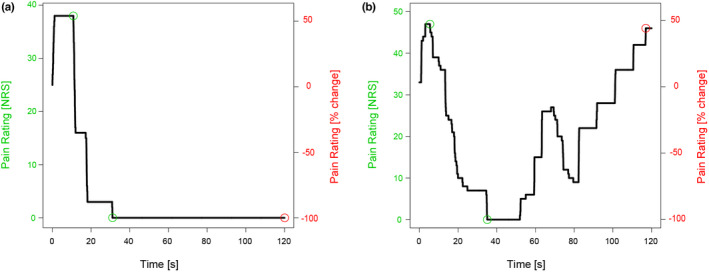
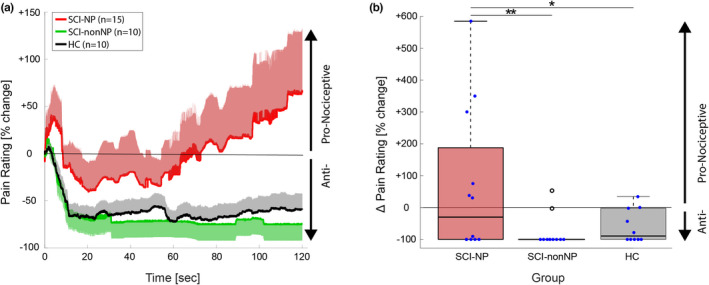
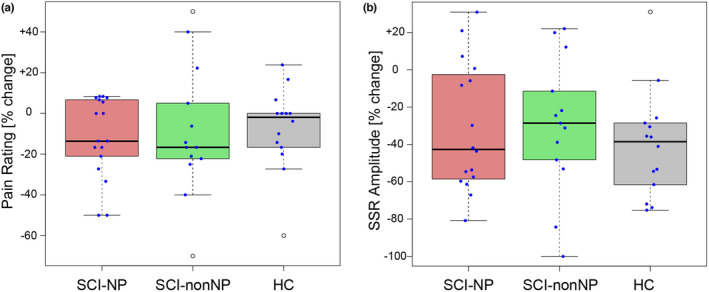
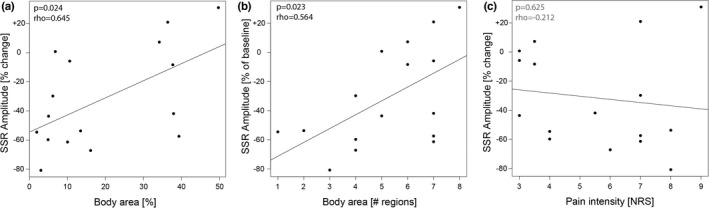
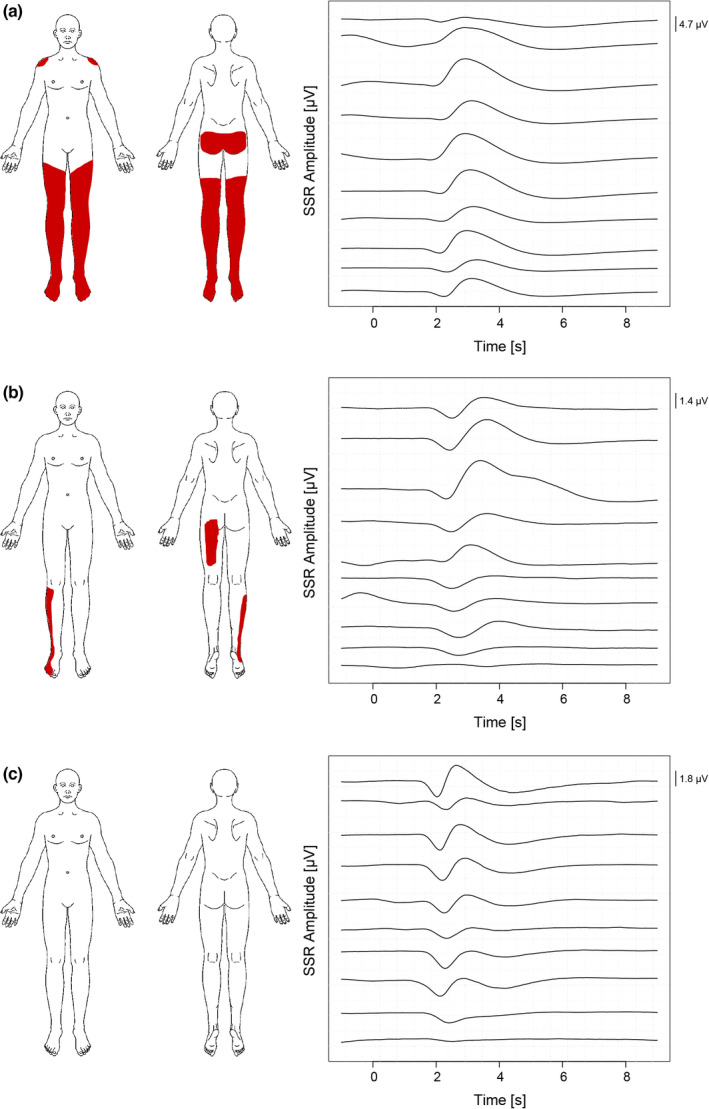
Methods: Two novel proxies for central sensitization were investigated in thoracic SCI subjects with (SCI-NP) and without NP (SCI-nonNP) compared to healthy controls (HC). Specifically, temporal summation of pain (TSP) was investigated by examining pain ratings during a 2-min tonic heat application to the volar forearm. Additionally, palmar heat-induced sympathetic skin responses (SSR) were recorded in order to reveal changes in pain-autonomic interaction above the lesion level. Pain extent was assessed as the percentage of the body area and the number of body regions being affected by NP.
Results: Enhanced TSP was observed in SCI-NP (+66%) compared to SCI-nonNP (-75%, p = 0.009) and HC (-59%, p = 0.021). In contrast, no group differences were found (p = 0.685) for SSR habituation. However, pain extent in SCI-NP was positively correlated with deficient SSR habituation (body area: r = 0.561, p = 0.024; body regions: r = 0.564, p = 0.023).
Conclusions: These results support the value of TSP and heat-induced SSRs as proxies for central sensitization in widespread neuropathic pain syndromes after SCI. Measures of pain-autonomic interaction emerged as a promising tool for the objective investigation of sensitized neuronal states in chronic pain conditions.
Significance: We present two surrogate readouts for central sensitization in neuropathic pain following SCI. On the one hand, temporal summation of tonic heat pain is enhanced in subjects with neuropathic pain. On the other hand, pain-autonomic interaction reveals potential advanced measures in chronic pain, as subjects with a high extent of neuropathic pain showed diminished habituation of pain-induced sympathetic measures. A possible implication for clinical practice is constituted by an improved assessment of neuronal hyperexcitability potentially enabling mechanism-based treatment.
© 2022 The Authors. European Journal of Pain published by John Wiley & Sons Ltd on behalf of European Pain Federation - EFIC ®.
Conflict of interest statement
The authors declare that there are no conflicts of interest regarding this work.
Figures
References
-
- Albu, S. , Gomez‐Soriano, J. , Avila‐Martin, G. , & Taylor, J. (2015). Deficient conditioned pain modulation after spinal cord injury correlates with clinical spontaneous pain measures. Pain, 156, 260–272. - PubMed
-
- Arendt‐Nielsen, L. , Morlion, B. , Perrot, S. , Dahan, A. , Dickenson, A. , Kress, H. G. , Wells, C. , Bouhassira, D. , & Mohr, D. A. (2018). Assessment and manifestation of central sensitisation across different chronic pain conditions. European Journal of Pain, 22, 216–241. - PubMed
-
- Baron, R. , Binder, A. , & Wasner, G. (2010). Neuropathic pain: Diagnosis, pathophysiological mechanisms, and treatment. Lancet Neurology, 9, 807–819. - PubMed
-
- Baron, R. , Hans, G. , & Dickenson, A. H. (2013). Peripheral input and its importance for central sensitization. Annals of Neurology, 74, 630–636. - PubMed
-
- Benarroch, E. E. (2006). Pain‐autonomic interactions. Neurological Sciences, 27(Suppl 2), S130–S133. - PubMed
Publication types
MeSH terms
LinkOut - more resources
Full Text Sources
Medical
Miscellaneous
