


Qualitative immunoassay for the determination of tetracycline antibiotic residues in milk samples followed by a quantitative improved HPLC-DAD method
- PMID: 36008564
- PMCID: PMC9411586
- DOI: 10.1038/s41598-022-18886-2
Qualitative immunoassay for the determination of tetracycline antibiotic residues in milk samples followed by a quantitative improved HPLC-DAD method
Abstract
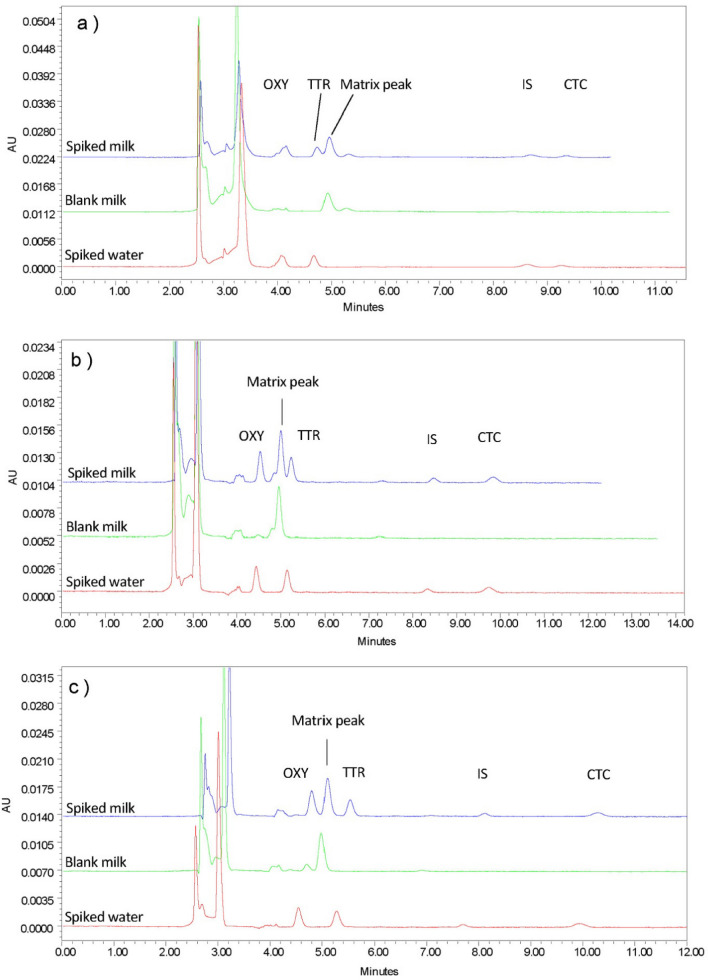
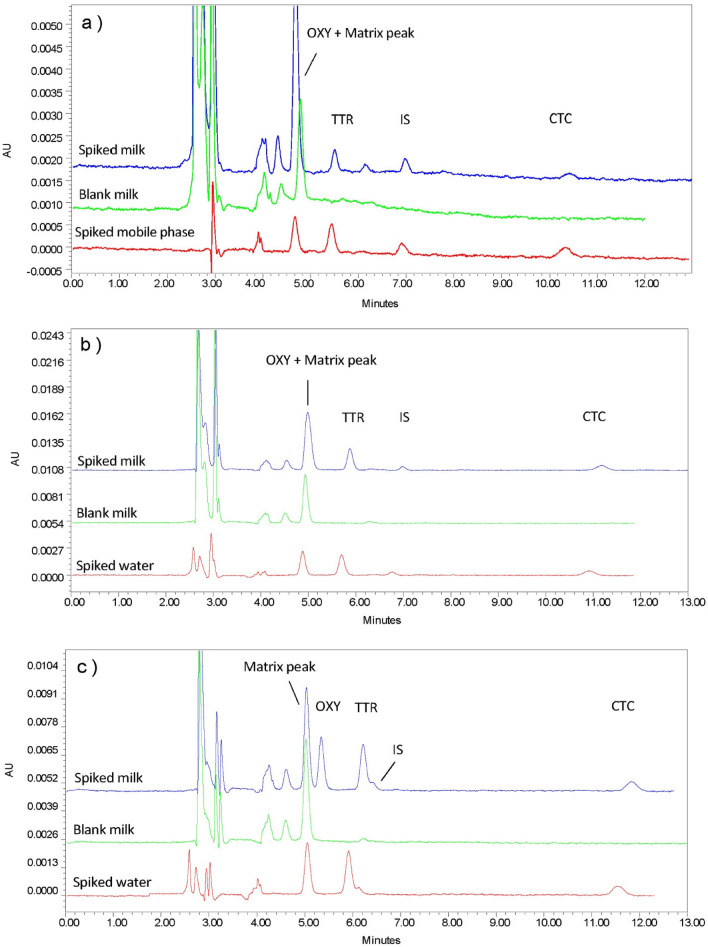
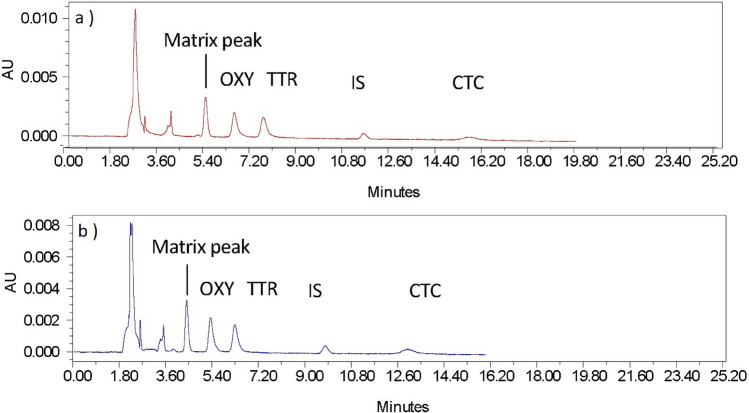
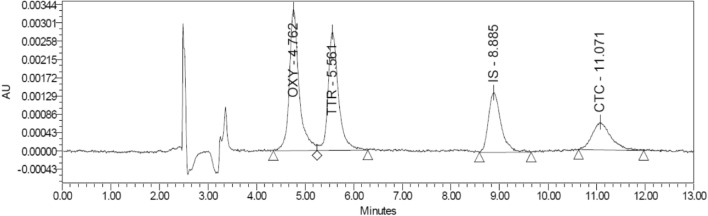
Environmental contaminant is one of several problems harming people and wildlife. An example of current emerging contaminants are antibiotics residues that can present in water and food. Although antibiotics are intended to treat or prevent human and animal infections, antibiotics have also been used as animal food supplements for their ability to promote growth and feed efficiency. This overuse of antibacterial has resulted in the accumulation of antibiotics residues in food products which are eventually consumed by human. The continuous unnecessary exposure of human to antibiotics through the direct animals meet or milk, or indirectly through plants or soil can increase the chance of the emergence of multi drug resistance bacteria and consequently adversely affecting human health. New regulations have been imposed regarding antibiotics utilization. Due to the scarce of data regarding antibiotics residue conditions in different types of food intended for human consumption in Saudi Arabia, this study proposed an optimized chromatographic method (HPLC-DAD) followed by an immunoassay approach for specifically detecting tetracyclines antibiotics in animal milk samples. The method was carried out using an RP-C18 column with a mobile phase consisting of 0.01 M KH2PO4: acetonitrile:methanol (70:20:10, v/v/v) adjusted to pH 4. Improvements were observed in the method in terms of resolution and sensitivity. The protein precipitation method used for extraction demonstrated high percent recoveries of 85-101%. The method was validated according to the guidelines of the International Conference for Harmonization (ICH). It is evidently clear from these findings that the presence of tetracycline and oxytetracycline antibiotics residues in milk products from the Saudi market are below the maximum residual limits (MRLs).
© 2022. The Author(s).
Conflict of interest statement
The authors declare no competing interests.
Figures
References
-
- Muralikrishna IV, Manickam V. Environmental Management. Elsevier; 2017. Introduction; pp. 1–4.
-
- Save N, Deshpande S. Upcoming trends to combat antibiotic resistance. Indian Drugs. 2018;55:7–19. doi: 10.53879/id.55.07.11320. - DOI
-
- Kirchhelle C. Pharming animals: A global history of antibiotics in food production (1935–2017) Palgrave Commun. 2018;4:1–13. doi: 10.1057/s41599-018-0152-2. - DOI
MeSH terms
Substances
LinkOut - more resources
Full Text Sources
