


Vitamin A Deficiency Alters the Phototransduction Machinery and Distinct Non-Vision-Specific Pathways in the Drosophila Eye Proteome
- PMID: 36008977
- PMCID: PMC9405971
- DOI: 10.3390/biom12081083
Vitamin A Deficiency Alters the Phototransduction Machinery and Distinct Non-Vision-Specific Pathways in the Drosophila Eye Proteome
Abstract
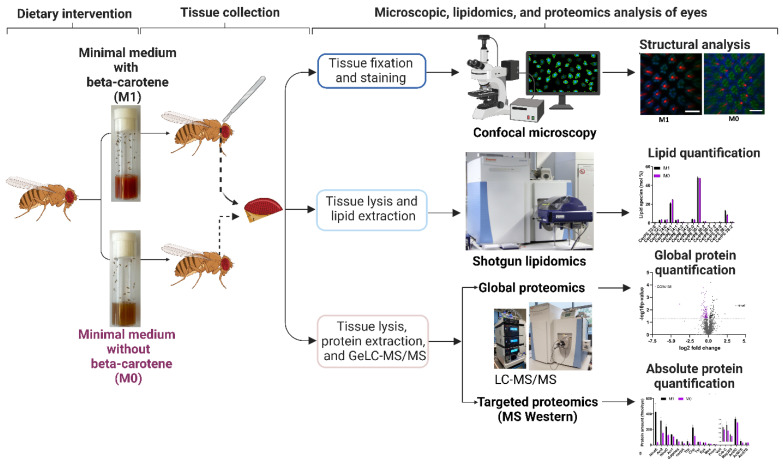
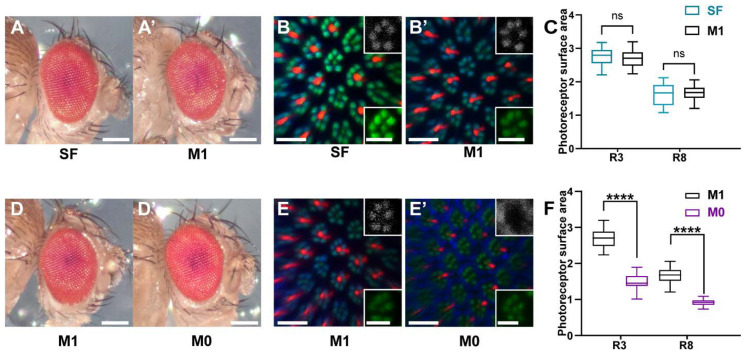
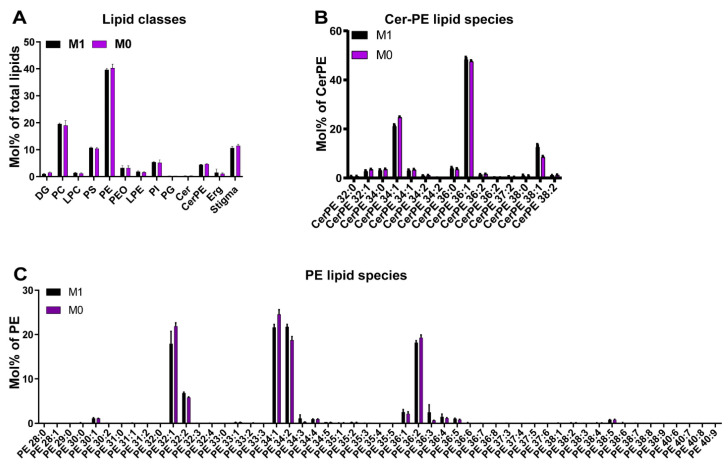
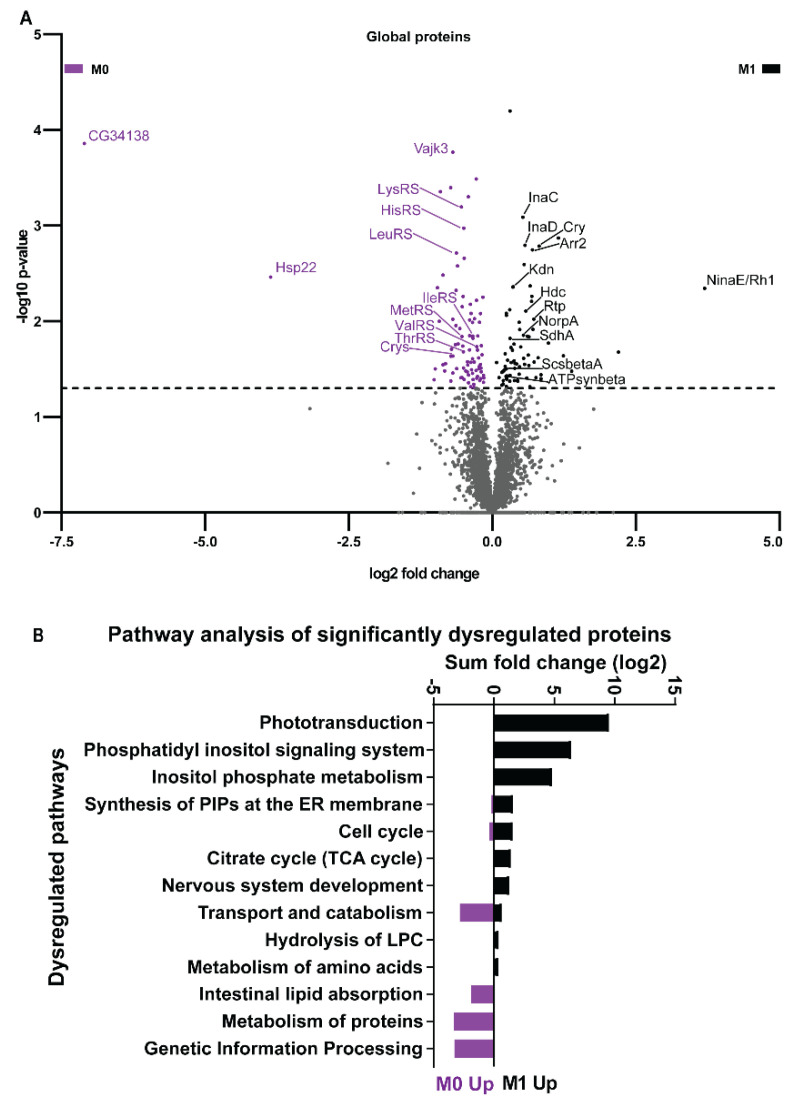
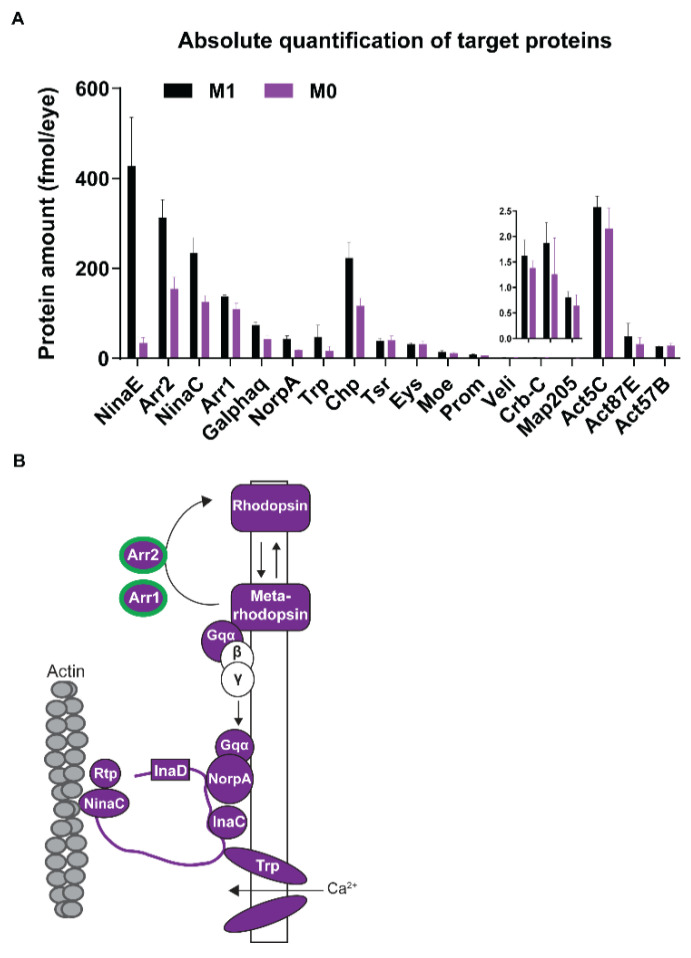
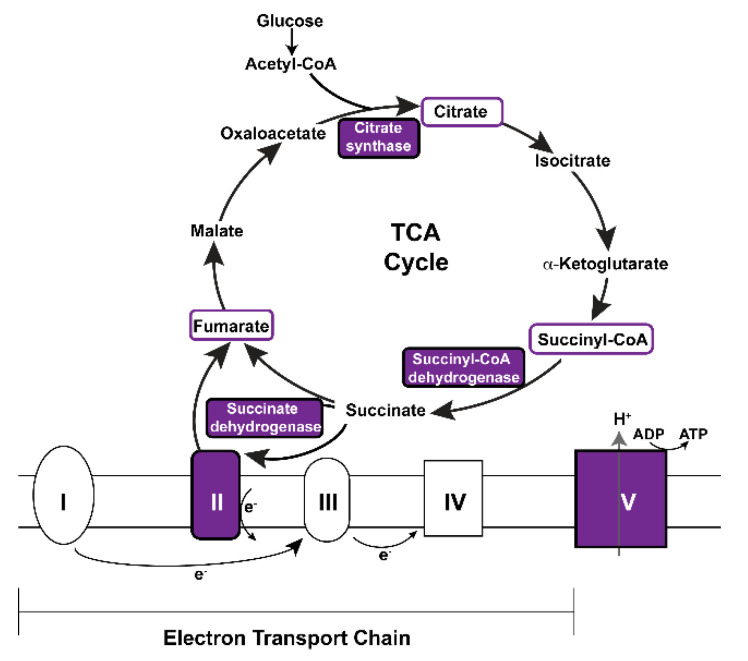
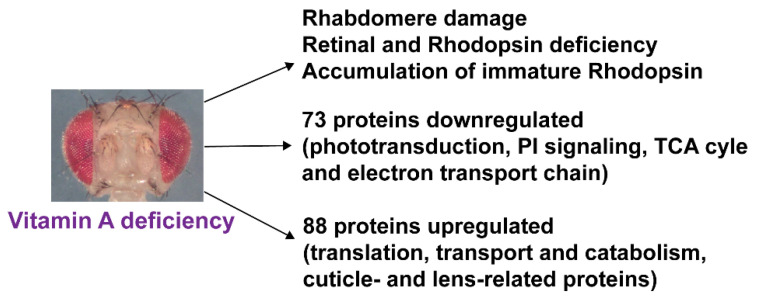
The requirement of vitamin A for the synthesis of the visual chromophore and the light-sensing pigments has been studied in vertebrate and invertebrate model organisms. To identify the molecular mechanisms that orchestrate the ocular response to vitamin A deprivation, we took advantage of the fact that Drosophila melanogaster predominantly requires vitamin A for vision, but not for development or survival. We analyzed the impacts of vitamin A deficiency on the morphology, the lipidome, and the proteome of the Drosophila eye. We found that chronic vitamin A deprivation damaged the light-sensing compartments and caused a dramatic loss of visual pigments, but also decreased the molar abundance of most phototransduction proteins that amplify and transduce the visual signal. Unexpectedly, vitamin A deficiency also decreased the abundances of specific subunits of mitochondrial TCA cycle and respiratory chain components but increased the levels of cuticle- and lens-related proteins. In contrast, we found no apparent effects of vitamin A deficiency on the ocular lipidome. In summary, chronic vitamin A deficiency decreases the levels of most components of the visual signaling pathway, but also affects molecular pathways that are not vision-specific and whose mechanistic connection to vitamin A remains to be elucidated.
Keywords: Drosophila; lipidome; mitochondrion; phototransduction; proteome; retina; retinal; vitamin A.
Conflict of interest statement
The authors declare no conflict of interest. The funders had no role in the design of the study; in the collection, analyses, or interpretation of data; in the writing of the manuscript, or in the decision to publish the results.
Figures
References
Publication types
MeSH terms
Substances
Grants and funding
LinkOut - more resources
Full Text Sources
Molecular Biology Databases
