


Identification, Superantigen Toxin Gene Profile and Antimicrobial Resistance of Staphylococci Isolated from Polish Primitive Sheep Breeds
- PMID: 36009729
- PMCID: PMC9404845
- DOI: 10.3390/ani12162139
Identification, Superantigen Toxin Gene Profile and Antimicrobial Resistance of Staphylococci Isolated from Polish Primitive Sheep Breeds
Abstract
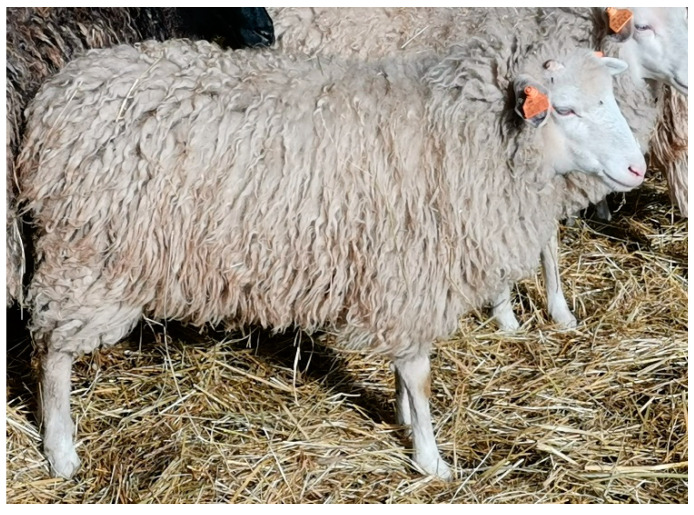
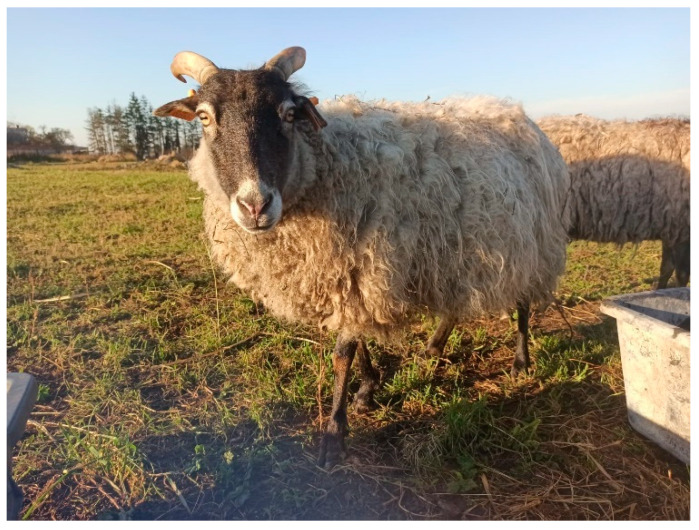
The study aimed to analyze staphylococcal microbiota of the nasal cavity of the primitive sheep breeds Polish Świniarka and Wrzosówka kept on the same ecological farm. The research included the identification of staphylococcal species, evaluation of the prevalence of genes encoding enterotoxins, staphylococcal enterotoxin-like proteins, exfoliative toxins, toxic shock syndrome toxin 1, and detection of antimicrobial resistance. From 61 swab samples gathered from Świniarka (33) and Wrzosówka (28) healthy sheep, 127 coagulase-negative staphylococci (CoNS) were isolated. Based on PCR-RFLP analysis of the gap gene using AluI and HpyCH4V enzymes, the isolates were identified as: Staphylococcus xylosus (33.9%), S. equorum (29.1%), S. arlettae (15%), S. warneri (9.4%), S. lentus (7.9%), S. succinus (3.9%) and S. sciuri (0.8%). Three of these species, S. lentus, S. succinus, and S. sciuri, were detected only from the Świniarka breed. It was found that 77.2% of isolates harbored from 1 to 7 out of 21 analyzed genes for superantigenic toxins. The greatest diversity of toxin genes was recorded for S. equorum (16 different genes). The most prevalent gene was ser (40.2%). The incidence and number of resistances to antimicrobials were found to be bacterial species but not sheep breed dependent. The highest percentage of resistance was found for S. sciuri. The most frequent resistance was observed to clindamycin (45.7%). The findings of this study prove that toxigenic and antimicrobial resistant CoNS can colonize the nasal cavity of healthy sheep.
Keywords: AluI enzyme; HpyCH4V enzyme; antimicrobial resistance; enterotoxin; exfoliative toxin; gap gene; primitive sheep breed; staphylococci; toxic shock syndrome toxin 1.
Conflict of interest statement
The authors declare no conflict of interest.
Figures
References
-
- Dagnew Y., Urge M., Tadesse Y., Gizaw S. Sheep Production and Breeding Systems in North Western Lowlands of Amhara Region, Ethiopia: Implication for Conservation and Improvement of Gumz Sheep Breed. Open J. Anim. Sci. 2017;07:179–197. doi: 10.4236/ojas.2017.72015. - DOI
-
- Marsoner T., Egarter Vigl L., Manck F., Jaritz G., Tappeiner U., Tasser E. Indigenous Livestock Breeds as Indicators for Cultural Ecosystem Services: A Spatial Analysis within the Alpine Space. Ecol. Indic. 2018;94:55–63. doi: 10.1016/j.ecolind.2017.06.046. - DOI
-
- Molotsi A.H., Dube B., Cloete S.W.P. The Current Status of Indigenous Ovine Genetic Resources in Southern Africa and Future Sustainable Utilisation to Improve Livelihoods. Diversity. 2019;12:14. doi: 10.3390/d12010014. - DOI
-
- Polak G., Krupiński J., Martyniuk E., Calik J., Kawęcka A., Krawczyk J., Majewska A., Sikora J., Sosin-Bzducha E., Szyndler-Nędza M., et al. The Risk Status of Polish Local Breeds under Conservation Programmes—New Approach. Ann. Anim. Sci. 2021;21:125–140. doi: 10.2478/aoas-2020-0071. - DOI
-
- Sobala M. Pasture Landscapes in Poland and Europe—Selected Types, Examples and Conservation Methods. Disserations Cult. Landsc. Commision. 2014;25:81–98.
LinkOut - more resources
Full Text Sources
Miscellaneous
