


Early Diagnosis of Oral Squamous Cell Carcinoma Based on Histopathological Images Using Deep and Hybrid Learning Approaches
- PMID: 36010249
- PMCID: PMC9406837
- DOI: 10.3390/diagnostics12081899
Early Diagnosis of Oral Squamous Cell Carcinoma Based on Histopathological Images Using Deep and Hybrid Learning Approaches
Abstract
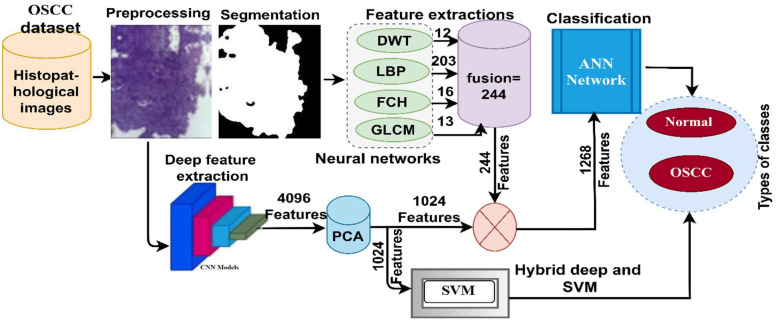
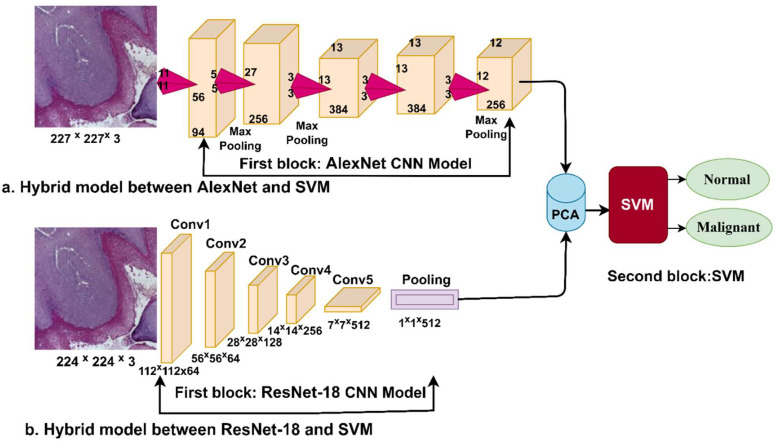
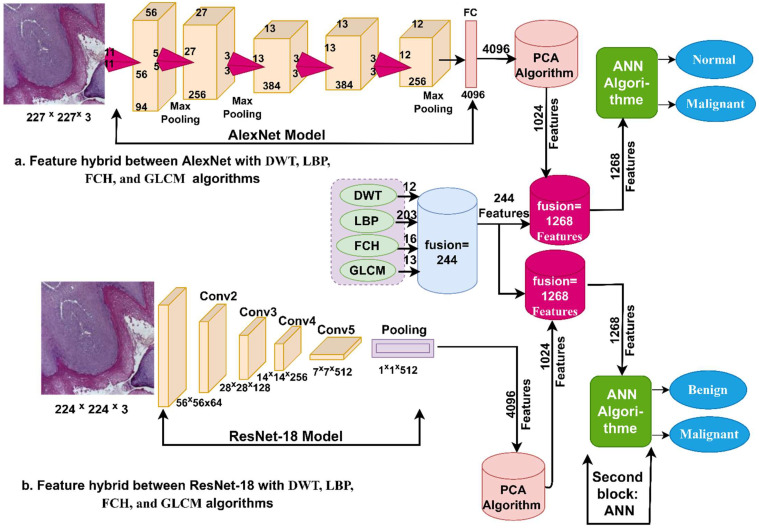
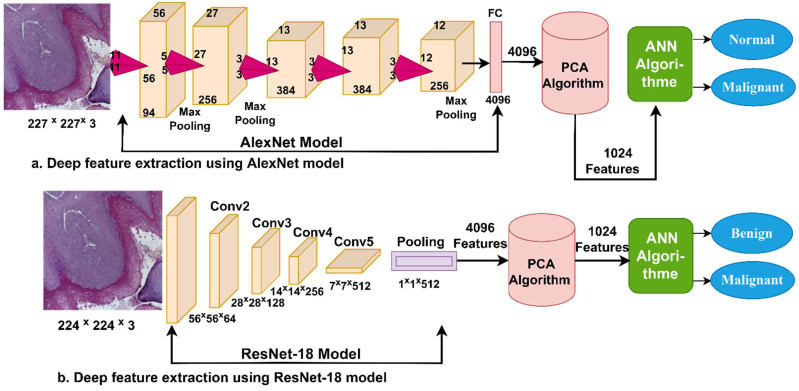
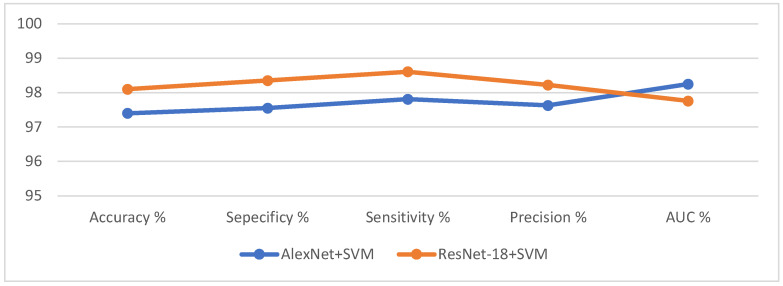
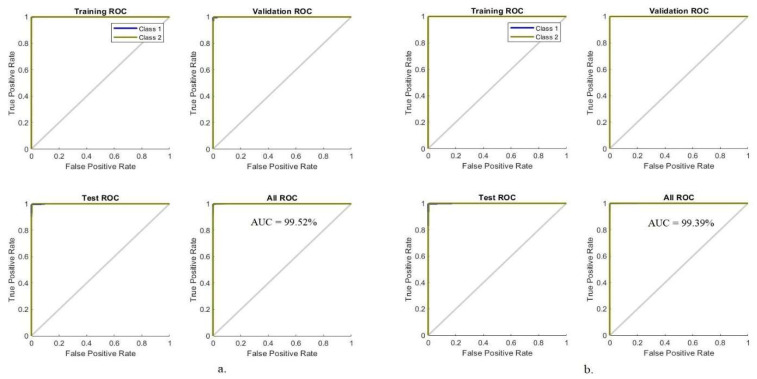
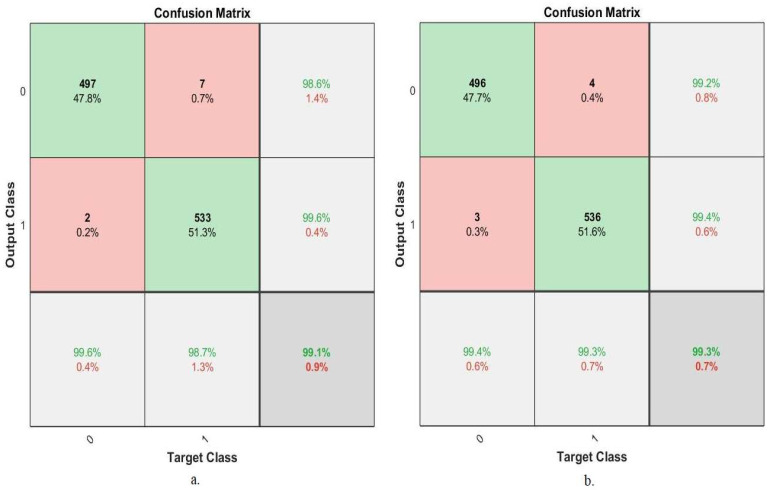
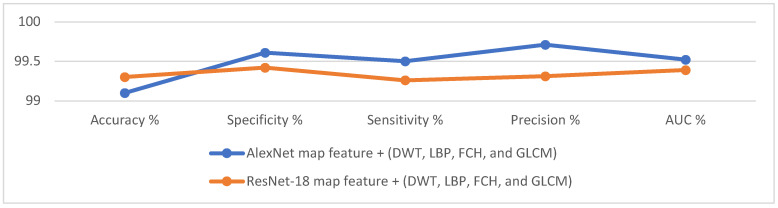
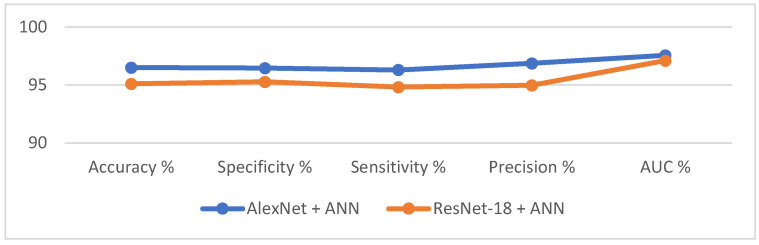
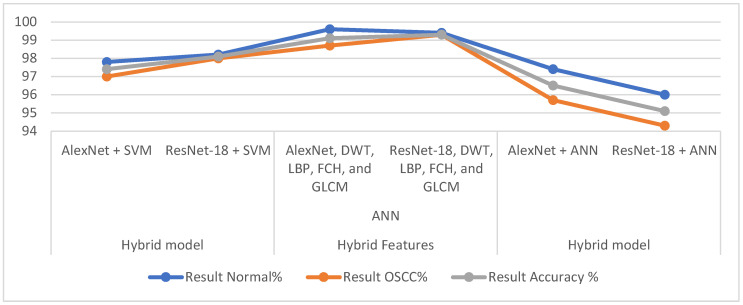
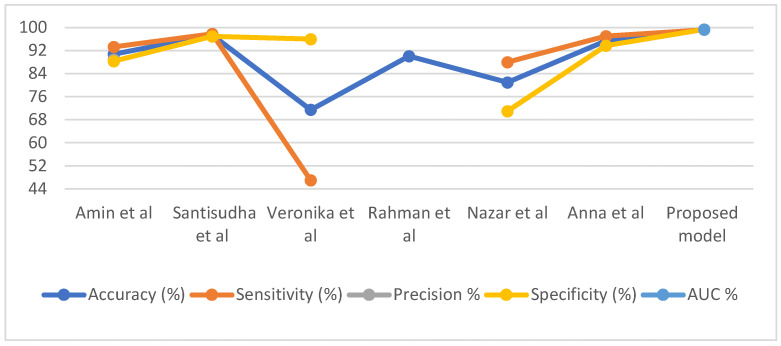
Oral squamous cell carcinoma (OSCC) is one of the most common head and neck cancer types, which is ranked the seventh most common cancer. As OSCC is a histological tumor, histopathological images are the gold diagnosis standard. However, such diagnosis takes a long time and high-efficiency human experience due to tumor heterogeneity. Thus, artificial intelligence techniques help doctors and experts to make an accurate diagnosis. This study aimed to achieve satisfactory results for the early diagnosis of OSCC by applying hybrid techniques based on fused features. The first proposed method is based on a hybrid method of CNN models (AlexNet and ResNet-18) and the support vector machine (SVM) algorithm. This method achieved superior results in diagnosing the OSCC data set. The second proposed method is based on the hybrid features extracted by CNN models (AlexNet and ResNet-18) combined with the color, texture, and shape features extracted using the fuzzy color histogram (FCH), discrete wavelet transform (DWT), local binary pattern (LBP), and gray-level co-occurrence matrix (GLCM) algorithms. Because of the high dimensionality of the data set features, the principal component analysis (PCA) algorithm was applied to reduce the dimensionality and send it to the artificial neural network (ANN) algorithm to diagnose it with promising accuracy. All the proposed systems achieved superior results in histological image diagnosis of OSCC, the ANN network based on the hybrid features using AlexNet, DWT, LBP, FCH, and GLCM achieved an accuracy of 99.1%, specificity of 99.61%, sensitivity of 99.5%, precision of 99.71%, and AUC of 99.52%.
Keywords: ANN; CNN; DWT; FCH; GLCM; LBP; OSCC; SVM; hybrid method.
Conflict of interest statement
The authors declare no conflict of interest.
Figures
References
-
- Warnakulasuriya S., Greenspan J.S. Textbook of Oral Cancer. Springer; Cham, Switzerland: 2020. Epidemiology of oral and oropharyngeal cancers; pp. 5–21. - DOI
-
- Perdomo S., Roa G.M., Brennan P., Forman D., Sierra M.S. Head and neck cancer burden and preventive measures in Central and South America. [(accessed on 15 February 2022)];Cancer Epidemiol. 2016 44:S43–S52. doi: 10.1016/j.canep.2016.03.012. Available online: https://www.sciencedirect.com/science/article/pii/S1877782116300376. - DOI - PubMed
-
- Speight P.M., Khurram S.A., Kujan O. Oral potentially malignant disorders: Risk of progression to malignancy. [(accessed on 15 February 2022)];Oral Surg. Oral Med. Oral Pathol. Oral Radiol. 2018 125:612–627. doi: 10.1016/j.oooo.2017.12.011. Available online: https://www.sciencedirect.com/science/article/pii/S2212440317312488. - DOI - PubMed
Grants and funding
LinkOut - more resources
Full Text Sources
Research Materials
Miscellaneous
