


Targeting on Nrf2/Sesn2 Signaling to Rescue Cardiac Dysfunction during High-Fat Diet-Induced Obesity
- PMID: 36010689
- PMCID: PMC9406590
- DOI: 10.3390/cells11162614
Targeting on Nrf2/Sesn2 Signaling to Rescue Cardiac Dysfunction during High-Fat Diet-Induced Obesity
Abstract
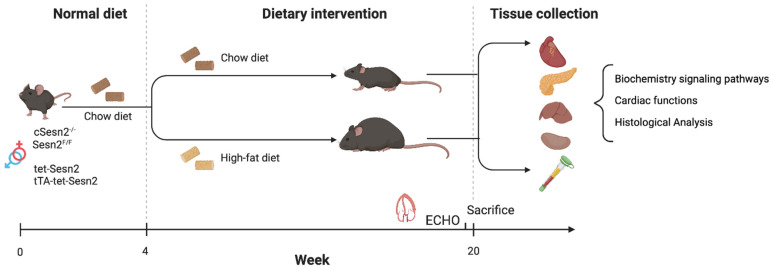
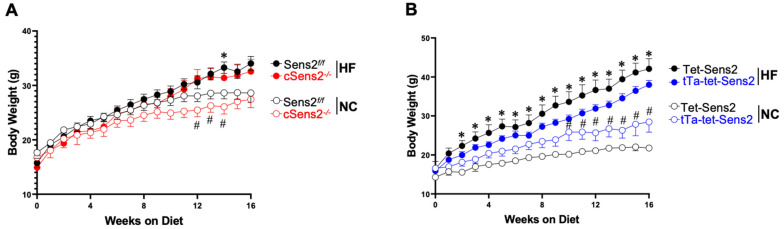
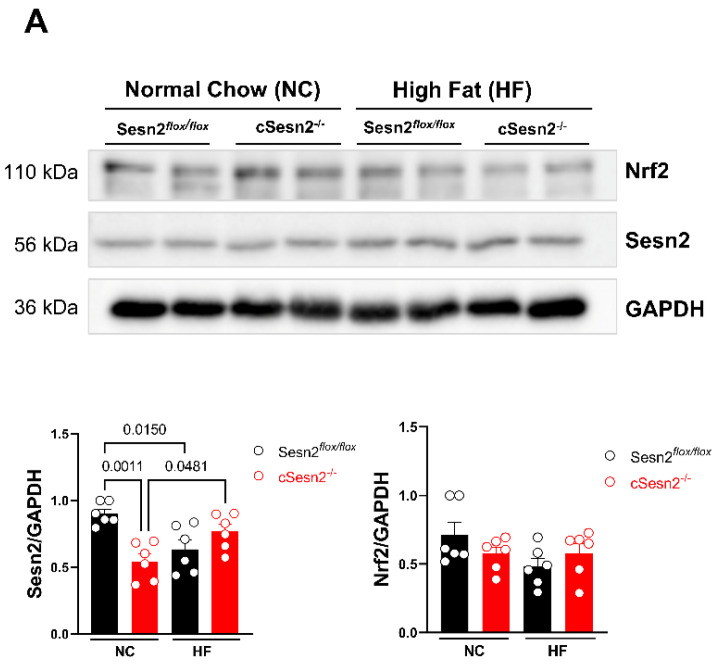
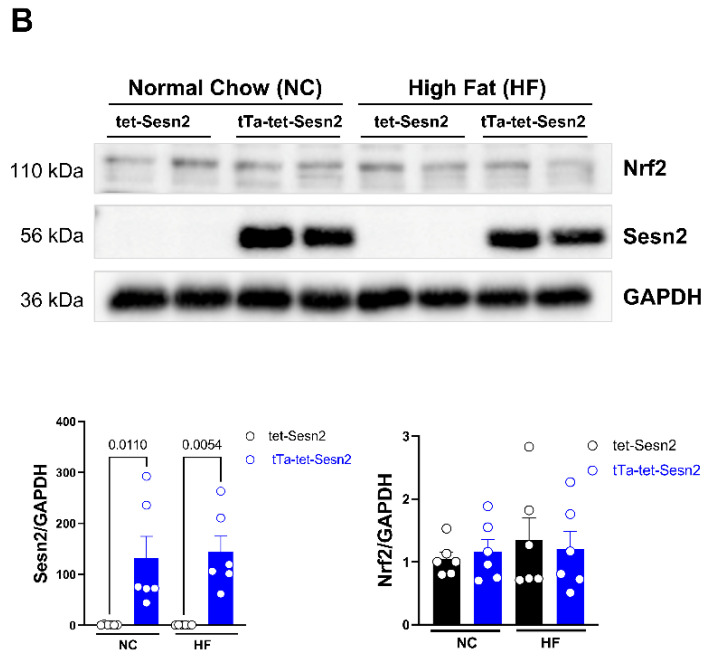
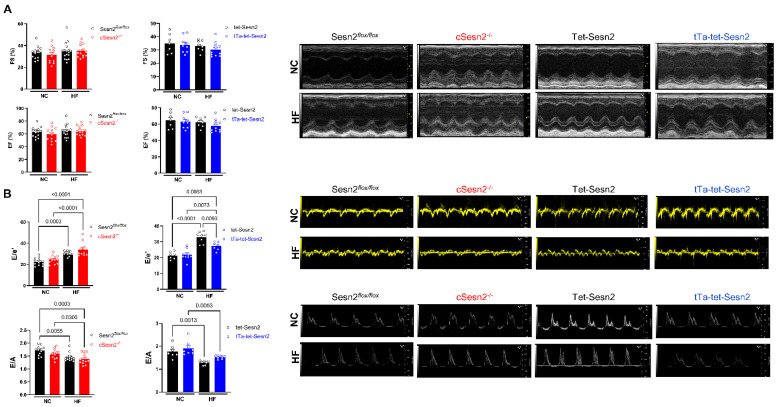
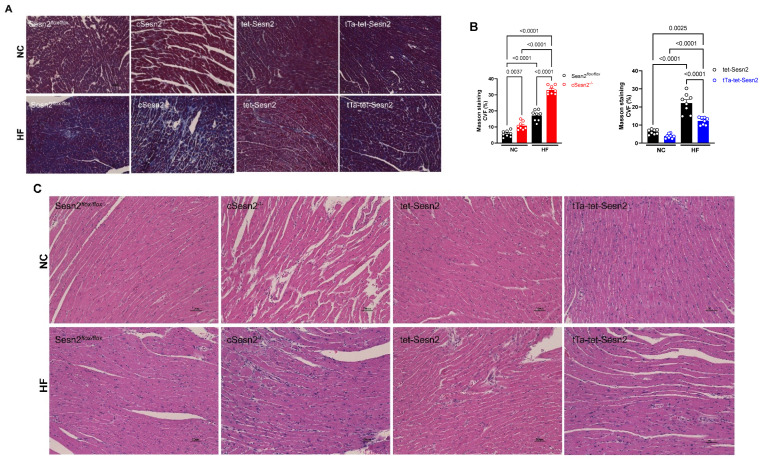
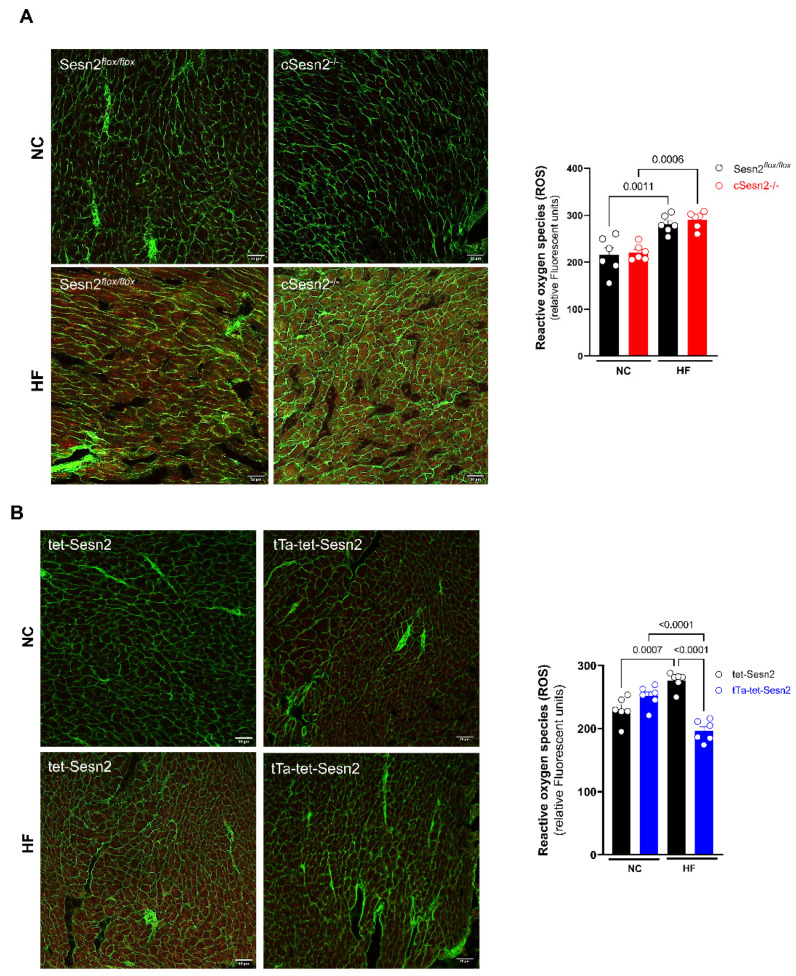
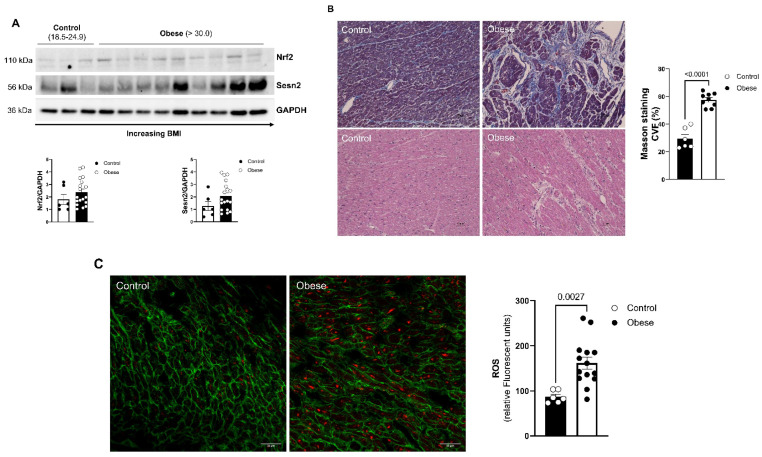
Obesity is of concern to the population because it is known to cause inflammation and oxidative stress throughout the body, leading to patient predisposition for health conditions such as diabetes, hypertension, and some cancers. However, some proteins that are activated in times of oxidative stress may provide cytoprotective properties. In this study, we aim to gain further understanding of the interconnection between Nrf2 and Sesn2 during obesity-related stress and how this relationship can play a role in cardio-protection. Cardiomyocyte-specific Sesn2 knockout (cSesn2-/-) and Sesn2 overexpressed (tTa-tet-Sesn2) mice and their wildtype littermates (Sesn2flox/flox and tet-Sesn2, respectively) were assigned to either a normal chow (NC) or a high-fat (HF) diet to induce obesity. After 16 weeks of dietary intervention, heart function was evaluated via echocardiography and cardiac tissue was collected for analysis. Immunoblotting, histology, and ROS staining were completed. Human heart samples were obtained via the LifeLink Foundation and were also subjected to analysis. Overall, these results indicated that the overexpression of Sesn2 appears to have cardio-protective effects on the obese heart through the reduction of ROS and fibrosis present in the tissues and in cardiac function. These results were consistent for both mouse and human heart samples. In human samples, there was an increase in Sesn2 and Nrf2 expression in the obese patients' LV tissue. However, there was no observable pattern of Sesn2/Nrf2 expression in mouse LV tissue samples. Further investigation into the link between the Sesn2/Nrf2 pathway and obesity-related oxidative stress is needed.
Keywords: Nrf2; Sesn2; high-fat diet; obesity.
Conflict of interest statement
The authors declare no conflict of interest.
Figures
References
-
- Badimon L., Bugiardini R., Cenko E., Cubedo J., Dorobantu M., Duncker D.J., Estruch R., Milicic D., Tousoulis D., Vasiljevic Z., et al. Position Paper of the European Society of Cardiology–Working Group of Coronary Pathophysiology and Microcirculation: Obesity and Heart Disease. Eur. Heart J. 2017;38:1951–1958. doi: 10.1093/eurheartj/ehx181. - DOI - PubMed
-
- Tarantini S., Valcarcel-Ares M.N., Yabluchanskiy A., Tucsek Z., Hertelendy P., Kiss T., Gautam T., Zhang X.A., Sonntag W.E., de Cabo R., et al. Nrf2 Deficiency Exacerbates Obesity-Induced Oxidative Stress, Neurovascular Dysfunction, Blood–Brain Barrier Disruption, Neuroinflammation, Amyloidogenic Gene Expression, and Cognitive Decline in Mice, Mimicking the Aging Phenotype. J. Gerontol. Ser. A. 2018;73:853–863. doi: 10.1093/gerona/glx177. - DOI - PMC - PubMed
Publication types
MeSH terms
Substances
Grants and funding
LinkOut - more resources
Full Text Sources
Medical
Research Materials
Miscellaneous
