Review
. 2022 Aug 12;23(16):9035.
doi: 10.3390/ijms23169035.

Alginate as a Promising Biopolymer in Drug Delivery and Wound Healing: A Review of the State-of-the-Art

Affiliations
Review

Alginate as a Promising Biopolymer in Drug Delivery and Wound Healing: A Review of the State-of-the-Art

Mohammad A S Abourehab et al. Int J Mol Sci. .

Abstract

Biopolymeric nanoparticulate systems hold favorable carrier properties for active delivery. The enhancement in the research interest in alginate formulations in biomedical and pharmaceutical research, owing to its biodegradable, biocompatible, and bioadhesive characteristics, reiterates its future use as an efficient drug delivery matrix. Alginates, obtained from natural sources, are the colloidal polysaccharide group, which are water-soluble, non-toxic, and non-irritant. These are linear copolymeric blocks of α-(1→4)-linked l-guluronic acid (G) and β-(1→4)-linked d-mannuronic acid (M) residues. Owing to the monosaccharide sequencing and the enzymatically governed reactions, alginates are well-known as an essential bio-polymer group for multifarious biomedical implementations. Additionally, alginate's bio-adhesive property makes it significant in the pharmaceutical industry. Alginate has shown immense potential in wound healing and drug delivery applications to date because its gel-forming ability maintains the structural resemblance to the extracellular matrices in tissues and can be altered to perform numerous crucial functions. The initial section of this review will deliver a perception of the extraction source and alginate's remarkable properties. Furthermore, we have aspired to discuss the current literature on alginate utilization as a biopolymeric carrier for drug delivery through numerous administration routes. Finally, the latest investigations on alginate composite utilization in wound healing are addressed.

Keywords: administration route; alginate; controlled release; drug delivery system; extraction methods; formulations; wound healing.


Conflict of interest statement

The authors declare no conflict of interest.

Figures
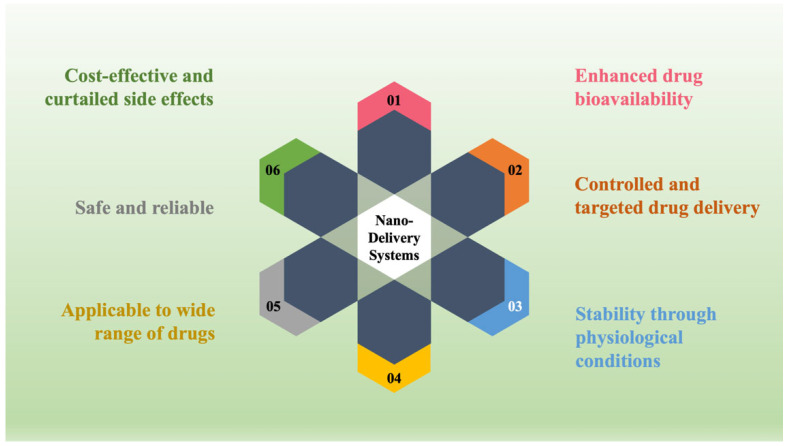
Figure 1
Figure 1
The ideal characteristics of nano delivery systems.
Figure 2
Figure 2
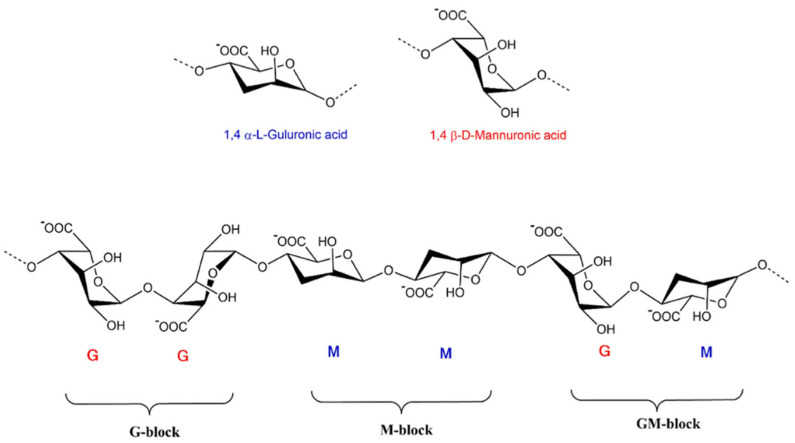
The monomer’s conformation and blocks distribution of ALG salt [27].
Figure 3
Figure 3
The extraction technique of ALG from brown seaweeds.
Figure 4
Figure 4
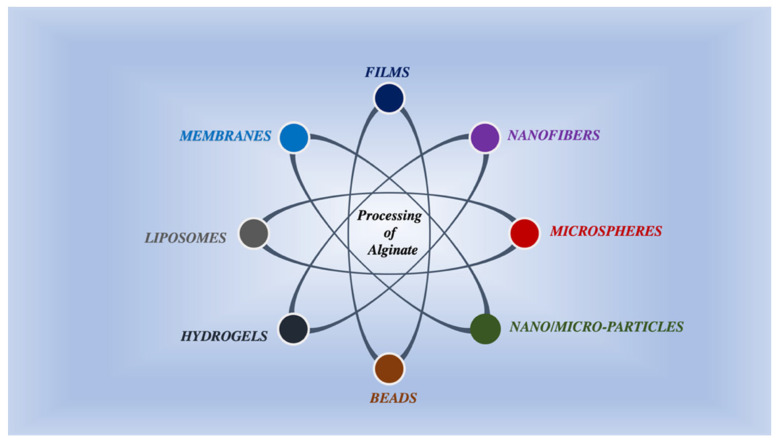
Diagrammatic representation of ALG formulations into diverse forms.
Figure 5
Figure 5
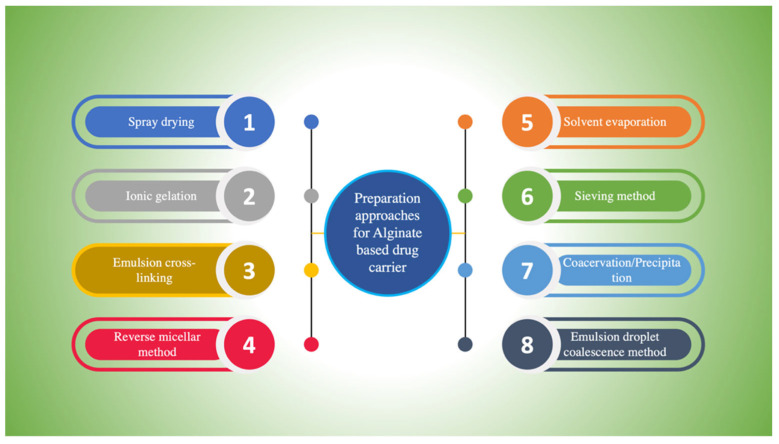
Various approaches for preparing ALG-based particulate carrier matrix.
Figure 6
Figure 6
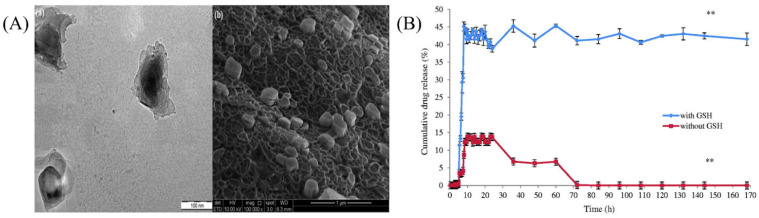
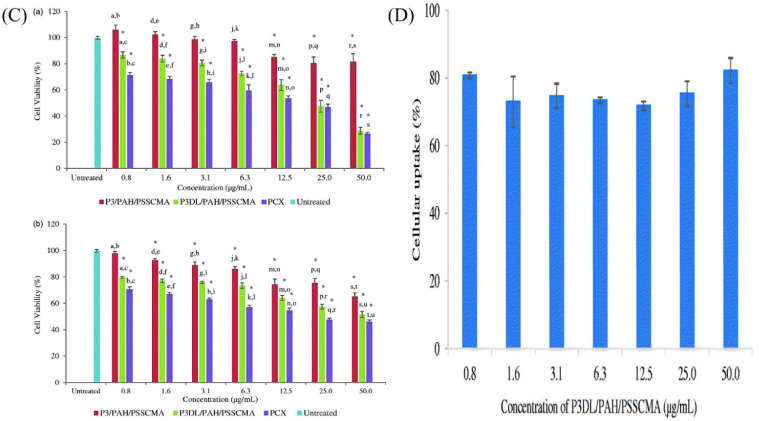
Biocompatible disulfide cross-linked SA derivative nanoparticles for oral colon-targeted drug delivery (A) P3DL/PAH/PSSCMA (a) TEM and (b) FeSEM pictures at magnifications of 110,000 and 100,000, respectively. (B) For 170 h in a simulated gastrointestinal medium, the cumulative % drug release of P3DL/PAH/PSSCMA was measured. ** means p < 0.01. (C) The effects of P3/PAH/PSSCMA, P3DL/PAH/PSSCMA, PCX and untreated P3/PAH/PSSCMA on (a) HT-29 and (b) CRL 1790. Data marked with the same letters show significant difference between the samples. * Indicates p < 0 .05 compared to the untreated samples. (D) P3DL/PAH/PSSCMA nanospheres tagged with rhodamine 110 are taken up by HT-29 cells. Reproduced with permission from [126], copyright Taylor & Francis Online, 2019.
Figure 6
Figure 6
Biocompatible disulfide cross-linked SA derivative nanoparticles for oral colon-targeted drug delivery (A) P3DL/PAH/PSSCMA (a) TEM and (b) FeSEM pictures at magnifications of 110,000 and 100,000, respectively. (B) For 170 h in a simulated gastrointestinal medium, the cumulative % drug release of P3DL/PAH/PSSCMA was measured. ** means p < 0.01. (C) The effects of P3/PAH/PSSCMA, P3DL/PAH/PSSCMA, PCX and untreated P3/PAH/PSSCMA on (a) HT-29 and (b) CRL 1790. Data marked with the same letters show significant difference between the samples. * Indicates p < 0 .05 compared to the untreated samples. (D) P3DL/PAH/PSSCMA nanospheres tagged with rhodamine 110 are taken up by HT-29 cells. Reproduced with permission from [126], copyright Taylor & Francis Online, 2019.
Figure 7
Figure 7
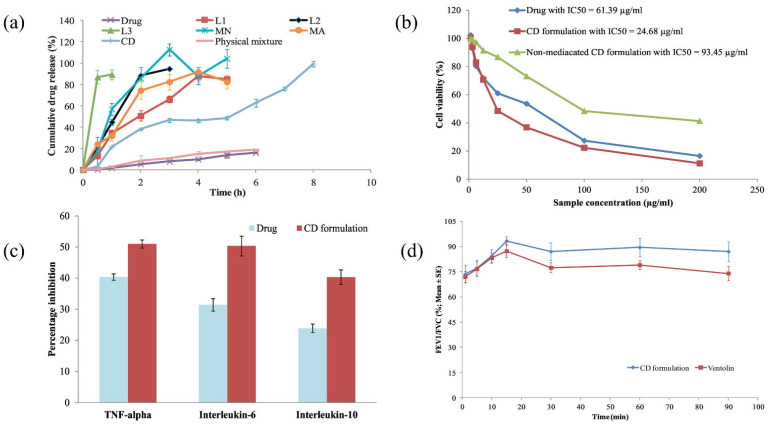
Design and characterization of emulsified spray-dried ALG microparticles as a carrier for the dually acting drug roflumilast (a) In an ethanolic phosphate buffer saline solution (30% v/v; pH 7.4), release patterns of roflumilast and emulsified spray-dried ALG microparticles were studied. (b) The effects of roflumilast, a medicated CD formulation, and a non-medicated CD formulation on the proliferation of A-549 tumor cells. (c) TNF-alpha, interleukin-6, and interleukin-10 levels were reduced in A-549 tumor cells by roflumilast and CD formulation. (d) FEV1/FVC%—time curve in healthy human volunteers upon inhaling the chosen CD formulation vs. Ventolin® HFA. Reproduced with permission from [177], Copyright Elsevier 2018.
Figure 8
Figure 8
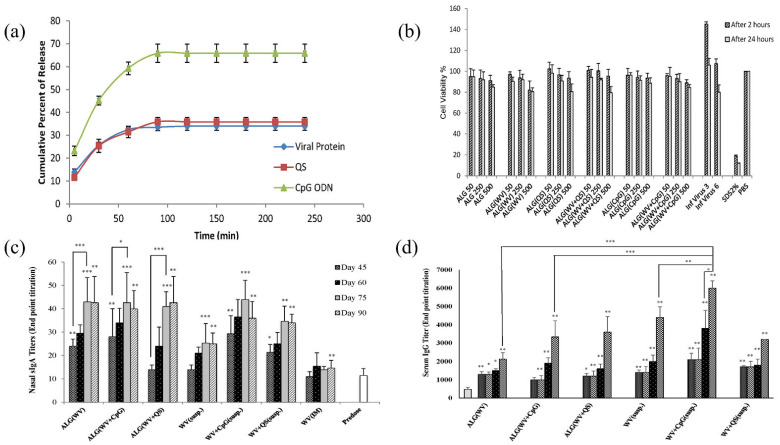
Preparation, characterization, and immunological evaluation of ALG nanoparticles loaded with whole inactivated influenza virus: Dry powder formulation for nasal immunization in rabbits (a) % of viral protein, QS, and CpG ODN released in vitro from ALG NPs over four hours. (b) After 2- and 24-h exposure with varying concentrations of each formulation, the effect of ALG NPs and influenza virus suspension on cell viability in Calu-6 cell lines (c) HAI antibody titers in each vaccination group on day zero (control), day 45 (after prime dose), day 60 (after the second dose), day 75 (after the third dose), and day 90 (after the final booster) (d) IgG titers in blood samples taken from each vaccinated cohort on days zero (negative control), 45 (prime dose), 60 (second dose), 75 (third dose), and 90 (after the final booster). * means p < 0.05, ** means p < 0.01, *** means p < 0.001. Reproduced with permission from [220], Copyright Elsevier 2019.
Figure 9
Figure 9
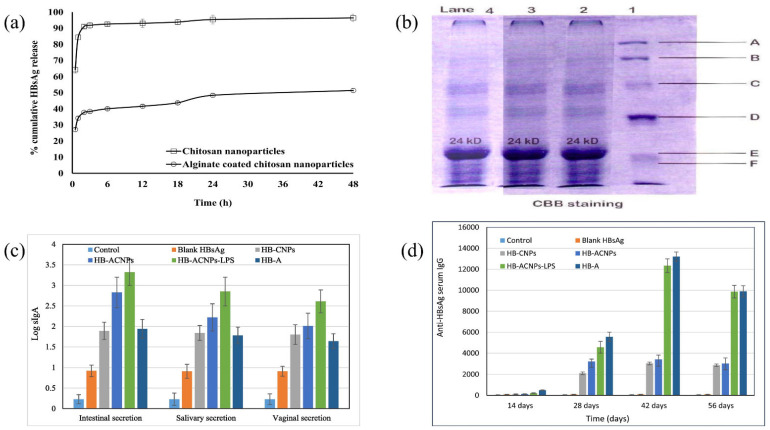
Lipopolysaccharide-derived ALG coated Hepatitis B antigen-loaded CS nanoparticles for oral mucosal immunization (a) Release profile of produced nanoparticles in vitro. (b) HBsAg release as determined by SDS-PAGE: Lane 1: Molecular weight markers; Lane 2: HBsAg solution; Lane 3: HBsAg loaded CS nanoparticles, Lane 4: HBsAg-loaded ALG coated CS nanoparticles produced from LPS. (c) The levels of sIgA in the fluid secretions of mice immunized with different formulations. (d) Anti-HBsAg IgG levels in mice inoculated orally with various formulations. Reproduced with permission from [270], Copyright Elsevier, 2020.
Figure 10
Figure 10
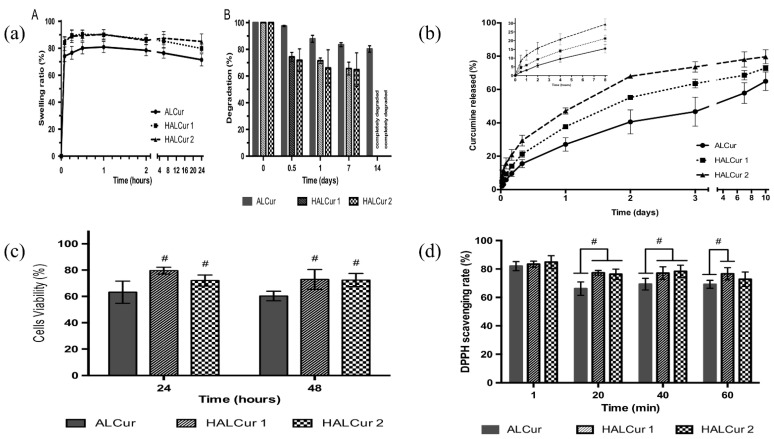
ALG/human elastin-like polypeptide composite films with antioxidant properties for potential wound healing applications. (a) swelling (A) and stability (B) graphs of ALCur, HALCur films encapsulating 0.1% curcumin. (b) % curcumin release characteristics of ALCur, HALCur films encapsulating 0.1% curcumin. (c) Cell viability assay of ALG/HELP composites on human fibroblast cell lines. (d) DPPH assay of ALCur and HALCur films indicating antioxidant activities. # p <0.05. Reproduced with permission from [353], copyright Elsevier 2020.

References

    1. Jain K.K. Drug Delivery Systems—An Overview. Methods Mol. Biol. 2008;437:1–50. - PubMed
    1. Ansari M.J., Ahmed M.M., Anwer M.K., Jamil S., Alshetaili A.S., Ali R., Shakeel F. Formulation and Characterization of Fluconazole Loaded Olive Oil Nanoemulsions. Indo Am. J. Pharm. Sci. 2017;4:852–860.
    1. Agrawal P. Significance of Polymers in Drug Delivery System. J. Pharmacovigil. 2015;3:10–12. doi: 10.4172/2329-6887.1000e127. - DOI
    1. Bhowmik D., Gopinath H., Kumar B.P., Duraivel S., Kumar K.P.S. Controlled Release Drug Delivery Systems. Pharma Innov. J. 2012;1:24–32.
    1. Abourehab M.A.S., Ansari M.J., Singh A., Hassan A., Abdelgawad M.A., Shrivastav P., Abualsoud B.M., Amaral L.S., Pramanik S. Cubosomes as an Emerging Platform for Drug Delivery: A State-of-the-Art Review. J. Mater. Chem. B. 2022;10:2781–2819. doi: 10.1039/D2TB00031H. - DOI - PubMed

LinkOut - more resources