


Genetic Diversity and Population Structure of Head Blight Disease Causing Fungus Fusarium graminearum in Northern Wheat Belt of India
- PMID: 36012808
- PMCID: PMC9409692
- DOI: 10.3390/jof8080820
Genetic Diversity and Population Structure of Head Blight Disease Causing Fungus Fusarium graminearum in Northern Wheat Belt of India
Abstract
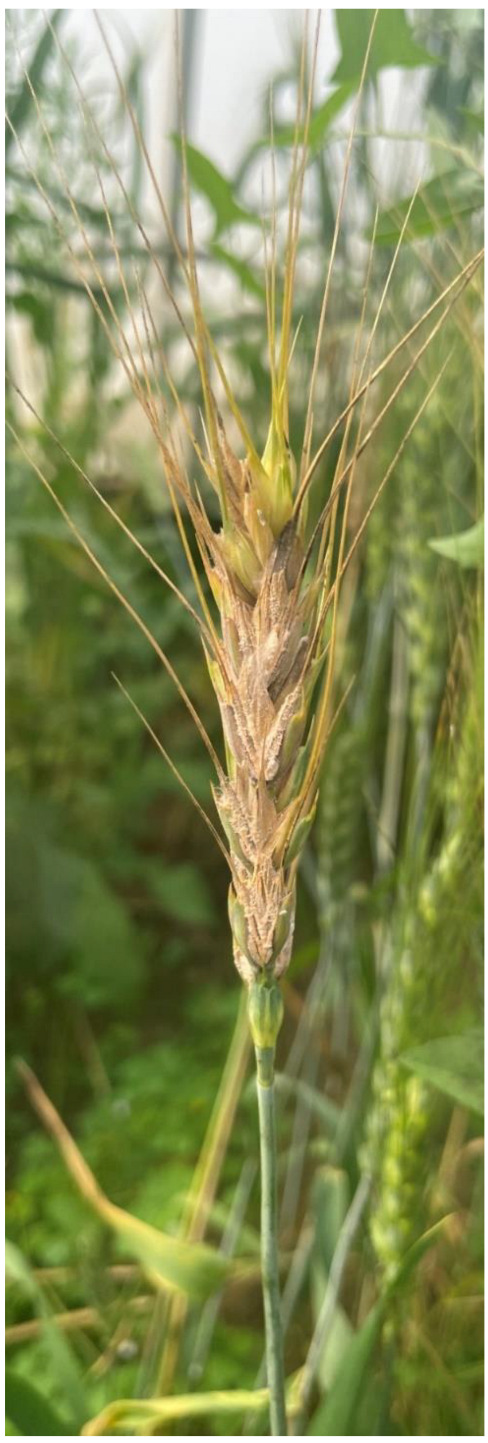
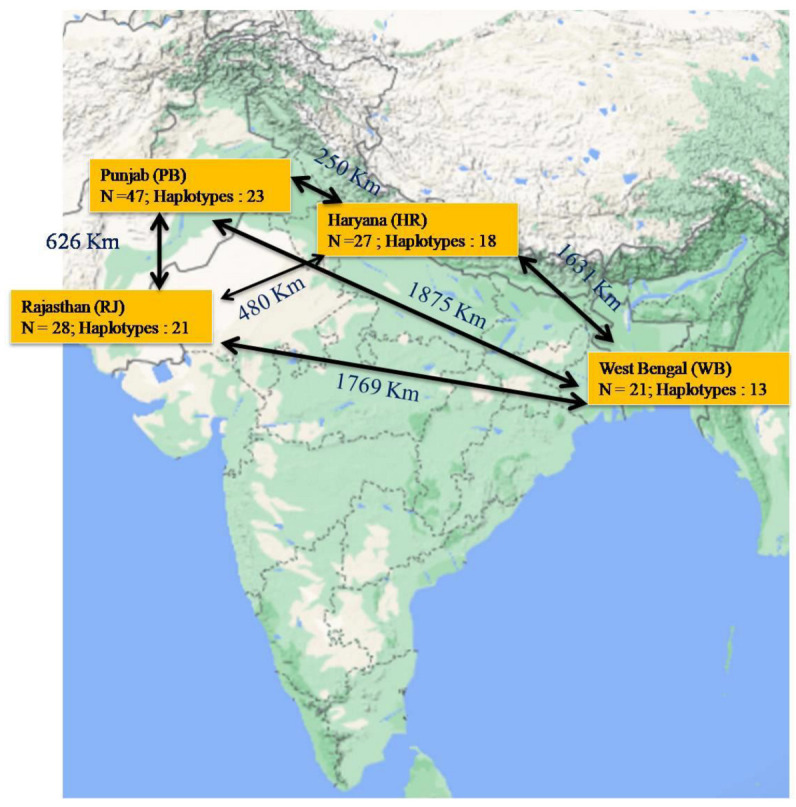
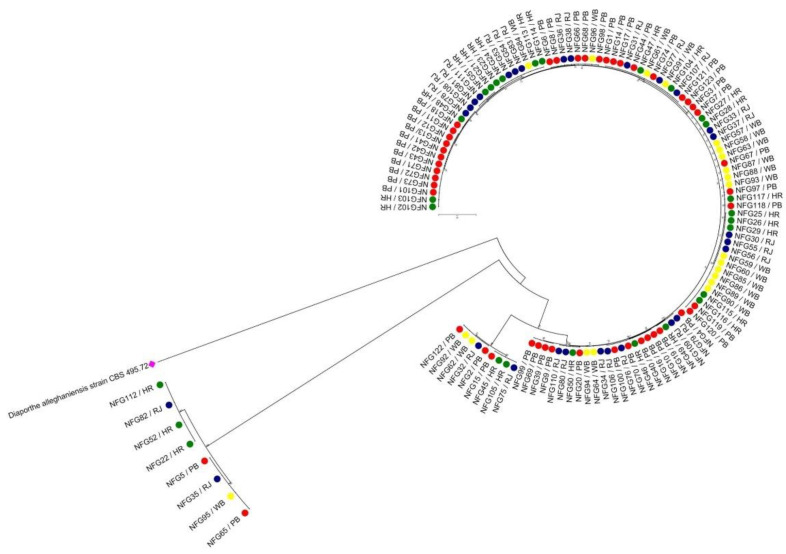
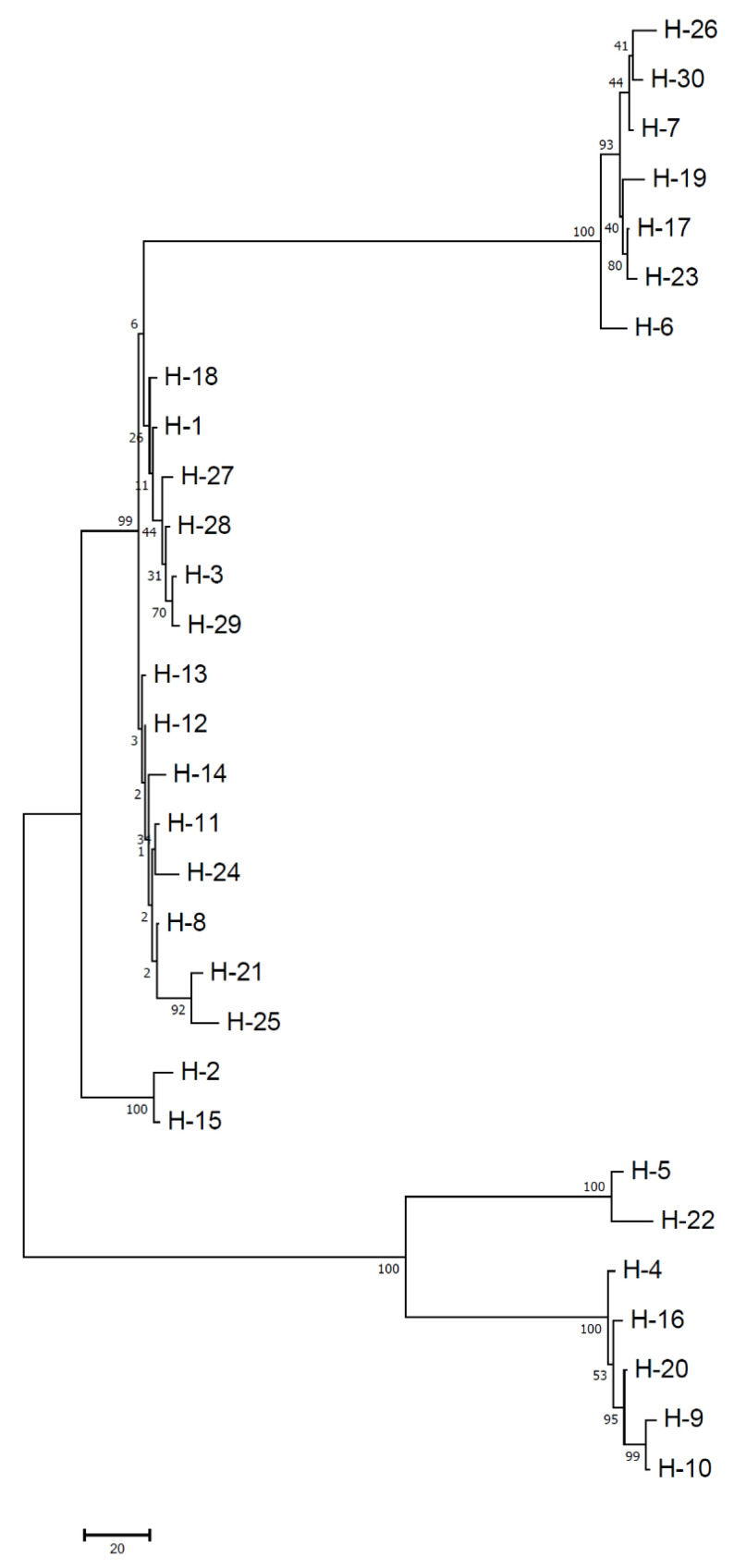
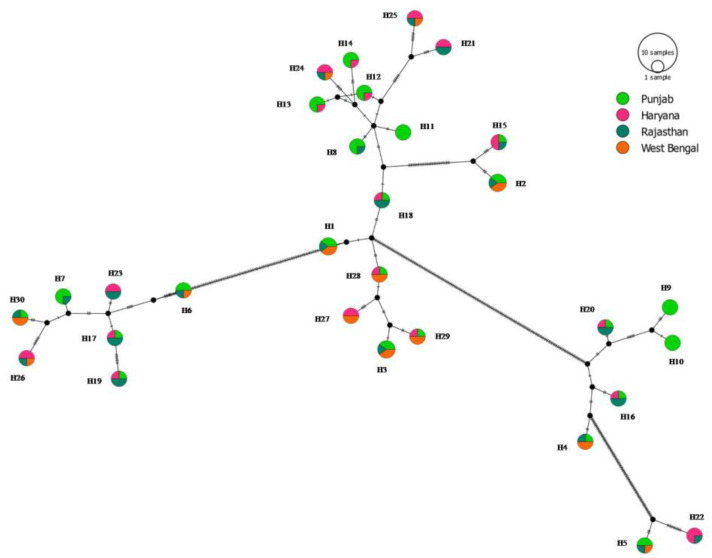
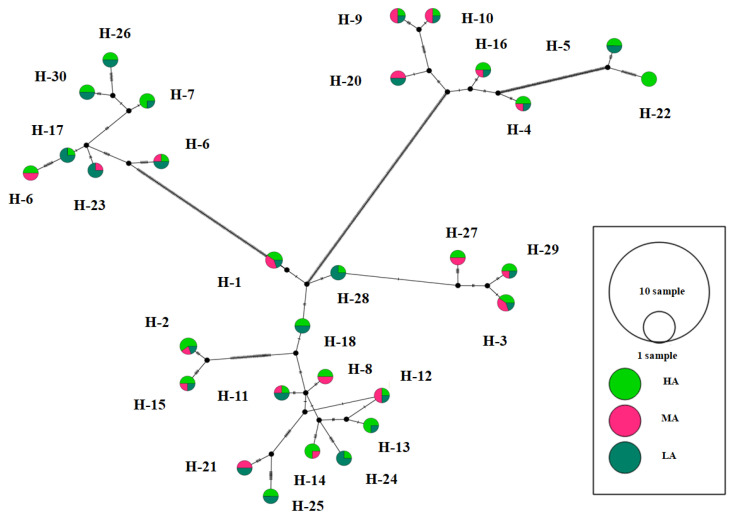
Head blight or scab caused by Fusarium graminearum (FG), once ranked as a minor disease in wheat, is now emerging as one of the economically important diseases in India. The present study represents the first in-depth population genetic analysis of the FG from the northern wheat belt of India. In this study, multiple conserved gene sequences comprised of β-tubulin (TUB), translation elongation factor 1-α (TEF), and histone-3 (HIS) regions were used for multi-locus phylogenetic analysis of 123 geographically distinct F. graminearum isolates collected from four different states (Haryana (HR), Punjab (PB), Rajasthan (RJ) and West Bengal (WB)) of India. The phylogenetic and haplotype analysis showed the presence of thirty haplotypes in all the analyzed populations. The haplotypic diversity in the RJ population (Hd = 0.981) was higher than in the HR (Hd = 0.972), PB (Hd = 0.965) and WB population (Hd = 0.962). Recombination events (Rm = 12) and mutation events (485) were also detected. Analysis of molecular variance (AMOVA) indicated that genetic diversity was exclusively due to the differences within populations. The haplotype network was widely dispersed and not associated with specific populations, as a single common haplotype was not detected. The PB population contained both unique (H9, H10 and H11) and shared haplotypes (27 haplotypes) in a higher number in comparison to other geographical locations. Except for haplotype H22 (contains highly aggressive isolates), there was no specific linkage noticed between the isolate aggressiveness and haplotype. The concatenated sequences of all the three genes demonstrated a low level of genetic differentiation (Fst = -0.014 to 0.02) in the analyzed population. Positive values for the neutrality tests in PB, HR and RJ reveal a balancing selection mechanism behind the FG population structure. The WB population showed both positive and negative values of neutrality indices, indicating the role of both population expansion as well as balancing selection in structuring the FG population.
Keywords: aggressiveness; head scab multi-locus sequence typing; mutation; phylogeny; population structure; recombination.
Conflict of interest statement
The authors declare no conflict of interest.
Figures
References
-
- Mengesha G.G., Abebe S.M., Fedilu K.B., Tadesse Y.B., Mekonnen A.A., Abate G., Lera Z.T., Shertore M.M., Cheleko D.C., W/Silassie A.B. Fusarium head blight progression and yield response of bread wheat as affected by fungicides and spray regimes under field condition in Southern Ethiopia. J. Crop Sci. Biotechnol. 2022 doi: 10.1007/s12892-022-00152-6. - DOI
-
- Mawcha K.T., Zhang N., Wang Y., Yang W. Advances in wheat breeding for resistance to Fusarium head blight. Czech J. Genet. Plant Breed. 2022 doi: 10.17221/1/2022-CJGPB. - DOI
-
- Kashyap P.L., Gupta V., Prakash Gupta O., Sendhil R., Gopalareddy K., Jasrotia P., Singh G.P. New Horizons in Wheat and Barley Research: Global Trends, Breeding and Quality Enhancement. Springer; Singapore: 2022. p. 842. - DOI
-
- Saharan M.S., Kumar H.M.A., Gurjar M.S., Aggarwal R. Fusarium head blight of wheat in india-variability in pathogens associated and sources of resistance: An overview. Indian Phytopathol. 2021;74:345–353. doi: 10.1007/s42360-021-00358-8. - DOI
Grants and funding
LinkOut - more resources
Full Text Sources
Miscellaneous
