


Inerting Waste Al Alloy Dust with Natural High Polymers: Sustainability of Industrial Waste
- PMID: 36013677
- PMCID: PMC9410461
- DOI: 10.3390/ma15165540
Inerting Waste Al Alloy Dust with Natural High Polymers: Sustainability of Industrial Waste
Abstract
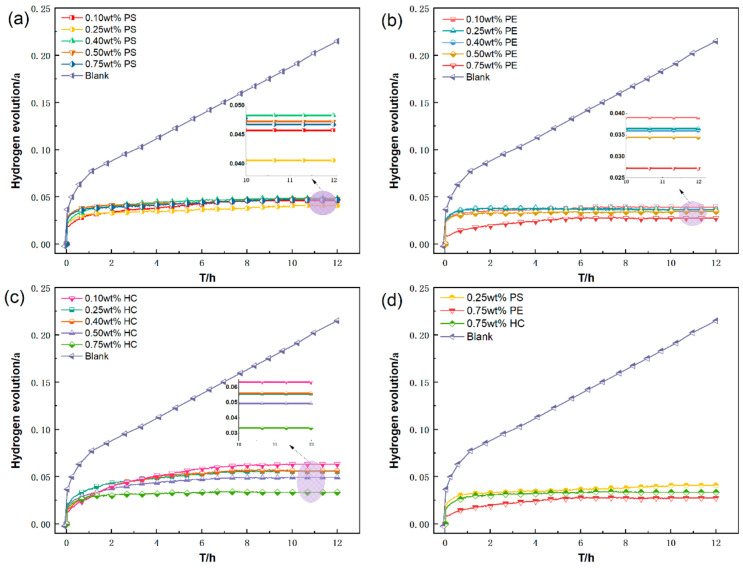
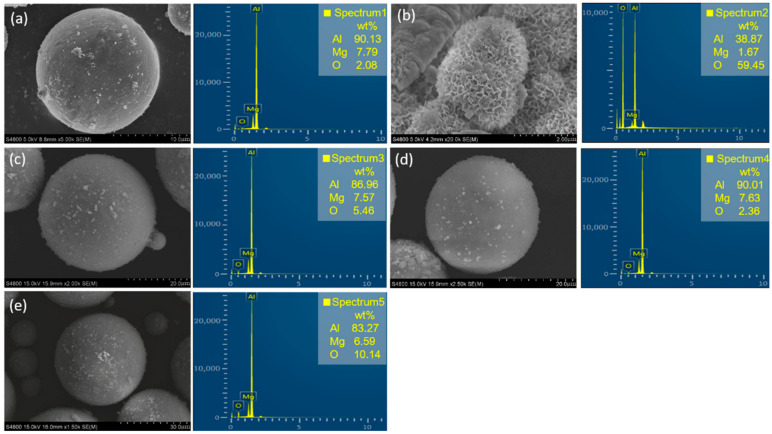
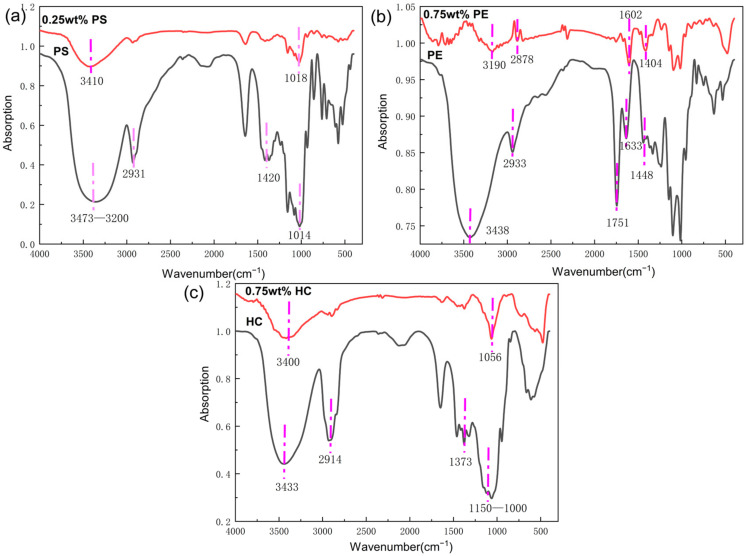
A large amount of waste dust will be produced in the process of metal grinding, resulting in a waste of resources and environmental pollution. Therefore, we present a new method of inerting waste aluminum (Al) alloy dust for recycling purposes. Three natural high polymers-starch, pectin, and hydroxypropyl cellulose-were selected to inert waste metal dust in order to prevent the alloy from hydrolyzing and keep the dust pure enough for reuse. The particles of the Al base alloy before and after dust reaction were characterized by scanning electron microscopy (SEM), X-ray diffraction (XRD), and Fourier transform infra-red (FTIR), and the relevant reaction mechanism was clarified. The hydrogen evolution test indicated that, across the temperature interval of 313-333 K, 0.75 wt% pectin inerted hydrogen evolution most efficiently (90.125%). XRD analysis indicated that the inerted product is composed of Al monomer and Al3Mg2, with no detectable content of Al hydroxide. The purity of the Al alloy dust was preserved. SEM and FTIR analyses indicated that the -OH, -COOH, and -COOCH3 functional groups in the high polymer participated in the coordination reaction by adsorbing on the surface of the waste Al alloy particles to produce a protective film, which conforms to Langmuir's adsorption model. Verification of the inerted Al alloy dust in industrial production confirmed the possibility of reusing waste Al alloy dust. This study provides a simple and effective method for recycling waste Al alloy dust.
Keywords: Al alloy dust; dust explosion; metal inerting; natural high polymers; waste reuse.
Conflict of interest statement
The authors declare no conflict of interest.
Figures





References
-
- Cao G., Orrù R. Self-Propagating Reactions for Environmental Protection: State of the Art and Future Directions. Chem. Eng. J. 2002;87:239–249. doi: 10.1016/S1385-8947(02)00014-1. - DOI
-
- Ge J., Zhang Y., Xu K., Li J., Yao X., Wu C., Li S., Yan F., Zhang J., Xu Q. A New Accident Causation Theory Based on Systems Thinking and Its Systemic Accident Analysis Method of Work Systems. Process Saf. Environ. Prot. 2022;158:644–660. doi: 10.1016/j.psep.2021.12.036. - DOI
-
- Hiraki T., Akiyama T. Exergetic Life Cycle Assessment of New Waste Aluminium Treatment System with Co-Production of Pressurized Hydrogen and Aluminium Hydroxide. Int. J. Hydrogen Energy. 2009;34:153–161. doi: 10.1016/j.ijhydene.2008.09.073. - DOI
-
- Gil A., Korili S.A. Management and Valorization of Aluminum Saline Slags: Current Status and Future Trends. Chem. Eng. J. 2016;289:74–84. doi: 10.1016/j.cej.2015.12.069. - DOI
Grants and funding
LinkOut - more resources
Full Text Sources
