


Sweet Corrosion Inhibition by CO2 Capture
- PMID: 36014449
- PMCID: PMC9415123
- DOI: 10.3390/molecules27165209
Sweet Corrosion Inhibition by CO2 Capture
Abstract
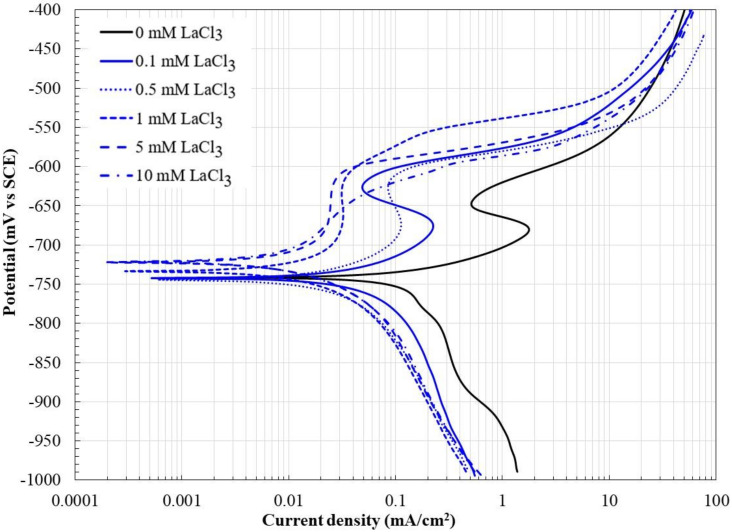
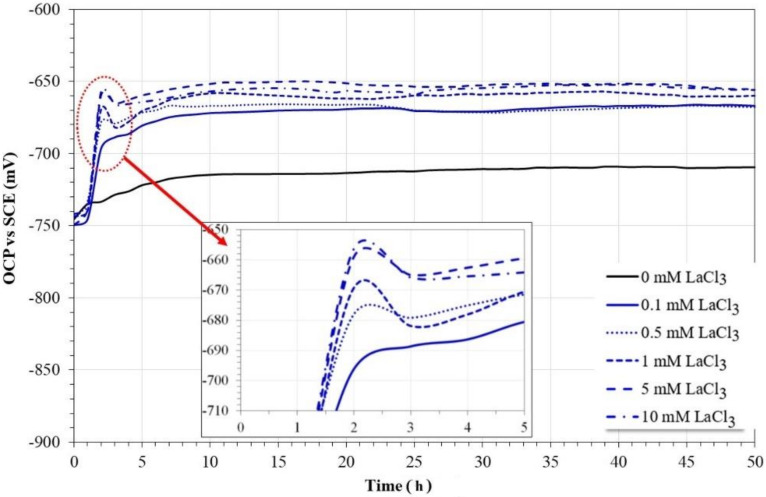
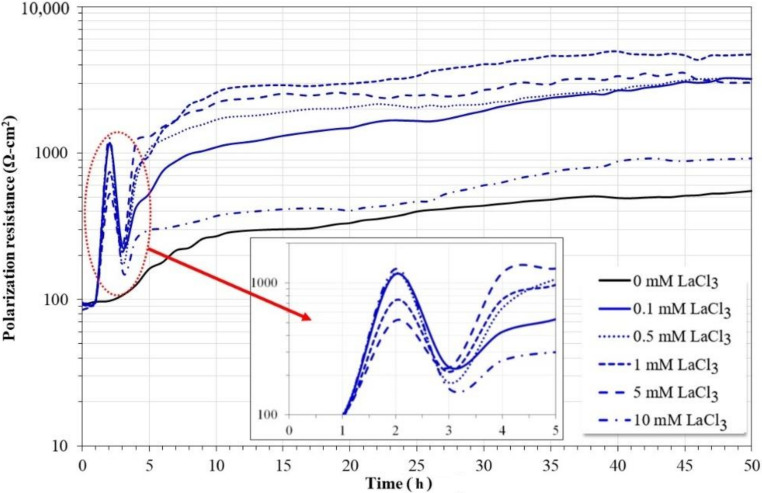
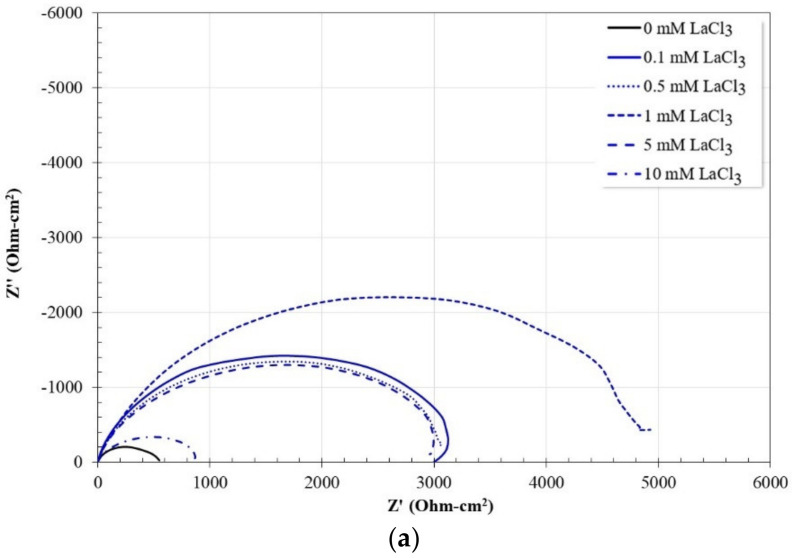
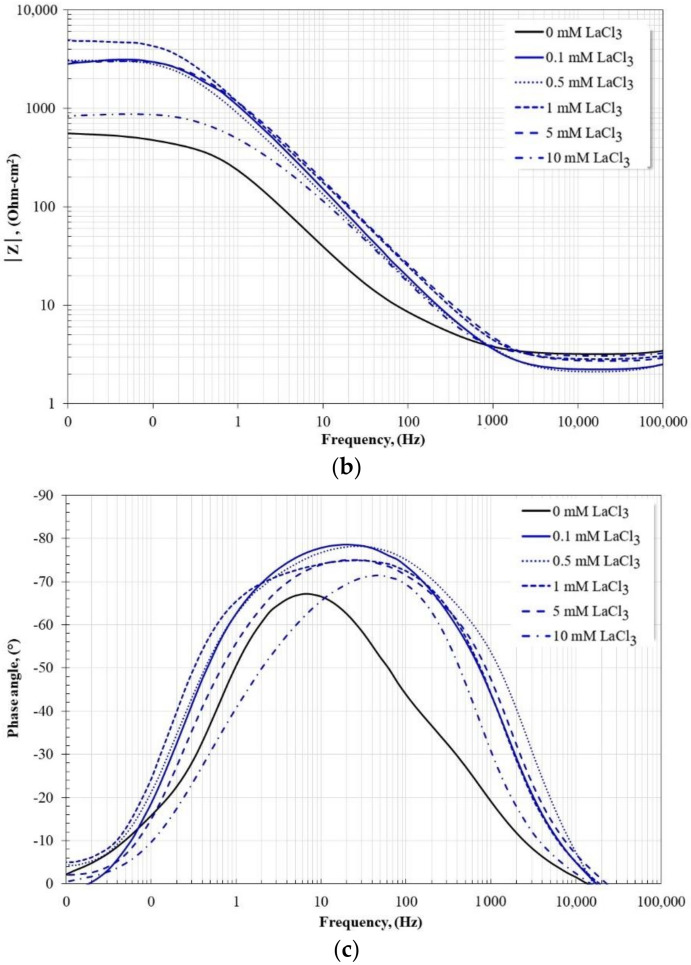
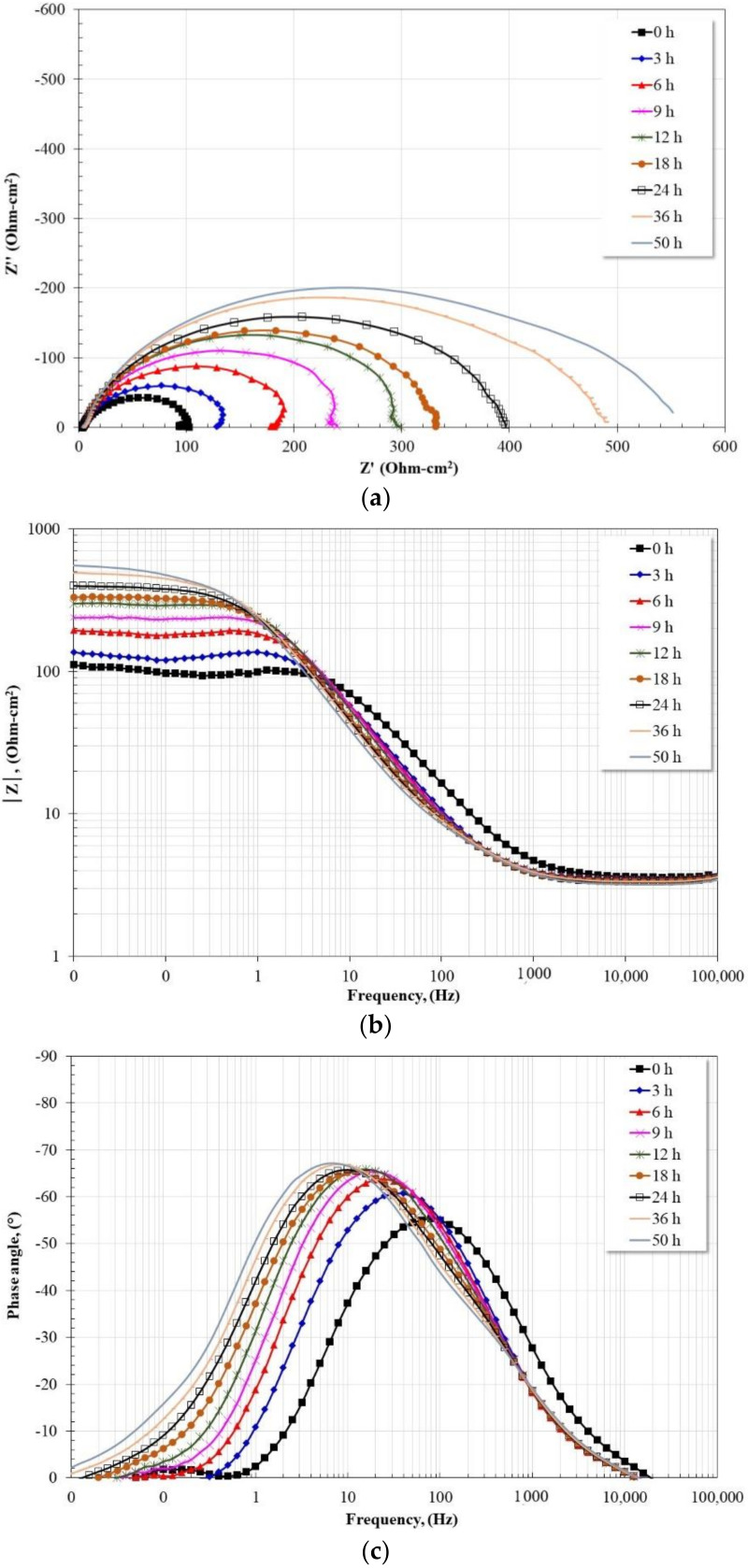
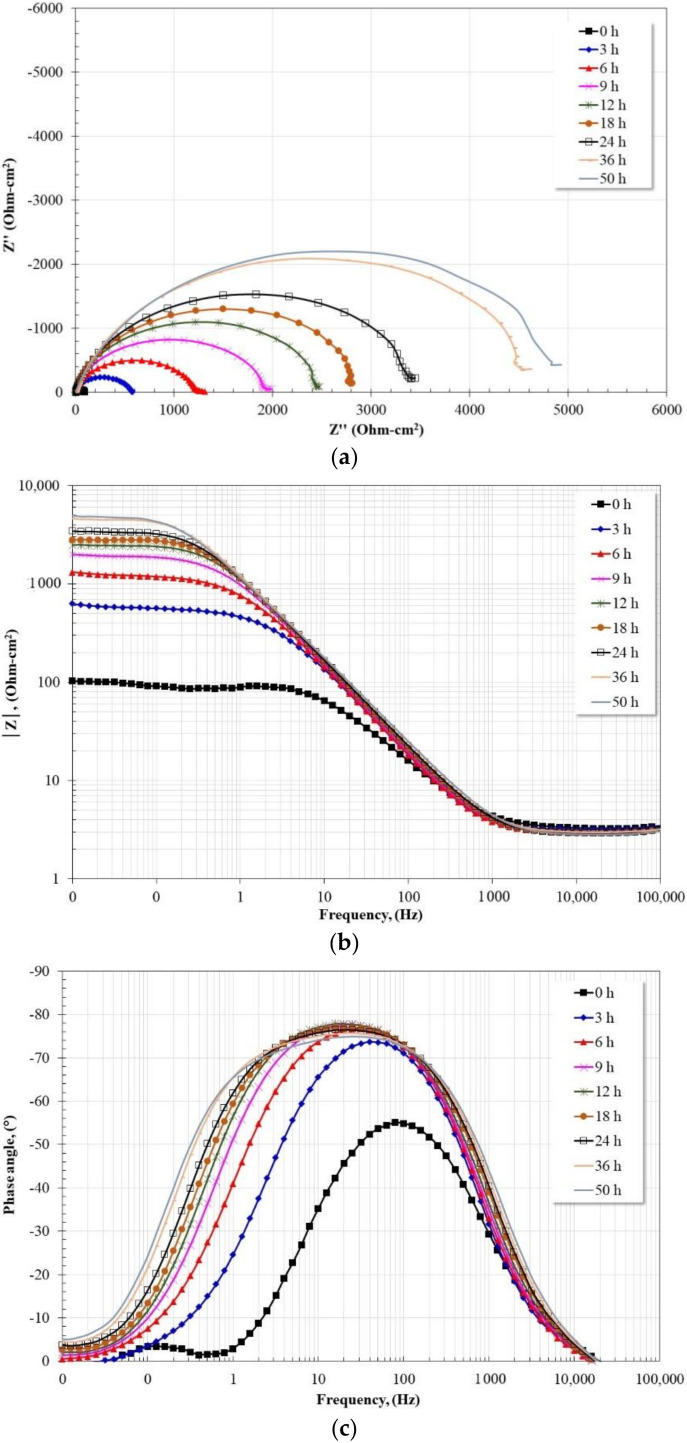
The most practical and economical way to combat the problems derived from CO2 corrosion (sweet corrosion) is the use of corrosion inhibitors of organic origin. Its main protection mechanism is based on its ability to adsorb on the metal surface, forming a barrier between the metal surface and the aggressive medium. However, despite its excellent performance, its inhibition efficiency can be compromised with the increase in temperature as well as the shear stresses. In this study, the use of an inorganic inhibitor is proposed that has not been considered as an inhibitor of sweet corrosion. The reported studies are based on using LaCl3 as a corrosion inhibitor. Its behavior was evaluated on 1018 carbon steel using electrochemical measurements, such as potentiodynamic polarization curves, open-circuit potential measurements, linear polarization resistance measurements, and electrochemical impedance. The results showed an inhibition efficiency of the sweet corrosion process greater than 95%, and that the inhibition mechanism was different from the classic corrosion process in CO2-free electrolytes. In this case, it was observed that the inhibitory capacity of the La3+ cations is based on a CO2-capture process and the precipitation of a barrier layer of lanthanum carbonate (La2(CO3)3).
Keywords: CO2 capture; corrosion; inhibitor; lanthanum carbonate; lanthanum chloride.
Conflict of interest statement
The authors declare no conflict of interest.
Figures

References
-
- Kahyarian A., Brown B., Nesic S. The Unified Mechanism of Corrosion in Aqueous Weak Acids Solutions: A Review of the Recent Developments in Mechanistic Understandings of Mild Steel Corrosion in the Presence of Carboxylic Acids, Carbon Dioxide, and Hydrogen Sulfide. Corrosion. 2020;6:268–278. doi: 10.5006/3474. - DOI
-
- Kahyarian A., Nesic S. On the mechanism of carbon dioxide corrosion of mild steel: Experimental investigation and mathematical modeling at elevated pressures and nonideal solutions. Corros. Sci. 2020;173:108719. doi: 10.1016/j.corsci.2020.108719. - DOI
-
- Wright R.F., Brand E.R., Ziomek-Moroz M., Tylczak J.H., Ohodnicki P.R., Jr. Effect of HCO−3 on electrochemical kinetics of carbon steel corrosion in CO2-saturated brines. Electrochim. Acta. 2018;290:626–638. doi: 10.1016/j.electacta.2018.09.114. - DOI
-
- Sk M.H., Abdullah A.M., Ko M., Ingham B., Laycock N., Arul R., Williams D.E. Local supersaturation and the growth of protective scales during CO2 corrosion of steel: Effect of pH and solution flow. Corros. Sci. 2017;126:26–36. doi: 10.1016/j.corsci.2017.05.026. - DOI
-
- Barker R., Burkle D., Charpentier T., Thompson H., Neville A. A review of iron carbonate (FeCO3) formation in the oil and gas industry. Corros. Sci. 2018;142:312–341. doi: 10.1016/j.corsci.2018.07.021. - DOI
MeSH terms
Substances
LinkOut - more resources
Full Text Sources
